
ADF Scanning Platform for Konica Minolta: Compatibility, Page Yield and Sourcing Tips
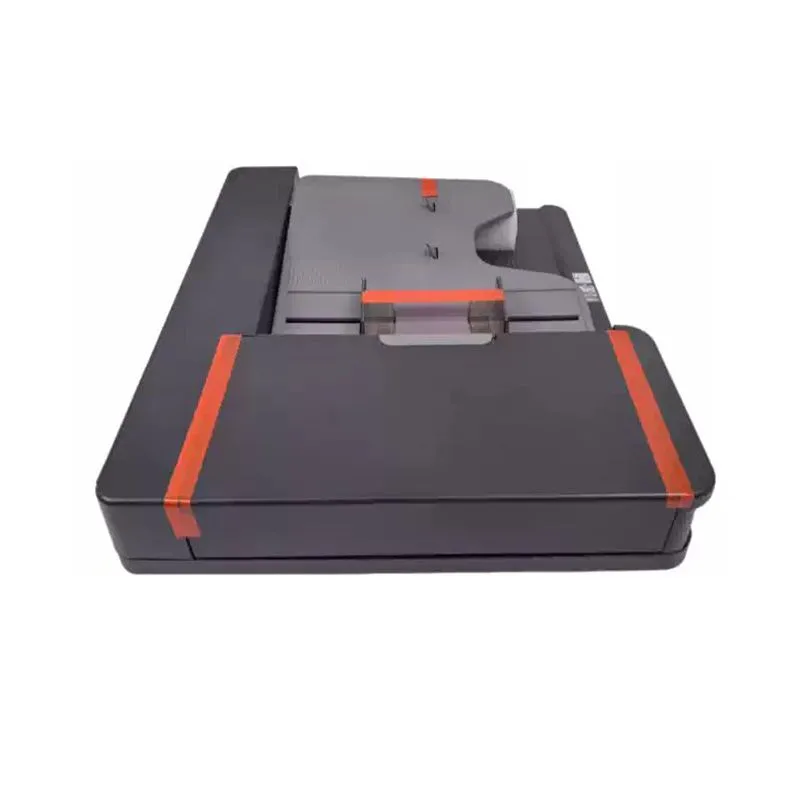
Most ADF failures that reach your bench are not electronics problems. They are worn pickup rollers, tired separation pads, cracked mylar guides and sloppy hinges that let the document feeder sit a fraction off the platen. Buying the whole scanning platform as a unit avoids chasing those individually — but only if the assembly matches the machine on the customer's floor. Konica Minolta's ADF lineage splits more finely than most catalogues admit, and a wrong-platform shipment costs more in returns than the margin ever covered.
Compatibility: match the platform, not just the model number
Konica Minolta's bizhub range reuses ADF platforms across several chassis, but the reuse is neither random nor universal. The DF-624 family dominates the bizhub C224/C284/C364 and C454/C554 generation, while the DF-701 and its variants sit on the C258/C308/C368 and C458/C558 machines. The C360i/C450i/C550i i-Series moved to a different feeder with revised hinge geometry and a different connector pinout. Buyers who order "ADF for bizhub C368" and receive a DF-624 assembly will find the mounting bosses line up but the interface cable will not seat.
Two identifiers settle most disputes before they start: the DF model plate on the feeder's underside and the machine's engine model on the rear label. Cross-check both against the parts diagram for the specific engine, not the marketing series. Konica Minolta also runs regional variants — a European C284e and a North American unit of the same name can carry different feeder firmware revisions. Ask your supplier which market the platform was built for. A factory that builds against the OEM drawing will tell you without hesitating.
Watch the i-Series transition especially. The C300i/C360i feeders share consumables with the previous generation but not the frame, so a mixed pallet of "compatible ADF platforms" will strand half your stock. Order by DF number, in writing, on the PO.
Page yield: what the ADF actually rates against
ADF page yield is a maintenance-interval figure, not a hard failure point. Konica Minolta publishes feeder PM cycles in the service manual — typically in the 120,000 to 300,000 sheet range depending on platform and duty class — and that number assumes clean, 80 gsm, undamaged paper fed in single-sided mode. Duplex scanning roughly doubles the sheet passes through the turn rollers, so a customer running heavy duplex at 60 pages per minute will eat a PM kit in half the rated interval.
The consumable that governs real yield is the separation pad and pickup roller pair, not the platform frame. Frames fail from hinge fatigue and sensor drift; rollers fail from paper dust. If you supply repair shops, sell the platform with a spare roller kit and quote the PM interval honestly. Buyers who inflate yield figures to win a tender get the platform back at 40,000 sheets with a jam complaint.
Paper stock matters more than most datasheets admit. Recycled stock with high ash content glazes the separation pad and causes multifeeds long before the rated count. Advise your accounts to log actual sheet counts per feeder and replace on condition, not on the calendar.
Inspection points before you accept a shipment
Open cartons and inspect, even on a repeat order. The failure modes are visible if you know where to look, and catching them at goods-in is far cheaper than at the customer's site.
- Hinge tension: open and close the feeder cover ten times — it should hold position without sagging or snapping shut.
- Roller surface: pickup and feed rollers should be uniform matte rubber, no glazing, flat spots or mould-release shine.
- Connector and harness: check pin count against the engine diagram and flex the harness to expose cracked insulation.
- Sensor flags and mylar guides: flags must spring back freely; guides must sit flat with no curling at the tips.
- Platen glass and white reference strip: scratches here cause vertical streaks that customers blame on the platform.
Run a live test where you can. Feed twenty sheets of mixed weight — one sheet of 60 gsm, one of 160 gsm card — and watch for skew and multifeed. A platform that passes that test cold will usually behave in the field.
Sourcing: what separates a real factory from a trading desk
Ask for the DF number on the box, the engine compatibility matrix, and the PM kit part numbers in the same email. A trading company will send a photo of a generic feeder and a promise. A factory that builds the platform will send the drawing revision and the roller durometer spec. That difference shows up eighteen months later when your customer needs a replacement separation pad and the supplier has moved on to the next model cycle.
Pricing should track the roller kit content, not just the frame. Platforms shipped with OEM-grade rollers and pads cost more and last longer; platforms with budget rubber look cheaper on the quote and generate warranty claims. For volume buyers, negotiate the roller kit as a line item so you can flex the mix per market.
Lead times on Konica Minolta ADF platforms run long when sourced through distribution. Factory-direct with a committed forecast shortens that, and OEM/ODM programmes let you specify the branding, packaging and roller grade your market expects — useful if you supply under your own label to office-equipment distributors.
CLONER builds ADF scanning platforms and roller kits for the Konica Minolta bizhub families in-house, with OEM and ODM options covering DF-number matching, custom packaging and your choice of roller compound. Send us the engine model and DF number and we will confirm compatibility against the drawing before you commit to a quantity — factory-direct pricing, with the inspection points above built into our outgoing QC.
Need a quote or samples from CLONER?
Factory-direct OEM/ODM supplier of compatible printer consumables & spare parts. Tell us your models — reply within 24h.


