
ADF Scanning Platform for Samsung: Compatibility, Page Yield and Sourcing Tips
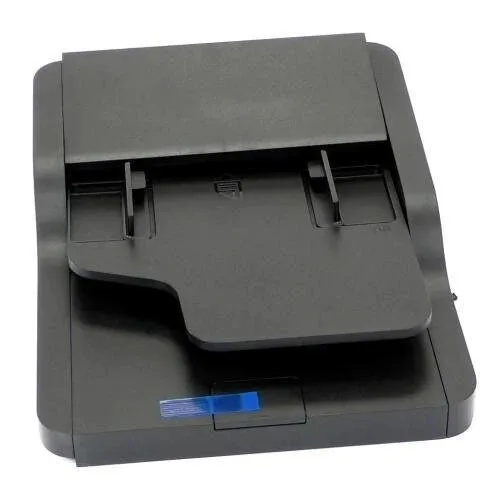
The ADF scanning platform is the part that quietly decides whether a refurbished Samsung multifunction ships or sits on the shelf. Buyers who treat it as a commodity pickup end up with units that feed skew, double-feed on the second pass, or throw jam codes the moment a customer scans a 20-page contract. Get the assembly right and the rest of the machine looks good. Get it wrong and every other component you replaced gets blamed.
Which Samsung families actually share the platform
Compatibility on Samsung ADF platforms is less tidy than the parts catalogues suggest. The Xpress M3870/M4070 series (M3870FD, M4070FR, M4080FX and their regional variants) share a broadly common feed frame and pick-up roller geometry, which is why refurbishers treat them as one pool. The ProXpress M4530/M4580 and the older SCX-4833/5637 families use a different hinge casting and exit tray moulding, so platforms are not interchangeable across those lines even when the machines look similar from the front.
The MultiXpress K2200/K3250/K3300 range is its own story. These are the high-volume boxes that come out of dealer fleets, and their ADF platforms carry heavier duty hinges and a different registration sensor bracket. A K3250 platform will not drop into a K2200 chassis without modification, and we have seen buyers burn a whole pallet assuming otherwise.
The practical rule: match by full model code plus the machine's firmware generation, not by series name. Samsung revised the ADF sensor harness mid-life on several M4070 variants, and the later platform uses a different connector pitch. Ask for the platform's revision stamp and cross-check it against the machine's serial range before you confirm a quantity.
Page yield is a duty-cycle figure, not a consumable rating
Nobody prints a yield number on an ADF platform, but buyers ask for one anyway. The honest answer is that platform life is driven by cycles, not pages: how many documents pass, at what staple-and-fold abuse level, and how often the pick-up roller is replaced. A well-built platform on an M3870 in a 3,000-page-a-month office will outlast the machine's fuser. The same platform in a legal office scanning 40,000 pages a month will show hinge wear and sensor drift inside 18 months.
What actually fails first is predictable. The pick-up and separation rollers glaze and flatten, the registration sensor flag sticks, and the hinge casting develops play that shows up as skew on the trailing edge. The platform frame itself rarely cracks unless the machine has been dropped. That means the commercial question is not "how many pages" but "how good are the rollers and the sensor flag on the unit I am buying" — and whether the supplier ships spare roller kits alongside.
For quoting purposes, we tell distributors to price the platform against the roller kit and one sensor, not against the full assembly. That framing keeps your landed cost realistic and stops you overpaying for a frame that was never the weak point.
Inspection points before you commit to volume
Inspection starts with the hinge. Open and close the ADF lid twenty times on a sample unit and watch for lateral play at the pivot — a millimetre of slop becomes visible skew at the scan head. Check that the lid sits flush across the platen glass; a warped platform frame is a scrap part, not a rework candidate.
Then the feed path. Run a 30-sheet mixed stack — thin fax paper, a folded invoice, a card stock sheet — and watch for double-feeds and misfeeds at the separation pad. Pull the registration sensor flag and confirm it springs back cleanly; a sticky flag is the single most common cause of "document jam" codes on refurbished Samsung ADFs.
- Hinge play: open/close 20 cycles, check pivot slop
- Lid flushness across the platen glass
- 30-sheet mixed-stack feed test, watch double-feeds
- Registration sensor flag spring-back
- Harness connector pitch against the machine's firmware generation
Finally, check the harness. Samsung's mid-life connector change catches out buyers who order a single SKU across a mixed container. Ask your supplier to photograph the connector on the actual production batch, not a stock image.
Sourcing: what factory-direct actually changes
Most ADF platforms on the secondary market are pulled assemblies with unknown cycle history. That works for low-volume repair shops buying ones and twos. It does not work for distributors filling a container, because the failure rate is unpredictable and the returns cost lands on you, not the puller.
Factory-direct supply changes the economics in three places. First, you get a defined revision — the platform is built to a specific Samsung model code and firmware generation, not "fits M3870 series." Second, the rollers and sensor flags are new, not harvested, which moves your warranty exposure from the customer's desk back to the supplier. Third, OEM/ODM programmes let you specify the hinge casting tolerance and the harness connector yourself, so a private-label platform can be tuned to the exact model mix your market runs.
CLONER builds Samsung-compatible ADF scanning platforms on that basis: model-code-matched revisions, new feed rollers and sensor flags as standard, and OEM/ODM runs where you set the tolerance and the packaging. If you are consolidating a Samsung ADF SKU list for the next container, send us the model codes and firmware generations and we will map the platform revisions against them before you commit a quantity.
Need a quote or samples from CLONER?
Factory-direct OEM/ODM supplier of compatible printer consumables & spare parts. Tell us your models — reply within 24h.


