
Bulk Sourcing Drum Units for Pantum: MOQ, Lead Time and QC for Repair Shops
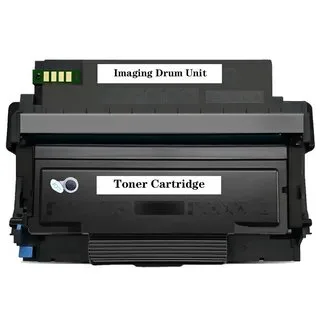
Pantum's installed base keeps growing in price-sensitive office and SMB channels, and that means more drum units wearing out in repair shops that never expected to service the brand. Buying these in bulk is where margins are made or quietly lost. The difference between a profitable drum-unit line and a drawer full of comebacks usually comes down to three things: an MOQ that matches your real turnover, a lead time you can plan around, and a QC routine that catches bad batches before they reach a customer's machine.
MOQ: Match the Carton, Not the Catalogue
Most Pantum drum units are sold in cartons of 10 or 20, and serious factories will quote at that level rather than forcing a full pallet on a first order. A repair shop turning over a handful of P2500 or M6500 series machines a month does not need 500 units sitting on a shelf collecting dust and humidity. Start with a mixed trial order: a couple of cartons of your highest-failure part numbers, one carton of a slower mover to test demand, and see how the batch performs before committing.
Be careful with MOQ quotes that look unusually low. Some traders will happily sell you three units, but they are reselling whatever stock they have, with no control over the drum coating or the reset gear. A factory-direct supplier with its own assembly line can hold a sensible MOQ — often one carton per model — because it is building to order rather than clearing a warehouse. Ask directly whether the MOQ is per model or per order, and whether mixed-model cartons are allowed. That single question tells you whether you are talking to a manufacturer or a middleman.
For distributors stocking multiple Pantum families, negotiate a blanket order with scheduled releases. You commit to a quarterly volume, the factory holds the tooling and components, and you draw down cartons monthly. It keeps your MOQ commitment reasonable while securing better unit pricing and priority in the production queue.
Lead Time: Build in the Realistic Buffer
Standard production lead time for Pantum-compatible drum units runs around 15 to 25 working days from confirmed order and deposit, depending on whether the model is a stock item or built to order. Add transit: sea freight to Europe or North America typically adds 25 to 40 days port to port, air freight a week or so at a much higher cost per unit. If you are planning around a 30-day figure quoted by a trader, you are planning to run out of stock.
Ask how the factory handles the OPC drum and developer supply. Drum units are sensitive to component availability; a supplier who buys OPC drums in bulk and holds buffer stock can keep lead times stable, while one buying hand-to-mouth will slip every time the coating supplier has a delay. For urgent repair-shop restocks, a factory that also runs a small air-freight channel for sample and emergency orders is worth keeping on your shortlist — even if you pay a premium, it beats telling a customer their machine waits two weeks.
Chinese New Year is the obvious pinch point, but do not overlook the weeks either side of it. Production slows for a fortnight before the holiday and takes another week or two to return to full rate. Place Pantum drum-unit orders for Q1 delivery by late November or early December, and confirm the factory's actual shutdown dates rather than assuming.
QC: What to Check on a Pantum Drum Unit
Pantum drum units have a few failure points worth inspecting on every incoming batch, not just the first. Start with the OPC drum surface: it should be uniform, free of scratches, coating streaks and light spots. A dull or uneven sheen often means the coating was applied too thin, and you will see background grey on prints within a few hundred pages. Check the developer roller for even magnetic brush coverage and no hard spots.
The reset gear and chip are where compatibility problems concentrate. Confirm the drum unit resets correctly on the target machine — a P2500 series unit that will not clear the page counter is useless no matter how good the drum looks. Test-fit the unit in a machine, run a test print, and check for background, banding, and ghosting. If you are buying OEM-ODM under your own brand, ask for the factory's incoming inspection records for the OPC drum lot and the chip firmware version.
A practical incoming inspection routine for a repair shop looks like this:
- Pull two units per carton and inspect drum surface under a bright light for scratches and coating defects.
- Test-fit one unit in a machine and run 20–30 pages, checking background, banding and ghosting.
- Confirm the page counter resets and the machine recognises the unit without error codes.
- Check the cartridge seals and packaging for transit damage or humidity exposure.
- Log the batch and supplier lot number so a failure can be traced back.
Keep the packaging honest, too. Individually sealed units with proper moisture barrier and a sturdy carton survive sea freight far better than loose units in a thin box. If a batch arrives with crushed corners or opened seals, photograph it before signing the delivery receipt.
Choosing the Supplier Behind the Carton
Price per unit matters, but the supplier's ability to hold consistent quality across repeat orders matters more. Ask for the factory's production capacity for Pantum drum units specifically, not a generic figure covering every brand they touch. A supplier who builds Pantum units on a dedicated line will have tighter control over the reset gear and chip programming than one swapping the same line between five brands.
Request samples from the actual production run, not hand-picked display units. Run them hard in your own shop for a few hundred pages and see how they behave. A factory confident in its QC will not hesitate to send production samples and will welcome a trial order. One that deflects or sends only perfect-looking display units is telling you something.
CLONER builds Pantum-compatible drum units factory-direct, with OEM and ODM options for distributors who want their own branding, packaging and chip configuration. MOQs are set per carton with mixed-model orders accepted, lead times are quoted against real component stock, and every batch is inspected before it leaves the line. Send over your model list and monthly volumes, and we will quote against your actual turnover rather than a catalogue minimum.
Need a quote or samples from CLONER?
Factory-direct OEM/ODM supplier of compatible printer consumables & spare parts. Tell us your models — reply within 24h.


