
Buying PCRs for Siond Copiers: A Field Guide for Repair Shops
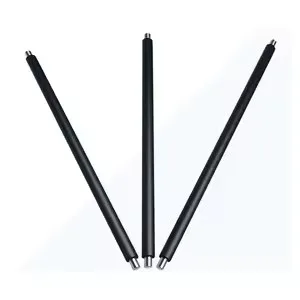
Primary charge rollers fail quietly. A Siond machine that starts throwing grey background, ghosting or uneven density at the edges rarely points a finger at the PCR first — techs chase the drum, the developer, the transfer unit, and the customer pays for two service calls instead of one. If you stock or install PCRs for Siond copier families, the buying decision is less about price per piece and more about whether the batch you receive will hold its resistance curve through 60k, 80k, 100k impressions. Get that wrong and the margin disappears in warranty labour.
Know Which Siond PCR You Are Actually Replacing
Siond's copier range spans several chassis generations, and the PCR is not interchangeable across all of them even where the drum diameter looks identical. The most common mistake we see from repair shops is ordering against a machine model name alone. A PCR specified for an older Siond monochrome engine may share the same 12mm or 16mm roller diameter as a newer unit but differ in shaft length, end-cap geometry and the conductive coating formulation. Fit a slightly short shaft and the roller walks; fit the wrong coating and you get charge leakage that shows up as background fog after a few thousand copies, not on the first page.
Pull the old roller and measure before you order. Shaft overall length, roller length, shaft diameter at the bearing seats, and the end-cap profile all matter. Photograph the roller next to a ruler and keep that image in your parts file — it saves arguments with suppliers who ship "equivalent" stock. Also note whether the machine uses a contact-charging PCR with a cleaning brush or a non-contact arrangement; the brush-side roller often has a different surface finish and a specific resistance window.
For shops servicing mixed fleets, build a cross-reference table keyed to the Siond engine family rather than the badge on the front door. OEM part numbers help, but OEM numbers get superseded, and aftermarket suppliers sometimes consolidate two OEM numbers into one SKU that fits neither perfectly. Ask your supplier which OEM numbers their SKU replaces and whether they have verified fit on the actual chassis.
What a Good PCR Batch Looks Like on the Bench
Incoming inspection is where you protect your service margin. A PCR is a coated conductive elastomer roller on a metal shaft, and the defects that matter are mostly invisible until the roller is running. Start with the obvious: roller surface should be uniform in colour and texture, with no mould parting lines, no shiny patches and no visible pinholes. Run a fingernail lightly along the surface — a good coating is consistent; a cheap one has soft spots where the conductive filler has not dispersed.
Check the shaft for straightness by rolling it across a flat surface. A shaft with even a slight bow will cause banding at a fixed interval, and the customer will blame the drum. Look at the end caps and bearings: they should seat without force and rotate freely. On Siond units with a press-fit gear or coupling, confirm the gear tooth count and pitch match the original — this is a frequent mismatch on low-cost aftermarket stock.
If you have the equipment, measure surface resistance across the length of the roller with a megohmmeter at the specified voltage. Resistance should sit inside the OEM window and stay consistent from end to end. A roller that reads high at one end will produce uneven charge and light density on that side. Shops without a megohmmeter can still catch the worst offenders by installing a sample in a known-good machine and running a halftone test chart — look for background, edge density variation and ghosting after 500 copies, not five.
- Measure shaft length, roller length and bearing-seat diameter against the original.
- Roll the shaft on a flat surface to check for bow.
- Inspect coating for pinholes, shiny patches and parting lines.
- Confirm gear or coupling tooth count and pitch.
- Run a 500-copy halftone test before accepting the batch.
Failure Symptoms That Trace Back to the PCR
Techs often misdiagnose PCR wear as drum wear. The tell is in the pattern. A worn drum usually shows a repeating defect at the drum circumference interval, and the defect moves if you rotate the drum. A failing PCR tends to produce broad background fog across the whole page, density that drops off toward one edge, or ghosting that appears at the roller circumference interval and repeats consistently. If the background clears after a few hundred copies and then returns, suspect charge leakage through a contaminated or degraded coating.
Contamination is the other common failure mode. Toner, paper dust and lubricant build up on the PCR surface, and cleaning with the wrong solvent strips the conductive coating. When a shop returns a PCR as defective, the first question should be how it was cleaned. A roller that has been wiped with alcohol or a general-purpose cleaner is not a warranty case — it is a training case. Specify a dry lint-free wipe or the manufacturer's approved cleaner, and train techs to handle the roller by the shaft ends only.
Environmental conditions also shorten PCR life. High humidity and high duty cycles accelerate coating wear, and machines running in dusty offices clog the cleaning brush faster. If a customer's Siond fleet is in a print room or a warehouse office, expect shorter PCR intervals and stock accordingly.
Sourcing: Factory-Direct vs. Distributor Stock
Repair shops buy PCRs on three channels: OEM through the authorised distributor, aftermarket through a local wholesaler, and factory-direct from a manufacturer. OEM is the safe but expensive route, and lead times can stretch when the distributor is out of stock. Local aftermarket stock is convenient but batch quality varies wildly, and you rarely know which factory produced the roller in the box. Factory-direct works when the manufacturer can show you the coating formulation, the resistance window and the fit verification — not just a photo of a roller.
Ask for batch-level data. A serious PCR supplier can tell you the target resistance range, the elastomer hardness, and which Siond engine families the SKU has been fitted to. Ask what happens on a warranty claim: replacement, credit, or a return-authorisation process that takes six weeks. Ask about packaging — rollers shipped loose in a bag arrive with flat spots and contamination. Individually sleeved rollers in a rigid tube are the baseline for anything going into a customer machine.
Pricing should be quoted per batch with a clear minimum order and a stated lead time. If you are buying for a repair shop with predictable monthly volume, negotiate a standing order with a fixed price window rather than spot-buying. That protects you from price spikes and gives the factory an incentive to hold your specification.
Where CLONER Fits
CLONER manufactures PCRs and copier consumables factory-direct, and we build Siond-compatible rollers to spec rather than to a catalogue photo. Our OEM/ODM line lets repair shops and distributors specify shaft length, coating resistance window and end-cap geometry for the exact Siond engine families they service, with batch-level inspection data and individually sleeved packaging. If you are tired of returns that trace back to a batch you never should have received, send us the OEM number and a photo of the original roller — we will confirm fit and quote a factory-direct batch with a lead time you can plan around.
Need a quote or samples from CLONER?
Factory-direct OEM/ODM supplier of compatible printer consumables & spare parts. Tell us your models — reply within 24h.


