
Compatible Ricoh Drum Units: Specs, Inspection, and Sourcing That Hold Up
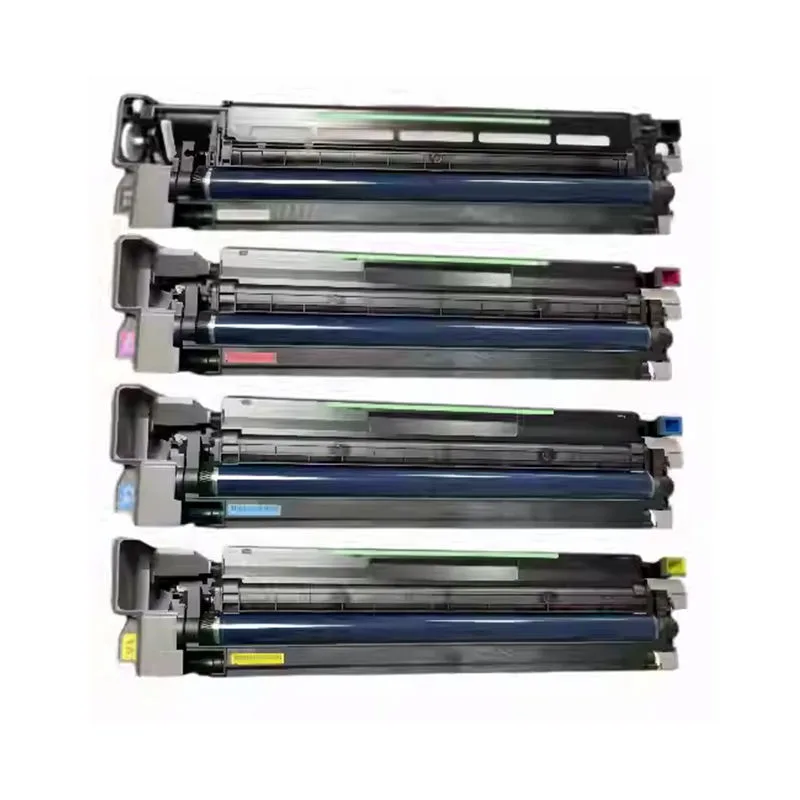
A compatible drum unit for Ricoh is one of the few consumables where a 4% price difference can cost you a 30% return rate. Buyers who treat these units as a commodity usually learn that lesson on the MP 2001 or IM C3000 accounts they can least afford to lose. The variables that matter are not printed on the box: OPC coating batch, doctor blade tension, charge roller resistance, and whether the housing seals were cut for the Asian or European humidity band. Get those right and a compatible unit will run its full 60–120k cycle. Get them wrong and you will be explaining streaks to a repair shop in Rotterdam.
Know Which Ricoh Drum Family You Are Buying
Ricoh's drum architecture splits into three groups that buyers routinely confuse. The mono MP series (MP 2001, 2352, 2852, 3352, 4054, 5054) uses a compact drum-and-developer assembly where the drum unit is often sold with the developer unit attached; the drum alone is a coated aluminium cylinder with integrated flanges. The IM series (IM C2000 through C6000, IM 2500/3000/3500/4000/5000/6000) moved to a longer-life drum with revised charge roller geometry and tighter tolerances on the cleaning blade. Then there is the legacy Aficio line, where MP C2800/C3300 colour units are still moving in volume through secondary markets in Southeast Asia and Latin America.
Ask your supplier to quote by Ricoh part number, not by machine name. The same MP 301SPF can take two different drum configurations depending on production batch, and a supplier who quotes only "MP 301 drum" is either guessing or hiding a one-size-fits-all SKU. A serious factory will send you the cross-reference sheet showing OEM part number, machine coverage, yield at 5% coverage, and the OPC maker (Mitsubishi, Fuji, or a licensed Chinese coater). That last data point alone tells you whether the unit belongs in a repair shop's van or a discount e-commerce listing.
Colour machines deserve separate scrutiny. Ricoh IM C-series drums are colour-specific in the housing — the yellow and magenta units are not interchangeable with black even where the cylinder looks identical. Suppliers who ship "universal colour drum kits" are selling you a returns problem. Insist on colour-coded housings and separate SKUs.
What to Inspect Before You Accept a Container
Incoming inspection on Ricoh compatible drums should take under ten minutes per carton and catch 90% of failures. Start with the OPC surface under a bright LED at a shallow angle: any haze, mottling, or visible coating line means the batch was coated in the wrong humidity or the cylinder was stored above 35°C. Run a fingernail lightly across the coating near the flange — it should feel slick and uniform, not chalky. Chalky coating equals early background fogging on the print.
Then check the mechanicals. Spin the drum by hand; it should rotate with light, even resistance and no click or catch. A catch usually means a deformed flange or a bearing pressed in at the wrong depth, and it will show up as banding within 5,000 pages. Look at the cleaning blade edge under magnification — a wavy or nicked edge will leave toner trails on the trailing edge of the page. Finally, check the charge roller for flat spots and confirm the contact springs are seated; a loose spring causes random light print that technicians blame on the machine, not the drum.
- OPC surface: no haze, mottling, or coating lines under angled LED light
- Rotation: even resistance, no click or catch through a full turn
- Cleaning blade: straight edge, no nicks or waves under 10x magnification
- Charge roller: no flat spots, springs seated and contacting
- Housing seals: intact, correct foam density for your humidity band
Print-test at least three units per batch on the actual machine family you are supplying. A 5% coverage page and a 50% halftone will expose banding, fogging, and background within 200 pages. Keep the test sheets; they are your evidence when a customer claims a batch failure.
Yield Claims, OPC Grade, and the Real Cost per Page
Ricoh's OEM yield figures for MP and IM drums are quoted at 5% coverage with a specific toner and a specific paper. Compatible suppliers who quote 100k pages on an MP 3352 drum are usually quoting the OEM number, not their own test result. Ask for the actual test protocol: which toner, which paper, which coverage, and how many units were tested. A factory that runs 30-unit batches on its own machines will give you a yield band (for example 85–95k) rather than a single hero number. Trust the band.
OPC grade is the hidden cost driver. A premium Mitsubishi-coated cylinder costs roughly 30–40% more than a domestic Chinese coating, but it delivers a flatter yield curve and far fewer mid-life failures. For repair shops doing contract maintenance, the premium grade is almost always the cheaper choice per page. For discount e-commerce sellers moving volume with no service contract, a mid-grade cylinder with honest 60k yield is a defensible product. The mistake is buying mid-grade at premium prices, or premium at mid-grade and discovering the substitution in month three.
Watch the developer unit interface on mono MP machines. When the drum and developer are sold as one assembly, the developer powder grade and the magnetic roller gap determine half the print quality. Suppliers who buy in developer powder from a different source than their drum coating often produce units that print well initially and then darken or lighten as the developer depletes. Ask whether the developer is filled in-house and to what tolerance.
Sourcing: Factory-Direct Versus Trading-Company Supply
Most compatible Ricoh drum units on the market pass through at least one trading layer. That layer adds 8–15% to your landed cost and, more importantly, breaks the traceability chain. When a batch of IM C3000 drums starts fogging in the field, a trading company cannot tell you which OPC coater ran the cylinder or which shift assembled the housing. A factory-direct supplier can pull the production record, isolate the batch, and either replace or credit without a three-week argument.
CLONER manufactures Ricoh-compatible drum units in-house, including OPC coating, housing moulding, blade and charge roller assembly, and developer filling for the mono assemblies. That vertical control is what makes OEM/ODM work practical: we run private-label housings, custom packaging, and machine-specific SKUs for distributors who need their own brand on the box without owning a coating line. For buyers moving 500+ units per quarter, an ODM programme with your part numbering and your inspection standard is usually cheaper than buying neutral stock and re-labelling it in a warehouse.
Order terms matter as much as unit price on this product. Confirm the yield band in writing, agree a defect allowance (2% is standard for compatible drums, 1% for premium OPC), and specify the humidity band for your destination market. Ask for the OPC coater name and the assembly line location on the spec sheet. Suppliers who hesitate on those two questions are telling you something useful.
If you are building a Ricoh consumables line for 2025, start with the two or three drum families that dominate your region's installed base, run a 30-unit field trial against your current source, and compare cost per page at the 80% yield point rather than the headline number. CLONER ships factory-direct Ricoh-compatible drum units and runs OEM/ODM programmes with your branding, your part numbers, and your inspection criteria — send us your top three Ricoh SKUs and we will quote against your current landed cost with the OPC grade and yield band stated up front.
Need a quote or samples from CLONER?
Factory-direct OEM/ODM supplier of compatible printer consumables & spare parts. Tell us your models — reply within 24h.


