
High Stability Pickup Roller for Sharp Copiers: Wholesale Buying and Inspection Guide
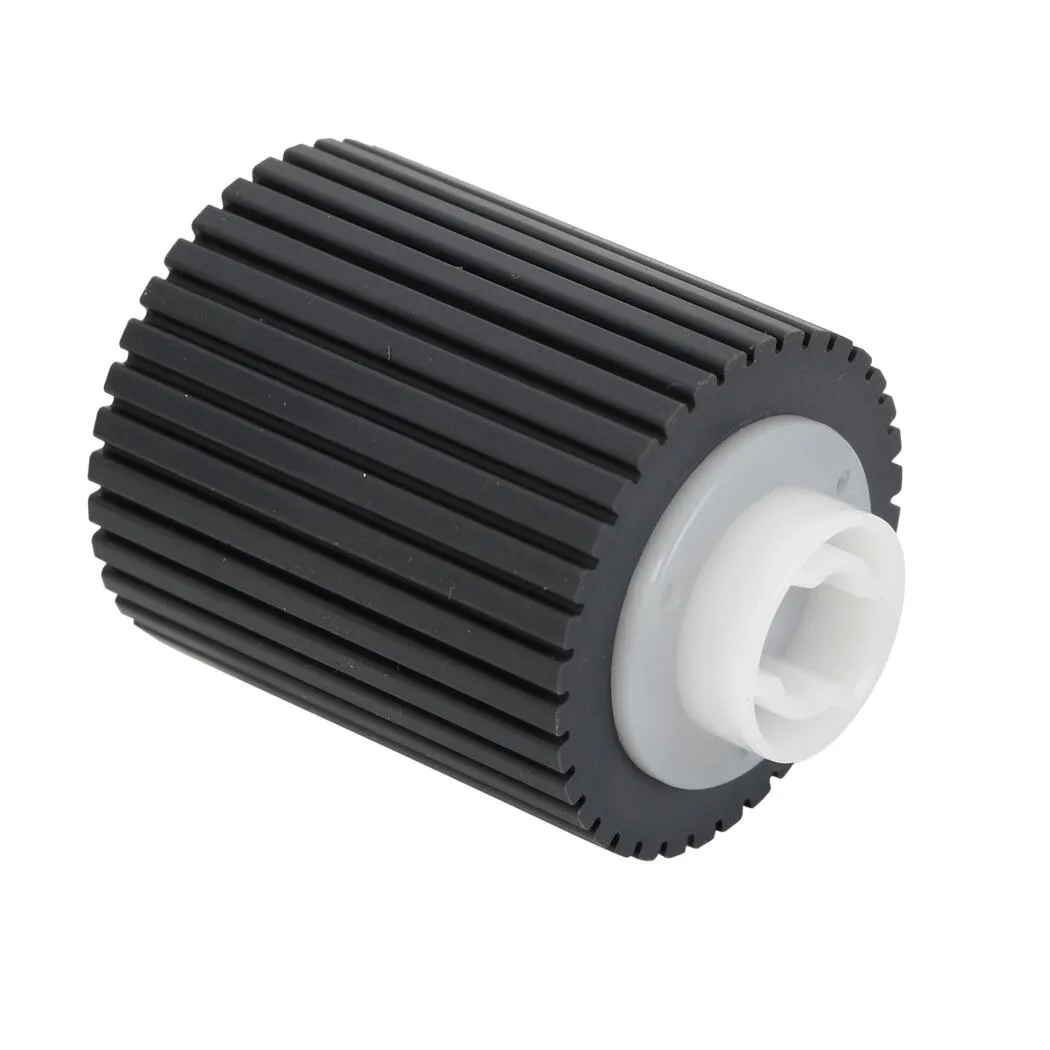
Sharp's paper feed path punishes cheap rubber. A pickup roller that looks right on the bench can start slipping at 40,000 feeds on an MX-3050 or MX-4070, and the customer blames your part, not their paper. Wholesale buyers who get this component right keep their repair-shop accounts; buyers who chase the lowest unit price spend the margin on replacements and freight. This guide covers what actually matters when sourcing high stability pickup rollers for Sharp machines.
Know which Sharp feed family you are buying for
Sharp's copier and MFP range splits into several feed architectures, and the pickup roller is not interchangeable across them. The MX-M and MX-B monochrome families use a compact roller on a one-way clutch hub, while the MX-C colour series and the older AR/AL ranges use wider rollers with different shaft diameters and mounting clips. A roller that fits an MX-2640 will not seat correctly on an MX-4140 tray, and forcing it wears the clutch spring.
Build your SKU list around the actual Sharp part numbers your customers request, then map each to the machine families it serves. Repair shops order by symptom and model, not by catalogue code, so your sales sheet should show "fits MX-3050/3550/4050 tray 1 and 2" alongside the OEM reference. That single detail cuts wrong-part orders more than any discount.
Watch the duplex and large-capacity tray variants too. Sharp's high-capacity feeders put higher torque through the pickup roller, and a standard-grade compound that survives the main cassette will glaze early in an LCC. If your accounts service law firms and print rooms, stock the reinforced version separately.
What separates a stable roller from a short-life one
The compound is the whole game. Sharp's original rollers use a filled EPDM-type rubber chosen for consistent friction across humidity swings. Low-cost replacements often use un-filled NBR or recycled rubber that grips well when new and turns shiny within a few thousand feeds. The symptom is unmistakable: misfeeds and multifeeds that start on humid mornings and disappear after the roller is cleaned.
Hardness matters as much as the recipe. A roller measuring around 60–70 Shore A on the surface gives reliable pick without marking paper, but the core must stay rigid so the roller does not deflect under the clutch. Check that the hub is moulded around the shaft, not glued, and that the one-way clutch rotates freely in one direction and locks in the other. A sticky clutch causes skew that technicians misdiagnose as a registration problem.
Surface finish is the third tell. A good pickup roller has a fine, even texture across the full contact width, with no mould flash line running around the circumference. Flash lines create a low-friction band that shows up as intermittent jams at a specific point in the feed cycle, which is exactly the kind of fault that generates warranty claims.
Incoming inspection that catches bad batches
Do not rely on a visual check at goods-in. Pull a sample from each carton and run a short bench test: measure durometer at three points, confirm the clutch direction, and roll the roller across a sheet of 80 gsm paper to feel for flat spots or high points. A roller that wobbles on a flat surface will wobble in the machine.
For volume buyers, keep a small feed-test rig or a retired Sharp chassis in the warehouse. Running 500 sheets through a sample tray tells you more about pick reliability than any spec sheet. Log the batch code against the result so you can trace a complaint back to a production run.
- Check durometer at both ends and the centre of the roller
- Verify one-way clutch locks and freewheels correctly
- Inspect for mould flash and uneven texture
- Confirm shaft diameter and clip fit against the OEM sample
- Record batch code and feed-test result
Stocking and pricing strategy for wholesale accounts
Pickup rollers are a fast-turn consumable, so depth beats breadth. Carry the two or three Sharp families that dominate your region's installed base, and keep enough units to fill a repair shop's monthly draw without backorders. Shops that service mixed fleets will forgive a missing exotic SKU; they will not forgive a roller that fails in the field.
Price on reliability, not on the cheapest landed cost. A roller that lasts twice as long at a 30% higher unit price is the easier sell to a distributor who tracks callback rates. Bundle pickup, feed and separation rollers as a tray-refresh kit for the most common Sharp models, and quote the kit rather than the single part. Kits raise average order value and reduce the mismatched-roller problem.
Keep packaging honest. Individually bagged rollers with a batch label and a model-fit sticker cost little and make your brand look like a serious supplier. Loose rollers in a poly bag read as surplus stock, and buyers price them accordingly.
Why factory-direct sourcing changes the equation
CLONER manufactures pickup rollers and feed components in-house, which means you are buying from the line that controls the compound, the mould and the clutch assembly rather than from a trader marking up someone else's carton. That control is what makes a high stability roller repeatable batch to batch, and it lets us hold durometer and clutch torque within tight tolerances on every Sharp-compatible run.
For importers and distributors, our OEM/ODM service covers private-label packaging, custom batch coding and model-fit documentation, so your Sharp pickup roller line carries your brand and your part references. We can quote mixed containers across Sharp, Ricoh, Canon and Konica Minolta feed parts to consolidate your freight. Send your target Sharp model list and annual volumes, and we will come back with sample rollers, inspection data and factory-direct pricing.
Need a quote or samples from CLONER?
Factory-direct OEM/ODM supplier of compatible printer consumables & spare parts. Tell us your models — reply within 24h.


