
LED Unit for OKI: Compatibility, Page Yield and Sourcing Tips
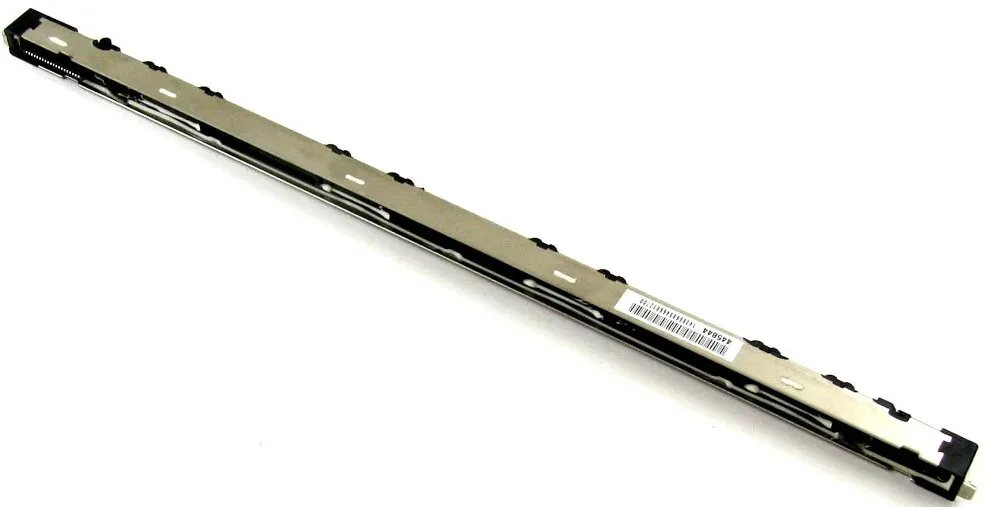
Most OKI machines do not use a laser/scanner unit at all. They use an LED print head, a long array of light-emitting elements pressed close to the drum, and that changes everything about how you buy the part. Get the compatibility wrong and the unit will physically fit but print with banding or a hard vertical line. Buy on price alone and you inherit a batch that fails inside 20,000 pages. The three things that matter are exact model mapping, realistic yield expectations, and a supplier who controls the LED array rather than reselling whatever is on the shelf.
Compatibility: Match the Part Number, Not the Series Name
OKI reuses chassis across several badges, and the LED head is often the one component that differs between them. A C332 head is not a C332dn head in every revision, and the MC300 series shares bodywork with the C300 without sharing the print head. The safe method is to work from the machine's own identity: pull the configuration page, note the exact model suffix and the firmware level, then cross-reference the LED unit part number printed on the head's bracket. That bracket label is the only reference that survives a refurbished or re-badged machine.
Watch the colour machines closely. Four-LED assemblies for C500-series and MC500-series bodies are frequently listed as interchangeable by marketplace sellers, and they are not — the mounting rail offset and the connector keying differ. On the mono side, B400/B401/B412 units look near-identical across the family, but the later revisions changed the lens geometry to suit a different drum coating. Fitting an early head to a late drum shows up as faint horizontal banding that techs often blame on the drum.
For repair shops holding mixed fleet stock, keep a small compatibility matrix on the bench rather than trusting the box. The practical checkpoints before you order:
- Exact model suffix from the config page, not the front badge
- Part number on the LED head bracket, cross-checked against the service manual
- Connector pin count and keying position
- Mounting rail offset and screw hole spacing
- Firmware level, since some later revisions require a matched head
Page Yield: What the LED Unit Actually Delivers
OKI rates LED heads by machine life, not by consumable cycles, and the honest working figure for a genuine-quality unit is the life of the printer body — typically 60,000 to 100,000 pages on the small A4 colour chassis and considerably more on the A3 workgroup models. That number assumes clean power, correct drum grounding and a machine that is not running third-party toner with poor charge control. In the field, most LED heads are replaced not because the array wears out but because contamination, heat or a power event kills a segment.
Yield claims on low-cost aftermarket heads deserve scepticism. An LED array that loses brightness uniformity early will still print, but density falls off across the page and customers complain about "faded copies" long before the head dies outright. Ask suppliers for the array's rated output and uniformity tolerance rather than a single page count. A head that holds density across the full width for 80,000 pages is worth more than one claiming 150,000 that bands at 30,000.
The failure pattern tells you whether yield was ever realistic. Vertical white lines, a hard thin stripe down one side, or a repeating mark at drum pitch all point to a specific segment or lens failure. Gradual overall lightening with no sharp line is usually contamination on the lens window and can often be cleaned rather than replaced. Knowing the difference protects your margin and your customer relationship.
Inspection: What Separates a Good Unit from Dead Stock
LED heads are fragile in ways that do not show in a photo. The lens window is the first inspection point — hold it to a light at an angle and look for haze, scratches or dried cleaner residue. A hazy window prints light; a scratched one prints a permanent line. Next, check the array housing for warp. Units stored badly in humid warehouses can bow slightly, and a bowed head never sits at the correct drum gap, which produces banding that no amount of cleaning fixes.
Then test electrically. A quick bench check with a known-good machine confirms every segment fires and density is even across the page. For volume buyers, ask for a sample from the actual production batch, not a golden sample kept aside for approval. Connector condition matters too: bent pins or a cracked latch cause intermittent dropouts that mimic a board fault and waste hours of technician time. Packaging is part of the inspection — an LED head shipped in a thin bag with no rigid tray will arrive out of alignment even if it left the factory perfect.
Sourcing: Factory-Direct Beats Marketplace Roulette
The aftermarket for OKI LED units is full of relabelled stock with no traceable origin, and the failure rate shows it. Buying factory-direct changes the economics because you are dealing with the party that controls the LED array, the lens moulding and the final alignment test. That means batch traceability, consistent specification between orders, and a route to fix a problem instead of a marketplace dispute. For importers and distributors, consistency between shipments matters more than the price on the first order.
Ask any supplier three questions: which array they use, how they test uniformity, and what their DOA policy is on a full carton. A manufacturer with real OEM/ODM capability will answer all three specifically and can build units to your own labelling and packaging. That capability also lets you specify the revisions your market actually needs, rather than accepting whatever is in stock. CLONER manufactures LED units for OKI and the wider copier range in-house, supplies factory-direct with OEM/ODM options for private-label programmes, and tests every unit for segment function and density uniformity before it ships — so your next carton matches the last one.
Need a quote or samples from CLONER?
Factory-direct OEM/ODM supplier of compatible printer consumables & spare parts. Tell us your models — reply within 24h.


