
OEM vs Compatible Charge Roller for OKI: A Distributor's Buying Guide
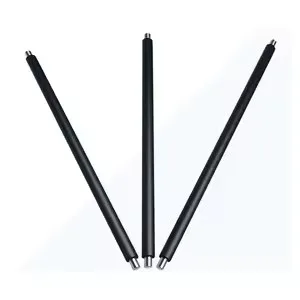
Every OKI distributor eventually faces the same question from a repair shop: "Should I use the OEM charge roller or a compatible?" The answer isn't as simple as OEM good, compatible bad. It depends on the printer model, the shop's volume, and what your customer is willing to pay. Get it wrong, and you'll be dealing with returns, bad reviews, or worse—a damaged printer. Get it right, and you build a loyal customer base that trusts your recommendations.
What a Charge Roller Actually Does in an OKI Printer
The charge roller is a critical component in the image drum unit. It applies a uniform negative charge to the drum surface before the LED print head exposes the image. If the charge roller is worn or contaminated, you'll see print defects: dark background, ghosting, or streaks. In OKI's LED-based printers—like the C300/C500 series, MC800 series, and the popular C800/C900—the charge roller is often integrated into the drum cartridge, but on some models it's a separate replacement part. Knowing which models use which design is the first step in stocking the right inventory.
OEM charge rollers are manufactured to exact specifications: specific rubber hardness, surface roughness, and electrical properties. Compatible rollers aim to match those specs, but quality varies wildly. A cheap roller might use inferior rubber that hardens quickly or a conductive coating that doesn't hold charge consistently. That's why some compatible rollers fail after a few thousand pages while others last nearly as long as OEM.
Performance and Reliability: Where Compatible Rollers Win and Lose
High-quality compatible charge rollers from reputable factories—like CLONER—are engineered to match OEM specs. We use the same grade of conductive rubber and test each batch for charge stability and wear resistance. In field tests, our OKI-compatible charge rollers consistently achieve 80-90% of OEM page yield, which is more than enough for most office environments. The key is consistency: a good compatible roller should perform predictably across the entire batch.
Where compatible rollers can fall short is in extreme conditions. High-humidity environments or high-volume printing (over 10,000 pages per month) can expose weaknesses in cheaper rollers. If your customers are in tropical climates or run their printers hard, you might want to steer them toward OEM or our premium compatible line, which uses a higher-grade rubber compound. We're transparent about the differences because we'd rather you upsell the right part than deal with a return.
Another factor is the drum unit design. Some OKI models have tight tolerances, and a slightly off-spec roller can cause noise or premature drum wear. That's why we reverse-engineer each roller from the OEM part and validate it in actual OKI drum units before shipping. It's not just about the roller itself; it's about how it interacts with the drum and the printer's charging system.
Cost Analysis: The Real Math for Distributors
OEM charge rollers typically cost 2-3 times more than compatible ones. For a repair shop, that price difference can be the margin between winning and losing a job. But the total cost of ownership matters more than the unit price. If a compatible roller fails early, the shop loses labor time and credibility. That's why we recommend distributors stock both: OEM for warranty work and high-end clients, and compatible for price-sensitive customers who understand the trade-off.
Volume buyers—like office-equipment distributors—can negotiate better pricing on compatible rollers, especially when ordering in bulk. We offer factory-direct pricing with no middleman markup, so you can maintain healthy margins even if you sell at competitive prices. And because we manufacture in-house, we can customize packaging and labeling for your brand, which helps you build your own reputation rather than just pushing OEM parts.
Inspection Checklist: What to Look for in a Compatible Charge Roller
Not all compatible rollers are created equal. When evaluating a new supplier, ask for samples and inspect them closely. Here's what we recommend checking:
- Surface finish: The roller should be smooth and free of bumps, pits, or mold lines. Run your finger along it—any roughness will cause uneven charging.
- Hardness: Use a durometer to check Shore A hardness. It should match the OEM spec (typically 60-70 Shore A for OKI rollers). Too soft and it'll flatten; too hard and it won't make proper contact.
- Conductivity: Measure resistance with a megohmmeter. It should be within the OEM range (usually 10^6 to 10^8 ohms). Inconsistent resistance leads to print defects.
- Shaft and bearings: The shaft should be straight and the bearings should rotate smoothly without play. Cheap rollers often skimp on bearing quality.
- Packaging: Proper packaging prevents contamination and damage during shipping. Look for individual bagging and sturdy boxes.
We also recommend testing a sample in an actual printer. Print a test pattern and check for background, ghosting, and uniformity. A good roller will produce clean prints from the first page.
Supply Chain and Customization: Why Factory-Direct Matters
When you buy from a trading company, you're at the mercy of their inventory and quality control. When you buy factory-direct from CLONER, you get direct access to our production line. That means faster lead times, consistent quality, and the ability to customize. We can produce charge rollers with your logo on the packaging, adjust the rubber compound for specific environments, or even develop a new roller for an obscure OKI model if there's enough demand.
We also understand the pressures of the aftermarket. That's why we keep a steady inventory of popular OKI charge rollers and offer flexible MOQs. Whether you need a few hundred for a trial or thousands for a national rollout, we can accommodate. And because we're the manufacturer, we can troubleshoot issues quickly—no passing the buck to a third party.
For distributors looking to build a private-label line, our OEM/ODM services are a natural fit. We'll work with you on everything from roller specifications to packaging design, so you can offer a product that meets your market's needs and your brand's standards.
Ready to evaluate our OKI-compatible charge rollers? Request a sample kit and see the difference for yourself. We'll include a free inspection guide and a list of compatible models so you can start testing immediately.
Need a quote or samples from CLONER?
Factory-direct OEM/ODM supplier of compatible printer consumables & spare parts. Tell us your models — reply within 24h.


