
PCR for Ricoh: Compatibility, Page Yield, and Sourcing Tips
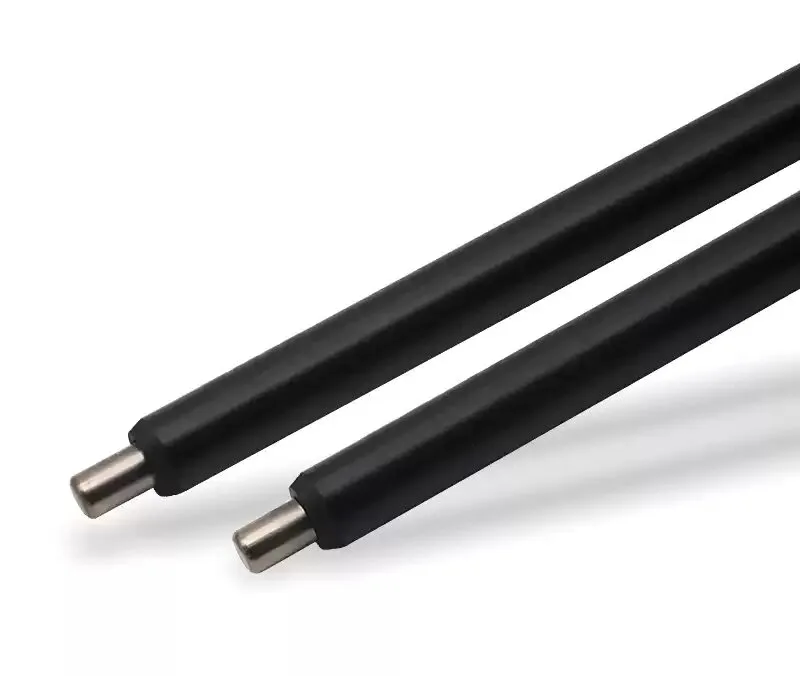
Primary charge rollers (PCRs) are the quiet workhorses of Ricoh's imaging systems, and they fail in ways that are easy to misdiagnose. A single PCR with inconsistent resistance can cause backgrounding, ghosting, or repetitive marks that send technicians chasing the drum or developer. For buyers sourcing PCRs for Ricoh machines, the real challenge is matching the part to the exact model family, verifying that page yield claims hold up in the field, and choosing a supplier whose quality control catches problems before the container ships.
Compatibility: More Than Just a Model Number
Ricoh's PCR part numbers often span multiple generations, but that doesn't mean every compatible roller is created equal. Take the Ricoh MP 2014 series: its PCR shares a part number with the MP 2001, yet the charge roller's resistance profile differs slightly because of changes in the drum coating. Install the wrong variant and you'll see faint backgrounding after 10k pages—a defect that won't show up in a quick test print. The same holds for the MP 2501/3001/3501 family, where aftermarket PCRs sometimes use a lower-grade conductive layer that degrades faster under high humidity.
Always cross-reference by machine family, not just part number. For Ricoh Aficio MP C3003/C3503/C4503/C5503 color machines, the PCR is shared across the line, but the color and black units have different bias voltages. A PCR that works fine in the black station may cause color shift in the cyan station if its resistance tolerance is too wide. Ask your supplier for the resistance specification and compare it to the OEM service manual. CLONER maintains a compatibility matrix that maps each PCR to the exact Ricoh models and stations it serves, so you can avoid the guesswork.
Watch for subtle physical differences too: shaft length, gear position, and the type of contact spring. A PCR that fits mechanically but has a shorter shaft can cause poor electrical contact, leading to intermittent charging faults. When evaluating a new supplier, request samples for the specific models you service most—MP 3010, MP 4002, and the newer IM series—and run them side by side with OEM parts for at least 20k pages.
Page Yield: What the Spec Sheet Won't Tell You
Most PCR suppliers quote a page yield based on a standard test under controlled conditions: 20°C, 50% RH, 5% coverage. Real-world offices are rarely that kind. In dry environments, a PCR with a high-resistance coating can cause image ghosting after 30k pages; in humid climates, low-resistance rollers may leak charge and produce backgrounding. The yield number on the box is a starting point, not a guarantee. For Ricoh machines, the OEM yield for a PCR is typically 120k pages for mono models and 80k for color, but aftermarket rollers often fall short by 20–30% if the conductive layer isn't formulated correctly.
Ask for the test protocol behind any yield claim. A supplier that tests at 10% coverage and 30% RH is not giving you a realistic figure. Better yet, request field data from a customer in a similar climate. CLONER's PCRs are tested at 23°C and 50% RH with 5% coverage, and we also run accelerated life tests at 35°C/80% RH to simulate Southeast Asia and the Middle East. That data is available to buyers who need to validate performance before committing to volume.
Another factor: the drum and developer interact with the PCR. A high-yield PCR paired with a worn drum will still fail early. When you sell a PCR, remind your customers to inspect the drum and developer unit—especially on Ricoh models where the PCR is part of a maintenance kit. Offering a complete kit (PCR, drum, developer) can reduce comebacks and increase average order value.
Inspection: What to Check Before You Buy
Incoming inspection of PCRs is often limited to a visual check, but that misses the most common defects. Here's a short checklist for your QC team:
- Measure the outer diameter at three points along the roller; variance should be within ±0.05 mm.
- Check the surface for pinholes or uneven coating using a magnifier under bright light.
- Verify the shaft end play—excessive movement indicates poor bearing fit.
- Test resistance with a megohmmeter at the specified voltage and compare to the datasheet.
- Run a print test on a known-good machine for 500 pages and inspect for backgrounding or ghosting.
These steps catch 90% of problems. For deeper validation, ask your supplier for a batch consistency report. CLONER provides a QC report with every shipment, including resistance values, dimensional checks, and a print sample from the production lot. That level of documentation is rare in the aftermarket, but it's standard for factory-direct orders.
Don't overlook packaging. PCRs are sensitive to light and dust; a roller shipped in a simple plastic bag may arrive with surface contamination. Look for individually bagged rollers with protective caps, packed in anti-static foam. If you're buying in bulk, ask for the inner box to be sealed and labeled with the production date and batch number—this helps with traceability if a problem arises later.
Sourcing Strategy: Beyond the Lowest Quote
Price is the easiest thing to compare and the least reliable indicator of value. A PCR that costs 10% less but fails 5% more often will cost you more in returns, labor, and reputation. When evaluating suppliers, ask about their manufacturing process: are they using a continuous coating line or a batch process? Continuous coating gives more consistent resistance, while batch processes can vary from lot to lot. Also ask about the conductive layer material—some use carbon black, others use ionic conductors. Carbon black is more durable but harder to control; ionic is cheaper but more humidity-sensitive.
Lead times matter too. Ricoh PCRs are not seasonal, but demand spikes when a new machine series launches or when a major distributor runs a promotion. A supplier with in-house production can adjust faster than one that outsources. CLONER manufactures PCRs in our own factory, so we control the schedule and can offer OEM/ODM services—custom packaging, private labeling, and even custom resistance profiles for specific markets. That flexibility is valuable if you serve multiple regions with different climate conditions.
Finally, consider the total cost of ownership. A slightly higher-priced PCR with a 10% longer life reduces service calls and keeps your customers loyal. We've seen buyers switch to a cheaper supplier only to return after a year of high failure rates. The smart play is to qualify two suppliers: one for volume, one for backup, and audit them annually.
Partnering with a Factory-Direct Manufacturer
CLONER supplies PCRs for Ricoh and other major brands from our own production lines, with full OEM/ODM capability. That means you can order standard parts with fast lead times or develop a custom PCR for a niche model—complete with your branding and packaging. Every shipment includes a QC report, and our technical team can help you match the right PCR to each Ricoh model you service. If you're tired of inconsistent quality and vague yield claims, request a sample kit and test our PCRs against your current stock. We'll let the rollers speak for themselves.
Need a quote or samples from CLONER?
Factory-direct OEM/ODM supplier of compatible printer consumables & spare parts. Tell us your models — reply within 24h.


