
Waste Toner Cartridge for Konica Minolta: Compatibility, Page Yield, and Sourcing Tips
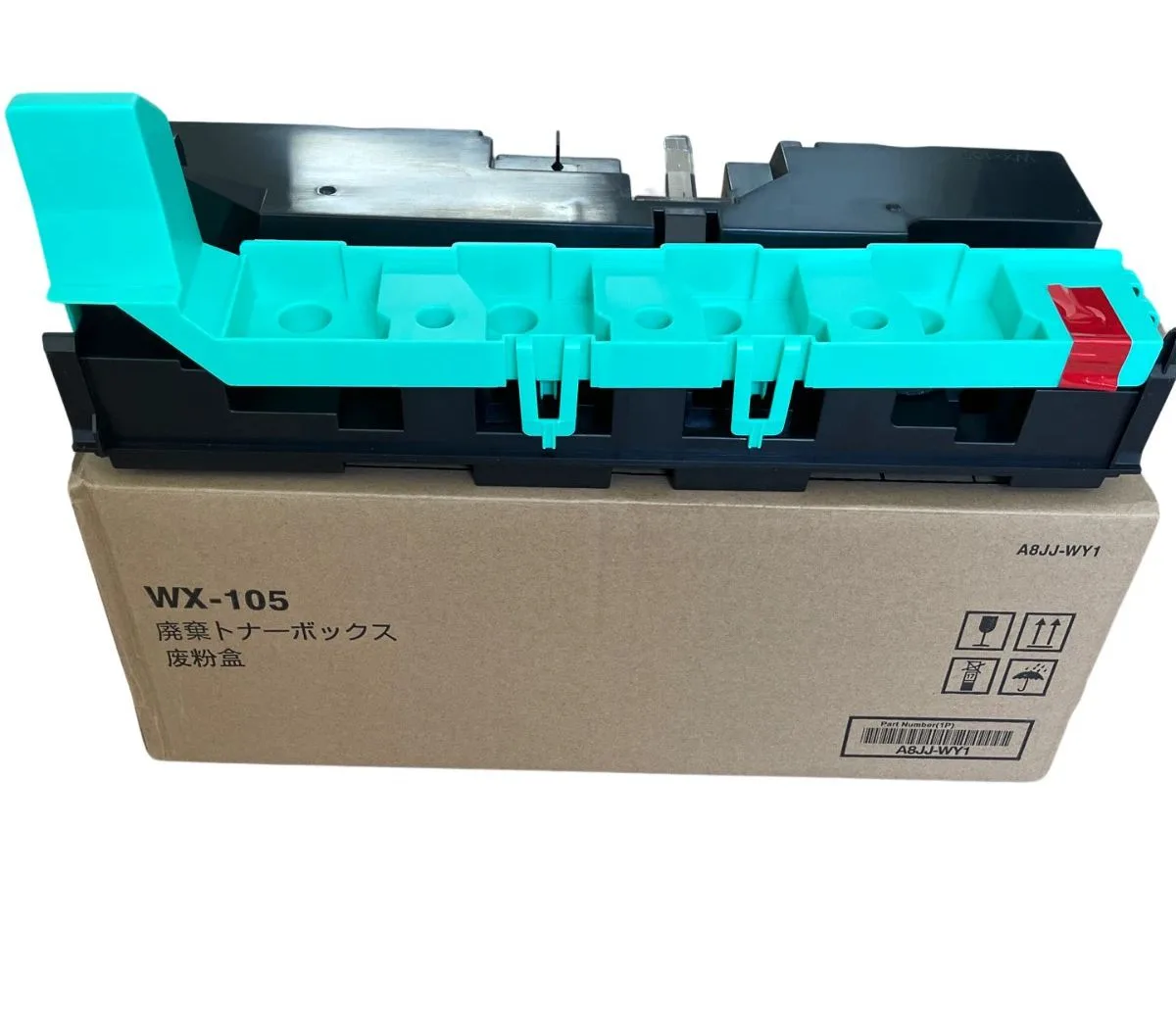
Waste toner cartridges rarely top the sourcing priority list, but a mismatch here leads to toner spills, sensor errors, and service calls that erode margins. Konica Minolta's bizhub range dominates offices worldwide, and the waste toner tank is a regularly replaced part that buyers often overlook. This guide delivers practical details to buy smart, inspect thoroughly, and source reliably.
Compatibility: More Than Just the Model Number
Konica Minolta waste toner cartridges are not one-size-fits-all. The bizhub C227, C287, C368, C458, and C558 series each use specific tank designs, and revisions occur within series. For instance, the tank for the bizhub C224e/C284e/C364e differs physically from the one in the C258/C308/C368. Cross-reference the part number—typically A1DUWY1 or A161WY1—against the machine's service manual. Don't rely on the model name alone; check the serial number range if possible.
Genuine Konica Minolta tanks include a chip that communicates with the machine to reset the waste ink counter. Aftermarket tanks may lack this chip, causing the machine to keep prompting for replacement even after installation. Some suppliers offer tanks with a reusable chip or reset tool, but that adds complexity. If you're buying for resale, know whether your customers expect plug-and-play or are comfortable with workarounds. CLONER supplies waste ink tanks with compatible chips for major Konica Minolta models, ensuring straightforward installation.
Physical fit matters: mounting tabs, outlet ports, and sealing gaskets must match exactly. A tank that's slightly off can cause toner leakage or improper seating, triggering error codes like C-2801 or C-2803. Always verify the tank's shape and connector layout against the original before committing to a bulk order.
Page Yield: What to Expect and How to Evaluate It
Konica Minolta doesn't publish a page yield for waste ink tanks—it's not a consumable that prints pages. Instead, the tank fills based on toner usage, which varies with print coverage, job types, and maintenance cycles. As a rule of thumb, a waste toner cartridge in a busy office machine might need replacement every 100,000 to 200,000 pages, but that's a rough estimate. High-coverage printing or frequent cleaning cycles can shorten that significantly.
Aftermarket tanks often claim a capacity in milliliters, but actual usable volume depends on internal design. Some tanks use a sponge or absorbent material that varies in density; a lower-density sponge may not hold as much ink before the sensor triggers. When evaluating a supplier, ask for the tank's nominal capacity and whether it's been tested for overflow resistance. A tank that leaks or overfills can damage the printer's interior, leading to costly repairs.
For resellers, set realistic expectations with end customers. Explain that waste ink yield is usage-dependent and that the tank should be replaced when the machine prompts, not on a fixed schedule. Offering a tank with slightly higher capacity can be a selling point, but only if quality holds. CLONER's waste ink tanks are designed to match OEM capacity and are tested for seal integrity and chip compatibility, so you can confidently quote them.
Inspection Points: What to Check Before You Buy
Whether evaluating a sample or a container load, a few key checks can save you from a bad batch. Start with the chip: does it communicate correctly with the machine? Install the tank in a test unit and confirm the waste ink counter resets and no error codes appear. Next, inspect the sealing gaskets and outlet port—any sign of flashing, uneven molding, or weak rubber compound can lead to leaks. Look at the tank body for cracks or warping; poor molding often shows as thin walls or misaligned tabs.
Check the absorbent material if visible. It should be evenly distributed and free of debris. Weigh a few tanks from the same batch—significant variation might indicate inconsistent fill or sponge density. Also, verify the packaging: tanks should be individually bagged to prevent contamination, and boxes should be sturdy enough for international shipping. If you're buying OEM/ODM, ask for test reports and batch consistency records.
- Chip functionality and reset capability
- Gasket and seal integrity
- Molding quality and dimensional accuracy
- Absorbent material consistency
- Packaging and labeling accuracy
These checks are quick and can be done on a sample basis. Don't skip them, especially when trying a new supplier. A few minutes of inspection can prevent a container of returns.
Sourcing Tips: Finding a Reliable Supplier
The market for Konica Minolta waste toner cartridges is crowded, with quality ranging from excellent to unusable. Start by asking potential suppliers about their manufacturing process: do they injection-mold the tanks in-house, or do they source from third parties? In-house molding typically means better control over tolerances and materials. Ask about chip programming—do they program chips themselves or buy pre-programmed ones? The former usually indicates deeper technical capability.
Request samples from multiple suppliers and test them under real conditions. A tank that works fine for a few hundred pages might fail later if the chip loses communication or the seal degrades. Check references from other buyers in your region; word-of-mouth is still the best indicator. Also, clarify the warranty and return policy. A supplier confident in their product will offer a reasonable warranty period and stand behind it.
Consider the total cost, not just the unit price. A cheaper tank that causes service calls or customer complaints will cost you more in the long run. Look for suppliers who provide technical support and can answer questions about compatibility and installation. If you're a distributor, you want a partner who can grow with you and offer OEM/ODM services for your own brand.
Why CLONER Fits Your Waste Ink Sourcing Strategy
CLONER manufactures waste ink tanks and other consumables for Konica Minolta and other major brands at our factory in China. We control the entire process—from mold design and chip programming to assembly and testing—so we can ensure consistent quality and competitive pricing. Our tanks are designed to meet or exceed OEM specifications, with compatible chips that reset the waste ink counter reliably. For distributors and repair shops, we offer flexible order quantities and fast turnaround.
We also provide OEM/ODM services: if you want to private-label waste toner cartridges under your own brand, we can customize packaging, labels, and even the tank design to your requirements. Our engineering team can work with you on chip solutions and capacity adjustments. With years of experience serving B2B buyers worldwide, we understand the importance of reliability and after-sales support. Contact us to discuss your needs and request samples.
Need a quote or samples from CLONER?
Factory-direct OEM/ODM supplier of compatible printer consumables & spare parts. Tell us your models — reply within 24h.


