Bulk Sourcing Sharp Drum Units: MOQ, Lead Time & QC Tips for Wholesale Buyers
If you're stocking Sharp drum units for resale or service, you already know the pain points: OEM prices are brutal, and aftermarket quality varies wildly. Whether you're supplying AR-201, MX-231, or the newer MX-4070 series, the wrong drum can mean callback after callback, eating your profit and your customers' trust. Here's how to source smart, inspect like a pro, and lock in terms that work for your business.
Know Your Sharp Drum Families Before You Order
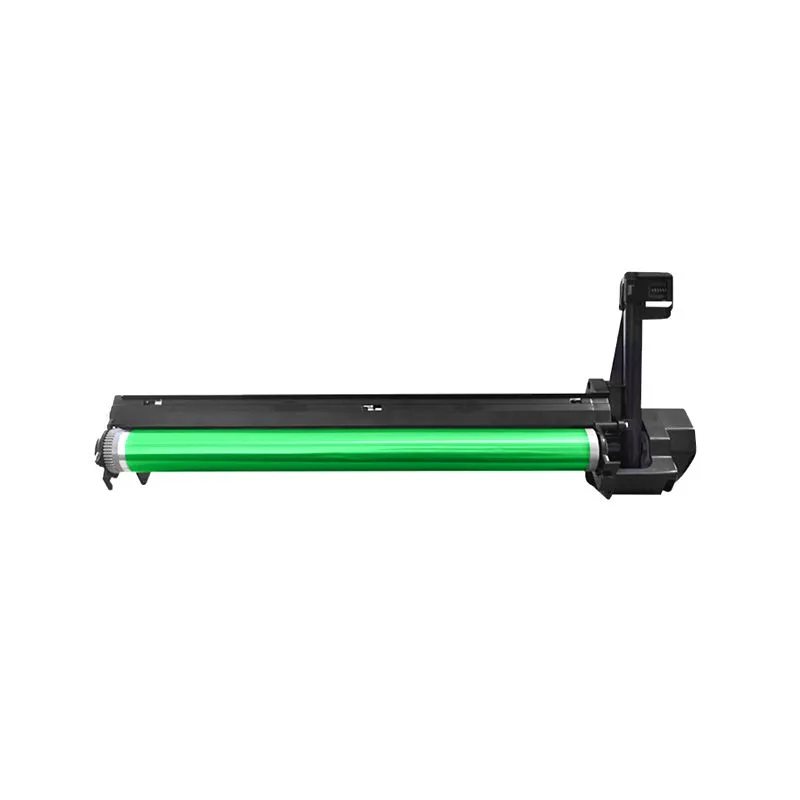
Sharp's drum units split into two broad categories: the older AR series (AR-201DR, AR-203DR, AR-205DR) and the MX series (MX-231DR, MX-312DR, MX-407DR, MX-560DR). The AR drums are typically smaller, with a photosensitive OPC layer on an aluminum base, while MX drums are larger and often include a blade and charge roller as part of the unit. Don't assume compatibility across models—check the service manual or the part number on the original drum. A mismatch can cause poor print quality, premature wear, or even damage to the developer unit.
Also, pay attention to the drum's expected life. Standard Sharp drums run 30,000 to 60,000 pages, but genuine OEMs often use a harder coating. Aftermarket drums may use a softer OPC, which prints fine initially but degrades faster. For high-volume customers, that's a red flag. Ask your supplier about the drum's coating thickness and the rated yield—if they can't give you a straight answer, walk away.
Setting Realistic MOQs and Lead Times
Wholesale drum sourcing is all about balancing inventory risk with price breaks. For popular models like the MX-231DR, a typical MOQ is 50 to 100 pieces. Less common models, like the AR-201DR, might have a MOQ of 20 to 30. Don't be afraid to negotiate—if you're a repeat buyer, many factories will flex the MOQ. But beware of suppliers who quote an unusually low MOQ (e.g., 5 pieces) at a suspiciously low price; they might be selling refurbished or relabeled drums.
Lead time is another critical factor. Standard production for Sharp drums runs 15 to 25 days, depending on the factory's schedule and whether they stock the OPC raw material. For custom OEM/ODM orders—say, with your own packaging or a modified drum—add 7 to 14 days for tooling and sampling. Always ask for the lead time in writing, and factor in sea freight (30-40 days to the US, 25-35 to Europe). If you need stock fast, consider air freight for the first order, but that eats your margin. Plan your reorders to avoid stockouts during peak season.
QC: What to Inspect Before You Commit
Quality control starts with the sample. When you request a pre-production sample, run it in a real Sharp machine—not just a bench test. Print a full gray scale, a halftone pattern, and a solid black page. Look for banding, fogging, and density variations. Also, check the drum's surface under a strong light: any scratches, pits, or uneven coating are deal-breakers.
On the production batch, do a random unboxing inspection. Here's a quick checklist to use:
- Check the OPC surface for fingerprints or smudges—these cause print defects.
- Verify the drum gear teeth are clean and not chipped.
- Confirm the drum's protective packaging is sealed and includes a desiccant.
- Measure the drum's diameter and length with calipers against OEM specs.
- Run a burn-in test on 2-3 units from different cartons.
Also, ask the supplier for their QC reports—things like surface roughness (Ra), OPC thickness, and drum runout. A reputable factory will have these on hand. If they hesitate, that's a red flag.
Selecting a Supplier: Beyond Price
Price per unit matters, but it's not the whole story. Calculate your total landed cost: unit price plus freight, duties, and the cost of any returns. A cheap drum that fails at 20,000 pages will cost you more in service calls than a quality drum that lasts 50,000. Look for suppliers who offer a warranty—typically 6 to 12 months—and who will replace defective units without hassle.
Also, consider the supplier's specialization. Some factories only make chips and rollers, not drums. You want a manufacturer that controls the OPC coating process in-house, because that's where quality is won or lost. Ask about their production capacity and whether they do 100% testing on every drum. Automated testing is a good sign; manual spot checks can miss defects.
Finally, think about your own branding. If you want to sell under your label, an OEM/ODM supplier can print your logo on the drum and the box. That adds perceived value and can justify a higher retail price. Make sure the supplier has the equipment for custom packaging and that their minimum for custom labeling is within your reach.
At CLONER, we've been making Sharp-compatible drum units for over a decade. Our factory-direct model means you get competitive pricing without the middleman, and our OEM/ODM capabilities let you brand the product as your own. We can adjust the MOQ for trial orders, and our standard lead time is 20 days for most Sharp models. Send us your target price and volume, and we'll send you a sample to test—because once you see the print quality, you'll know why we're the partner you've been looking for.