
Charge Roller for Konica Minolta: Compatibility, Page Yield & Sourcing Tips from CLONER
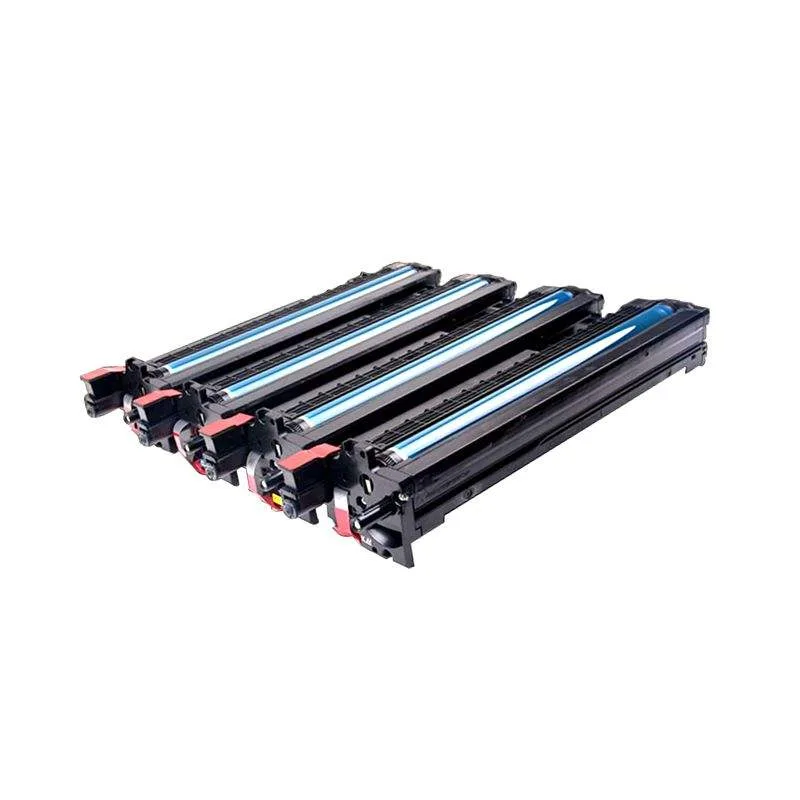
If you’re sourcing charge rollers for Konica Minolta machines, you already know the pain: wrong roller kills print quality, low page yield eats margins, and inconsistent supply chains mess up your inventory. Here’s the no-fluff guide on compatibility, page yield, and how to source like a pro from a manufacturer that’s been making these rollers for years.
Compatibility: Which Konica Minolta Series Use Which Roller?
Not all charge rollers are created equal—even within the same brand. For Konica Minolta, the bizhub series is the big one. The older 200/250/350 series (e.g., bizhub 200, 250) use a specific roller with a smaller diameter and different shaft length compared to the newer 227/287/367 series (e.g., bizhub 227, 287, 367). The 308/368/458 series also have their own part numbers. Mixing them up leads to uneven charge, ghosting, or even drum damage.
CLONER’s factory covers all these variants. We produce charge rollers for nearly every Konica Minolta model from the bizhub 200 up to the 958. Our catalog matches OEM part numbers like A3EDR70300, A3HDR70300, and A6VDR70300. If you’re ordering for a specific model, always double-check the original part number—our team can cross-reference in seconds.
Page Yield: What to Expect and What Affects It
Page yield for a charge roller isn’t a fixed number—it depends on the machine’s duty cycle and environment. For a bizhub 227 running 20,000 pages per month, a good charge roller should last 100,000 to 150,000 pages. But if you’re pushing a bizhub 958 at 200,000 pages monthly, the roller might only last 60,000 to 80,000 pages due to higher charge voltage and faster rotation.
Key factors that kill page yield: low-quality toner (increases wear), high humidity (causes corona discharge), and dirty machine interiors (contaminants scratch the roller surface). CLONER’s charge rollers use a semi-conductive rubber compound with a consistent resistance of 10^5–10^6 Ω, which balances charge uniformity and longevity. We’ve tested them in high-volume labs to ensure they hit OEM-level yields—typically within 5% of original.
Verification Tips: How to Spot a Bad Charge Roller Before Installing
Don’t wait until the machine prints streaks to find out you got a dud. Here’s what to check on arrival:
- Surface smoothness: Run a clean cotton cloth along the roller. Any snag or rough patch means the rubber has defects—will cause voids in prints.
- Diameter consistency: Measure with a caliper at three points. Variation over 0.05 mm leads to uneven charge across the drum.
- End caps/collar fit: The plastic caps on each end must be snug. Loose caps cause noise and misalignment in the charge unit.
CLONER’s quality control includes 100% surface inspection and resistance testing for every batch. We also offer sample orders (50–100 pieces) so you can verify fitment before placing a full container. That’s standard for us.
Sourcing: Why Factory-Direct Beats Trading Companies Every Time
Most charge rollers you see on Alibaba or from distributors are made by smaller factories that rebrand. You pay a 30–50% markup for the middleman. With CLONER, you’re buying from the same factory that supplies OEM replacement parts to major remanufacturers. Our price for a Konica Minolta charge roller starts at $0.85 for 1,000+ pieces, with discounts at 5,000 and 10,000.
We also do OEM/ODM—if you need custom resistance, shaft length, or packaging with your brand, we can do it. Minimum order quantity for OEM is 2,000 pieces, and lead time is 25 days from approval. For standard items, we keep 50,000+ in stock in our warehouse, ready to ship in 7 days.
One more thing: always ask for the rubber hardness (Shore A) spec. Konica Minolta rollers are typically Shore A 60–70. CLONER’s are Shore A 65, which gives the best balance of charge transfer and wear resistance. If a supplier can’t tell you the hardness, walk away.
Bottom line: whether you’re an importer stocking for repair shops or a wholesaler supplying dealers, CLONER’s charge rollers give you the compatibility, yield, and price you need. No fluff, just parts that work. Contact our sales team for a quote or sample set—we’ll send you a cross-reference list for all Konica Minolta models.