
Siond Fuser Assembly Failures: Buying, Inspection and Selection Guide
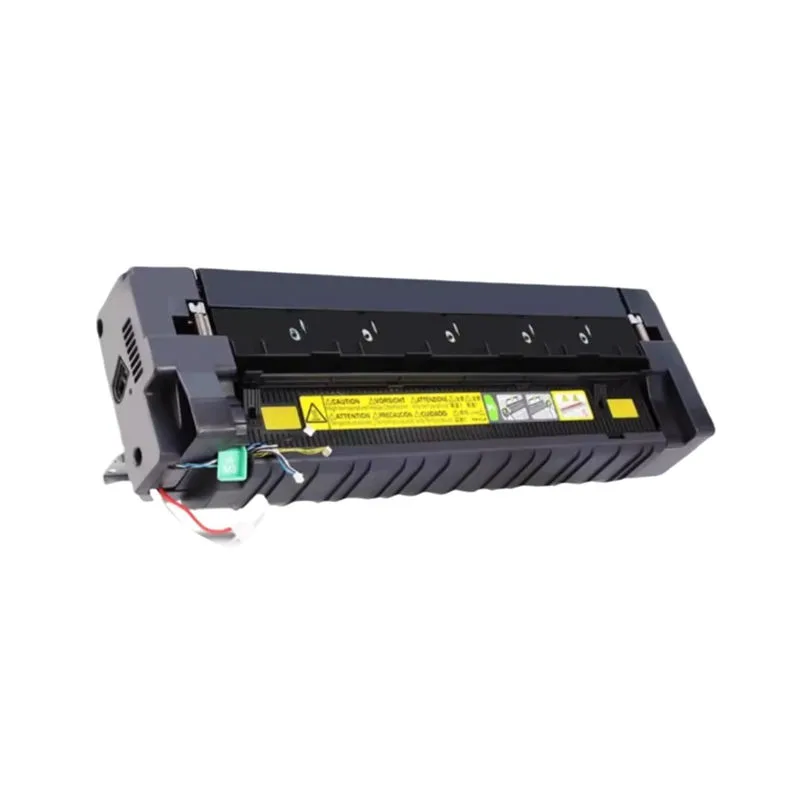
Siond machines hold a solid share of the mid-volume copier installed base in price-sensitive markets, and the fuser assembly decides whether customers see that machine as reliable or as a money pit. Most fuser failures we see in the field trace back to four causes: worn fixing film, pressure-roller flat spots, thermistor drift, and lamp or connector failure. Each leaves a distinct symptom on the page and tells you something about how the replacement part should be specified. Get the diagnosis right before you quote, and the reorder rate on your Siond fuser SKUs gets a lot cleaner.
Read the print defect before you pull the fuser
Repeated marks at a fixed pitch down the page are the fastest way to identify a failing roller. Measure the spacing between marks and compare it to the circumference of the pressure roller and the fixing roller; the part whose diameter matches the pitch is the one that has flat-spotted or taken a set. Siond fusers that sit idle in a hot room or run long jobs at low duty often develop a pressure-roller flat spot that shows as a faint band every revolution, and no amount of cleaning will remove it. That is a replacement, not a repair.
Background grey haze and toner offsetting onto the back of the sheet usually point to thermistor drift or a contaminated thermistor surface rather than a failed lamp. Siond fuser units use contact thermistors that foul with toner mist and paper dust; the controller reads a temperature lower than actual, the lamp over-runs, and you get offset and curl. If the machine throws a warm-up or over-temperature code intermittently, check the thermistor harness connector before condemning the assembly — a partially seated connector mimics a dead thermistor and costs you a fuser you did not need to sell.
Fixing-film tears are the classic Siond failure on high-volume accounts. A torn film shows as a sharp crease line, toner smearing along one edge, or a loud scraping noise as the film edge lifts. Once the film tears, the pressure roller is usually scored too, so selling a film-only kit into that machine guarantees a comeback. Quote the complete assembly when you see scoring.
Inspection points that separate good stock from returns
When a container of Siond fuser assemblies lands, inspect before you shelve. Check the film for uniform tension and no ripples at the edges — a film that has relaxed in transit will wrinkle on first heat cycle. Spin the pressure roller by hand and feel for any flat spot or bearing roughness; a roller that hesitates will band from day one. Look at the thermistor surface for contamination and confirm the harness is clipped in its routing channel, not pinched under the frame.
Then check the lamp and connectors. A fuser lamp with a cracked ceramic end or a connector that has been re-crimped shows up as an open circuit on a meter, and it is far cheaper to catch that on the bench than in a customer's office. Confirm the gear train turns freely and that the fuser's mounting lugs are not bent — bent lugs cause misalignment against the machine frame and produce skewed prints that technicians blame on the paper path.
- Film tension even, no edge ripples or creases
- Pressure roller turns smoothly with no flat spot or bearing noise
- Thermistor clean, harness routed and fully seated
- Lamp ends intact, connector continuity confirmed
- Mounting lugs square, gears turn freely
Matching the assembly to the Siond model and duty cycle
Siond fuser assemblies are not interchangeable across model families even when the physical footprint looks close. Voltage rating, lamp wattage, thermistor count and connector pinout vary between the low-end and mid-volume chassis, and a 220V assembly dropped into a 110V machine will either fail to reach fusing temperature or cook the thermistor. Confirm the model code and the machine's voltage before you order, and keep the OEM part number on your purchase order so your supplier cannot substitute a lower-spec unit.
Duty cycle matters as much as fit. A fuser built for a 30k-per-month office will not survive a print shop running 90k, and the film will tear within weeks. Ask your supplier which duty rating the assembly is built to and whether the film is the thicker gauge used in the high-volume variant. For accounts running mixed volumes, stock two tiers rather than one, and price the higher tier accordingly.
Also check the firmware and reset behaviour. Some Siond machines log a fuser life counter that must be cleared after replacement, and a technician who skips the reset gets a premature life warning that looks like a defective part. Include the reset procedure with every assembly you ship to a repair shop — it cuts warranty claims that are really installation errors.
Buying terms that protect your margin
Fuser assemblies are bulky and fragile, so packaging and freight terms matter more than on small consumables. Specify individual foam-cradled boxing rather than bulk cartons, and confirm the film is protected from compression during transit. Ask for a batch date and a shelf-life statement — fuser films and rollers age, and stock that has sat in a hot warehouse for a year will fail early.
Agree a clear DOA and warranty window, and define what counts as a valid claim: photographed defect, model code, and installation date. Suppliers who will not accept a film-tear claim within 90 days are telling you something about their film quality. For importers building a private-label line, ask whether the supplier can print your brand on the box and supply a model-specific label — that is a routine OEM request and a good test of how flexible the factory really is.
Finally, watch the price-to-spec ratio. A fuser assembly priced well below the market usually carries a thinner film, a lower-grade pressure roller or a re-crimped lamp connector. Those units cost you more in comebacks than they save on the invoice, and they damage your reputation with the repair shops that buy from you.
CLONER manufactures Siond-compatible fuser assemblies factory-direct, with OEM and ODM programs for importers and distributors who need their own branding, model-specific packaging and stable spec across repeat orders. We build to the duty rating the account actually runs, hold batch traceability on films and rollers, and quote transparently on freight and warranty terms so your landed cost is predictable. Send us the model codes and volumes you move, and we will match the assembly spec to the machines in your market.


