
Bulk Sourcing HP Upper Fuser Rollers: MOQ, Lead Time, and QC for Wholesale Copier Parts
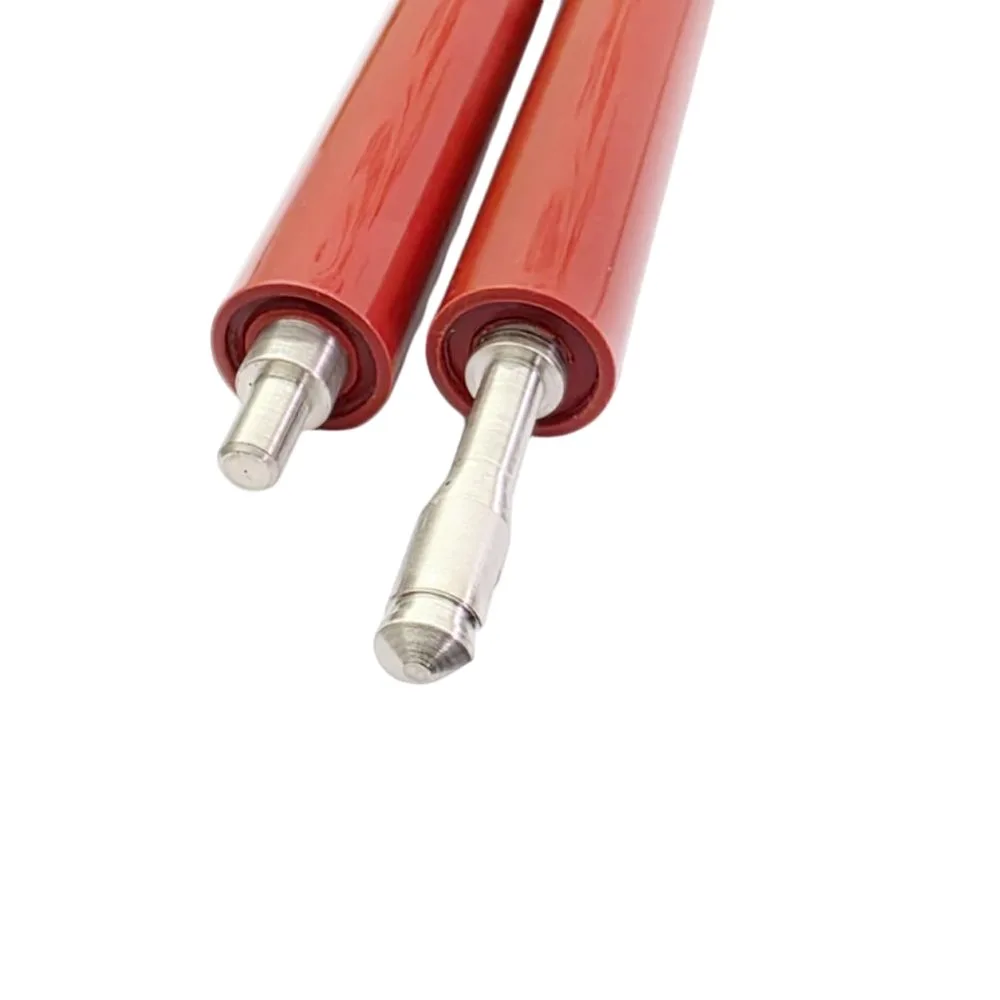
Most wholesale buyers get burned on HP upper fuser rollers not because the price was wrong, but because the batch was. A roller that looks identical to the OEM part can fail at 40,000 pages instead of 150,000 if the PTFE coating is thin or the core alloy is soft. This guide covers what actually matters when you place a bulk order: realistic MOQs, lead times you can quote to your own customers, and the QC checks that catch bad stock before it reaches your warehouse.
Know the HP Roller Families Before You Negotiate
HP fuser rollers are not interchangeable across the range, and suppliers who quote a single "HP upper roller" price are usually hiding something. The high-volume workhorses — LaserJet P2035, P2055, M401, M402, M425, and the M601/M602/M603 series — use rollers with different diameters, bearing arrangements, and gear configurations. Enterprise units like the M604/M605/M606 and the Color LaserJet M552/M553 families add their own coating tolerances because of higher fusing temperatures and colour registration demands.
When you request a quote, specify the exact model family and, where possible, the HP spare part number. A serious factory will confirm the cross-reference before quoting. If a supplier offers one roller for "P2035/P2055/M401/M402," ask for the dimensional drawing — the P2035 and M402 rollers differ in end-cap geometry, and forcing one into the wrong machine causes premature bearing noise and paper-wrap jams that come straight back to you as warranty claims.
This is where the OEM/ODM distinction matters. An ODM-capable factory can produce to your spec — your coating thickness, your core tolerance, your packaging and barcode — rather than pushing whatever mould is already running. For wholesalers building a private-label line, that flexibility is worth more than a few cents off the unit price.
MOQ Reality: What Bulk Actually Means
MOQ on HP upper fuser rollers varies wildly by model popularity and by whether you buy stock or custom. For fast-moving models like the P2035, P2055, and M401, factory-direct MOQs typically start around 50–100 pieces per model, and mixed-model orders are usually accepted once the total order value justifies a production run. Slower enterprise models — M604, M605, M606 — often carry higher per-model minimums because the tooling run is longer and demand is thinner.
Custom OEM/ODM orders change the equation. If you want your own branding, packaging, or a modified coating spec, expect MOQs in the 200–500 piece range per model, sometimes higher for colour-series rollers. The trade-off is real: a custom run locks in your specification and protects your margin, but it also locks in your capital. New buyers should start with a stock or light-custom order to validate the factory's consistency before committing to a private-label run.
Watch for MOQ games. Some traders quote a low MOQ, then pad the price or the freight to recover margin. Ask for the FOB unit price at your actual quantity, not the headline MOQ price, and confirm whether mixed models count toward the minimum.
Lead Times You Can Quote to Your Customers
For in-stock HP upper fuser rollers, factory-direct lead time is typically 3–7 working days to dispatch, plus transit. Custom OEM/ODM production runs usually take 15–25 days depending on model complexity and order size, with colour-series rollers at the longer end. Add freight: sea freight to Europe or North America runs 25–40 days door-to-door, air freight 5–10 days at a significant premium.
The insider point is that lead time is only reliable if the factory controls its own coating and assembly. Factories that outsource PTFE coating to a third party lose schedule control, and coating is the bottleneck that causes most delays. Ask directly: is the coating done in-house? If not, your 20-day promise can slip to 40 with no warning, and your wholesale customers will not care whose fault it was.
Build a buffer into your first order with any new supplier. Order one production cycle ahead of your forecast until you have two or three clean batches behind you. After that, a 15-day custom cycle is realistic to plan against.
QC: The Checks That Catch Bad Batches
Incoming inspection on HP upper fuser rollers should be fast but ruthless. You are looking for coating defects, dimensional drift, and core quality — the three failure modes that generate returns. A practical incoming checklist:
- Measure the outer diameter at three points along the roller with a micrometer; compare against the OEM spec, not the supplier's drawing.
- Inspect the PTFE coating under bright light for pinholes, streaks, orange-peel texture, and thin edges near the end caps.
- Check the core for straightness by rolling on a flat surface; any wobble signals a bent shaft that will cause banding.
- Verify bearing fit and gear engagement by test-fitting into a known-good fuser assembly.
- Run a sample batch in an actual machine to at least 10,000 pages and inspect for coating wear, gloss shift, and paper-wrap symptoms.
The bench checks catch maybe 70% of problems. The machine test catches the rest — soft cores that deform under heat, coating that fails early, and bearing noise that only appears under load. Never approve a bulk shipment on visual inspection alone; pull three to five units per model and run them.
Also ask for the factory's own QC records: coating thickness measurement, hardness testing, and batch traceability. A factory that cannot show you batch records is not running QC — it is running hope.
Why Factory-Direct Changes the Economics
Buying HP upper fuser rollers through a factory that coats, assembles, and packs in-house removes a layer of margin and a layer of risk. CLONER manufactures fuser rollers and copier consumables directly, with OEM/ODM capability across the HP LaserJet and Color LaserJet ranges — meaning your coating spec, packaging, and branding can be built to order rather than sourced from whatever is on the shelf. For wholesale buyers, that translates into MOQs that scale with your actual volume, lead times you can quote with confidence, and batch-level QC records you can hand to your own customers. Send your model list and target volumes, and we will confirm tooling availability, MOQ, and a production schedule before you commit a dollar.
Need a quote or samples from CLONER?
Factory-direct OEM/ODM supplier of compatible printer consumables & spare parts. Tell us your models — reply within 24h.


