
HP Fuser Rollers: How to Source Without Getting Burned
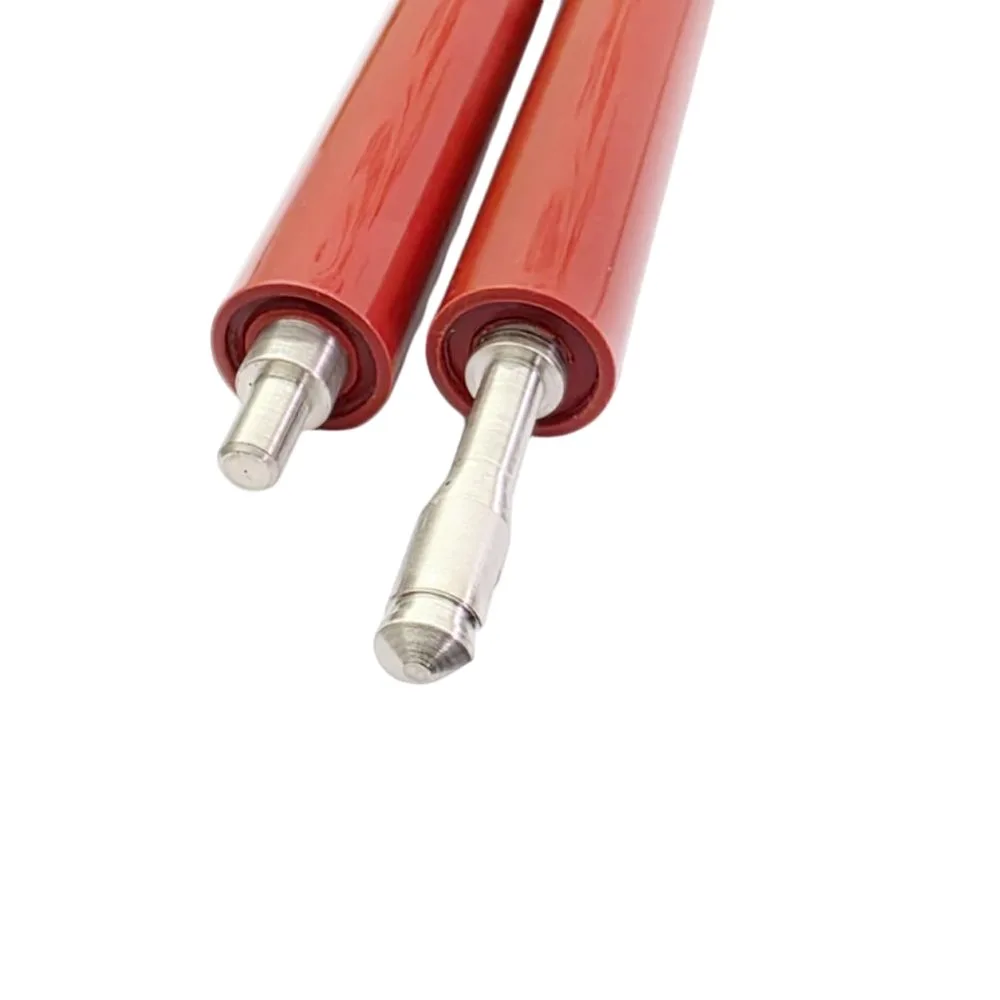
Every HP fuser roller complaint you get from a repair shop traces back to one of three things: the silicone layer cooked too early, the bearing seized, or the roller was never straight to begin with. If you're importing upper fuser rollers for HP LaserJet and MFP fleets, the cheapest quote per piece is rarely the cheapest landed cost. Here's how to buy this part without eating returns six months later.
Know which HP platforms you're actually buying for
The HP fuser roller market is not one product. The P2035/P2055 family, the M401/M425 series, the M601/M602/M603 mono machines, and the color M251/M276 and M451/M476 platforms all use different rollers with different diameters, gear configurations, and pressure spring interfaces. A supplier who quotes you one "HP universal fuser roller" price is telling you they don't know the category. Ask for a model-to-part cross-reference before you discuss price.
Volume concentrates in a handful of workhorses. The M601/M602/M603 upper rollers and the M401/M425 rollers move fastest for independent distributors because the installed base in SMB offices is huge and those machines are now hitting end-of-life service cycles. Color rollers for M251/M276 move in smaller but steadier lots, and the margin per unit is usually better. Build your first order around two or three high-turn platforms, not ten.
Watch the OEM part numbers. HP has superseded several fuser roller part numbers across the P2035 and M401 lines, and a supplier shipping the older revision will trigger fitment complaints even though the roller physically installs. Get the current revision confirmed in writing on the PI.
MOQ: what's reasonable and what's a red flag
For standard black-and-white HP upper fuser rollers, a realistic factory MOQ sits around 100 to 300 pieces per model. Color rollers and low-volume MFP platforms often start at 50 to 100 pieces. If a supplier insists on 1,000 pieces per SKU across the board, they're either a trading company reselling someone else's stock or they're protecting a long production run that you're funding.
Mixed-model MOQs are where real factory relationships show up. A manufacturer running its own coating and grinding lines can usually let you combine several HP models into one MOQ total, because the constraint is the coating batch, not the individual SKU. Push for that. It lets you test four platforms at 100 pieces each instead of betting everything on one model.
Don't accept MOQ concessions that quietly change the spec. Some suppliers will meet a low MOQ by pulling from B-grade stock or by skipping the post-cure on the silicone. Ask directly whether the MOQ price is for A-grade, and get the grade written into the purchase order.
Lead time: separate production time from shipping time
Quoted lead times in this category are routinely optimistic because suppliers quote production only. A realistic in-house production window for HP upper fuser rollers is 15 to 25 days for standard models, longer for color rollers or any custom gear. Add sea freight of 25 to 40 days to Europe or North America, plus port and customs time. If someone promises 20 days door to door on an ocean shipment, they're quoting air freight pricing into a sea freight number.
Stock status matters more than the lead time number. Ask whether the roller core, the silicone compound, and the end caps are held in inventory or ordered per PO. Suppliers who stock cores and coat to order typically ship in 10 to 15 days. Suppliers who order everything per PO will slip two weeks the moment their coating line is busy.
For repeat wholesale buyers, negotiate a rolling stock agreement: hold a buffer of your top two or three HP models and release against your forecast. This is the single biggest lever on lead time, and it's the kind of arrangement a factory can offer that a trader cannot.
QC: what to check before the carton is sealed
Incoming inspection on fuser rollers is mostly visual and dimensional, and it catches most defects. Check roller diameter at three points along the length, not just the center. Out-of-round rollers cause uneven fusing and paper curl that the end user will blame on the machine. Check the silicone surface under raking light for pinholes, blisters, and mold parting lines. Run a straightedge along the length; any visible bow is a reject.
Then check the parts that fail in the field:
- Bearing rotation: spin each end bearing by hand, listen for grit, and confirm no axial play.
- Gear tooth profile and hardness: compare against a known-good OEM gear, not a photo.
- Silicone hardness: durometer readings should be consistent across the batch, typically in the 40 to 60 Shore A range depending on model.
- End cap bonding: tug test the caps; adhesive failure shows up as roller walk and jams.
- Packaging: individual foam or bubble wrap, with rollers stored vertically, not stacked under weight.
Ask for a pre-shipment inspection report with photos and dimensional data per lot. A supplier who can't produce that has no QC process, only a final visual glance. For larger orders, commission a third-party inspection on the first shipment and use the report as the baseline spec for every reorder.
Why factory-direct changes the economics on this part
CLONER manufactures upper fuser rollers for the HP LaserJet and MFP platforms in-house, which means the silicone formulation, the core machining, and the bearing fit are all under one roof. That's what allows mixed-model MOQs, rolling stock agreements, and lot-level dimensional reports instead of a photo and a promise. For buyers who need their own brand on the carton or a modified gear, end cap, or durometer spec, OEM and ODM programs run on the same lines, with tooling and sample approval handled before the production PO is released. Send your target HP model list and annual volume, and we'll come back with a spec sheet, a sample timeline, and a landed-cost quote you can actually plan a container around.


