
Bulk Sourcing Lower Fuser Rollers for Kyocera: MOQ, Lead Time and QC for Distributors
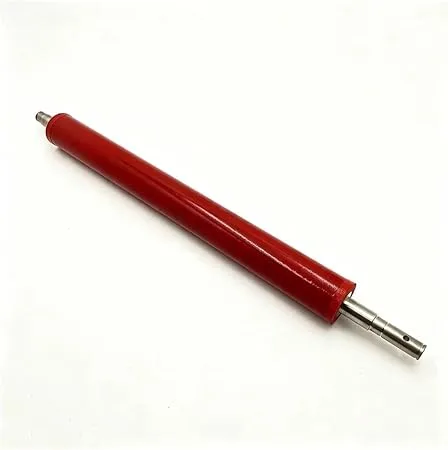
Kyocera fuser assemblies last, which is why the lower pressure roller often fails first—and why distributors who stock the right one keep repair shops loyal. When buying Kyocera lower fuser rollers for TASKalfa or ECOSYS machines in volume, the questions that decide your margin are not "which model" but "which coating, which hardness, which MOQ tier, and who inspects the batch before it ships." Get those wrong and you absorb returns; get them right and this becomes one of the steadiest repeat lines in your catalogue.
Know which Kyocera families you are buying for
Lower pressure rollers are not interchangeable across the Kyocera range, and failure symptoms differ by family. On the TASKalfa 2552ci, 3252ci, and 3552ci colour series, the lower roller typically shows gloss variation and paper curl before outright failure—the silicone surface hardens and stops compressing evenly against the upper roller. On ECOSYS M2540, M2640, and M3145 monochrome workhorses, the tell is offset ghosting and a visible flat spot where the roller sat under pressure. Buyers who confuse the two families end up with returns from shops that know the difference.
Map your SKUs to actual part numbers before negotiating. A TASKalfa 4052ci lower roller is not the same casting or coating as the 2552ci, even where diameters look close. Ask your supplier for the OEM cross-reference per part number, not a "fits most Kyocera" claim. CLONER keeps the Kyocera lower roller range mapped to specific machine families and part numbers precisely because distributors get burned by near-matches.
Also separate fuser belt machines from roller machines. Some newer Kyocera platforms use a fuser belt and pressure pad arrangement, so a "lower roller" order for those models is a category error. Confirm the fuser architecture per model with your supplier's technical contact before the PO goes out.
MOQ: what realistic tiers look like factory-direct
MOQ for Kyocera lower fuser rollers depends on whether you are buying a stock item or a custom-coated run. For standard, in-production models, factory-direct tiers typically start around 50–100 pieces per part number, with meaningful price breaks at 300 and 500. Below that, you are paying for setup and packing, not the roller. Distributors who try to buy 20 pieces of five different part numbers usually pay more per unit than a mixed 200-piece order across three fast movers.
Custom coating specs—different hardness shore values, alternative silicone compounds, or OEM-branded packaging—push MOQ up, often to 300–500 per part number, because the coating line must be dialled in and cleaned between runs. That is normal. If a supplier quotes a 50-piece MOQ on a custom hardness roller, ask how they handle changeover; the answer tells you whether they run their own coating line or resell.
Mixed-model consolidation is where factory-direct buying pays off. A single shipment combining TASKalfa and ECOSYS lower rollers, plus upper rollers and fuser belts, spreads freight and lets you hit the higher price break on your top two or three movers while keeping slow SKUs at the lower tier. Negotiate the MOQ per shipment, not per part number, where you can.
Lead times: plan around coating runs, not catalogue promises
Standard Kyocera lower rollers from a factory with stock typically ship in 7–15 days. Custom coating or OEM packaging runs take 20–35 days depending on the coating schedule and whether your spec needs sample approval first. Add transit—25–40 days sea freight to Europe or North America, 5–10 days air for urgent restocks. A distributor quoting "3 days" on a custom roller is either holding stock in your spec or not being straight with you.
The lead-time trap is the sample approval loop. Build 10–14 days into your plan for a pre-production sample to reach you, get fitted in a machine, and be signed off. Skipping that step to save two weeks is how batches arrive with the wrong hardness and every shop in your network finds out at once. First orders should always run through sample approval; repeat orders on an approved spec can move straight to production.
Ask about production capacity per month and current order book. A supplier running 5,000 lower rollers a month across brands can absorb a 500-piece rush; one running 500 cannot. For distributors with contract customers on scheduled deliveries, confirm whether the factory holds buffer stock of your approved spec—that is the difference between a reliable restock and a scramble.
QC: the inspection points that actually matter
Lower fuser rollers fail in service for a short list of reasons, and each one is catchable before shipment. The coating is first: check hardness with a durometer across the length, not just at one point, and look for bubbles, seams, or thin patches at the ends. A roller that passes a visual check but reads soft at the edges will curl paper within a few thousand pages. Second, check the shaft and bearing seats for concentricity—runout beyond a few hundredths of a millimetre shows up as banding.
Third, verify the end caps and gear fit. Loose end caps cause the roller to walk and chew the fuser frame; tight ones crack on installation. Fourth, confirm the silicone or fluororesin coating thickness and cure—an under-cured coating releases and contaminates the upper roller. Fifth, check packaging: rollers shipped without end protection arrive with flat spots and coating scuffs that turn into warranty claims.
- Durometer reading at five points along the roller, ends included
- Shaft runout and bearing-seat concentricity within spec
- End-cap and gear fit checked against a known-good OEM sample
- Coating cure and thickness verified per batch, with a retained sample
- Drop and vibration test on the packed carton, not the bare roller
Ask for the factory's inspection record per batch, and insist on a retained sample from each run so a field failure can be traced back. A supplier who cannot produce that record is asking you to be their QC department.
Buying factory-direct from CLONER
CLONER manufactures Kyocera lower fuser rollers in-house, with the coating line, tooling and inspection under one roof—so MOQ tiers, coating hardness and packaging are ours to control, not a trading desk's to negotiate. We supply distributors and repair-shop networks on factory-direct terms, run OEM/ODM programmes with your branding and packaging, and hold approved specs for scheduled restocks. Send us your Kyocera part numbers and target volumes and we will come back with a quote, a sample plan and a realistic lead time—no catalogue guesswork.
Need a quote or samples from CLONER?
Factory-direct OEM/ODM supplier of compatible printer consumables & spare parts. Tell us your models — reply within 24h.


