
Bulk Sourcing Kyocera Lower Fuser Rollers: MOQ, Lead Times, and QC That Hold Up
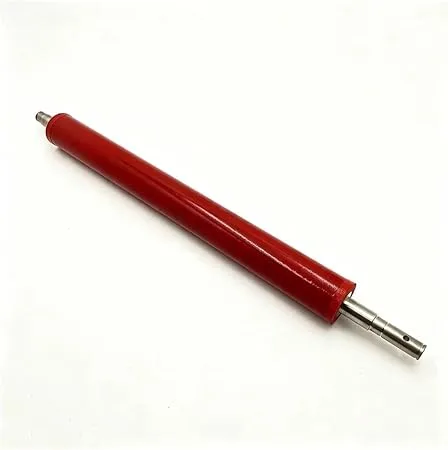
You've probably had it with trading companies that can't tell a TASKalfa 3050ci from a 3550ci, or that promise 15-day lead times and deliver in 45. For office equipment distributors, the real cost isn't the unit price—it's the downtime, the returns, and the reputation hit when a batch fails at 80k pages. Here are the numbers and checkpoints that matter when buying in bulk.
MOQ: What's Realistic for Kyocera Lower Fuser Rollers
Most factories quote MOQs of 100–200 pieces per model for standard Kyocera lower fuser rollers, but that's often just a starting point. For popular models like the TASKalfa 2551ci, 3050ci, 3550ci, and 4550ci, you can usually negotiate down to 50–100 pieces if you accept standard packaging. For older or niche models—say the KM-1620 or FS-1020MFP—expect MOQs of 200+ because tooling and coating runs are less frequent.
Watch out for suppliers who offer “no MOQ” on Kyocera fuser rollers. That usually means they're reselling stock from other factories, which brings inconsistent coatings and no control over lead times. If you need mixed models, ask for a consolidated MOQ—some factories will let you combine 3–5 models to hit a total quantity, which is handy for distributors serving diverse machine fleets.
Lead Times: What to Expect and How to Avoid Delays
Standard lead time for bulk Kyocera lower fuser rollers is 15–25 working days after deposit and artwork approval. That's for factory-direct orders with standard packaging. If you need custom packaging or your own brand, add 5–7 days for print proofing and production. Peak seasons—Q4 and back-to-school—can push lead times to 30–40 days, so plan ahead.
Shipping method matters too. Sea freight to Europe or North America adds 25–35 days port-to-port, while air freight cuts that to 5–7 days but triples the cost per unit. For urgent restocks, consider a hybrid: ship 20% by air to cover immediate demand and the rest by sea. Always ask for a production schedule with milestone dates—deposit received, materials ready, production start, QC passed, and shipment booked. Suppliers who can't provide that are likely juggling multiple trading orders.
QC Checkpoints: What to Inspect Before You Pay
Lower fuser rollers fail in predictable ways: uneven coating, poor heat resistance, and dimensional drift. Start with the coating—ask for a sample from the actual production batch and check for bubbles, streaks, or thin spots. A good roller has a uniform, matte finish with no visible seams. Heat resistance is critical; Kyocera fusers run hot, and low-quality silicone or PTFE coatings can degrade and cause paper wrap or smearing within 20k pages.
Dimensional accuracy is non-negotiable. The roller's outer diameter and length must match the OEM spec within ±0.05 mm. Ask for a dimensional report with each batch, and spot-check with calipers on arrival. Also check the shaft for straightness—bent shafts cause vibration and premature bearing failure. For a quick incoming inspection, run these checks:
- Visual: coating uniformity, no bubbles or scratches, clean edges.
- Dimensional: OD, length, and shaft diameter within tolerance.
- Functional: install in a test fuser and run 500 pages—check for even fusing, no offset, no abnormal noise.
- Durability: request a 50k-page life test report from the factory (or run your own accelerated test).
- Packaging: each roller in a protective sleeve, boxed with model label and batch code.
Don't skip the life test. A roller that looks perfect but fails at 30k pages will cost you more in returns than the savings from a cheaper supplier. Ask for test data on coating adhesion and heat aging—reputable factories keep these records.
Pricing and Payment: What's Fair in Bulk
Factory-direct pricing for Kyocera lower fuser rollers typically runs 30–50% below OEM list, depending on model and volume. For 500+ pieces, you should be able to negotiate 10–15% off the quoted price, especially if you commit to a quarterly schedule. Payment terms are usually 30% deposit, 70% before shipment, but established distributors can push for 20/80 or even net 30 after the first few orders.
Be wary of prices that are significantly lower than the market average—they often mean recycled cores, thinner coatings, or inconsistent materials. Ask for a material declaration (silicone or PTFE type, hardness, and thickness) and compare it to the OEM spec. If the supplier can't provide that, walk away.
Why Factory-Direct Matters for Kyocera Fuser Rollers
CLONER manufactures lower fuser rollers for Kyocera models including the TASKalfa and ECOSYS series, with full OEM/ODM support. That means you can get your own brand on the packaging, custom MOQs for mixed models, and direct control over lead times—no middleman adding 10 days and 20% to the cost. Our QC process includes dimensional checks on every batch, coating thickness measurement, and a 50k-page life test on samples. For distributors who need consistent quality and predictable schedules, factory-direct is the only way to get both.


