Buying Transfer Roller for Brother: A Field Guide for Copier Repair Shops
If you run a copier repair shop or supply office-equipment distributors, you already know that Brother transfer rollers are one of the most frequently replaced consumables on models like DCP-L2550DW, MFC-L2710DW, and HL-L2370DW. The roller looks simple—a rubber cylinder with a metal shaft—but a bad batch or wrong spec can cause jams, wavy prints, or even damage the drum unit. This guide cuts through the noise and gives you the specific checks, selection criteria, and buying strategies that matter for your bottom line.
Know the Part Numbers and Interchangeability
Brother doesn’t make it easy. A single transfer roller can serve multiple models, but you need to cross-reference carefully. For example, the roller for the DCP-L2550DW (part number LV2604001) also fits the MFC-L2710DW, HL-L2370DW, and DCP-L2530DW. But the roller for the HL-L2350DW uses a different shaft length. Always check the OEM part number against your target machine family. CLONER stocks the most common Brother transfer rollers and can provide a cross-reference list for any batch order.
Don’t rely on “compatible” listings alone. Many generic rollers use a different rubber hardness or shaft diameter. A 0.5 mm difference in shaft length can prevent the roller from seating correctly, causing lateral play and uneven transfer. When ordering from a factory-direct source like CLONER, ask for the exact OEM-equivalent specifications—they’ll provide dimensional drawings if you request them.
Physical Inspection: What to Check Before You Stock
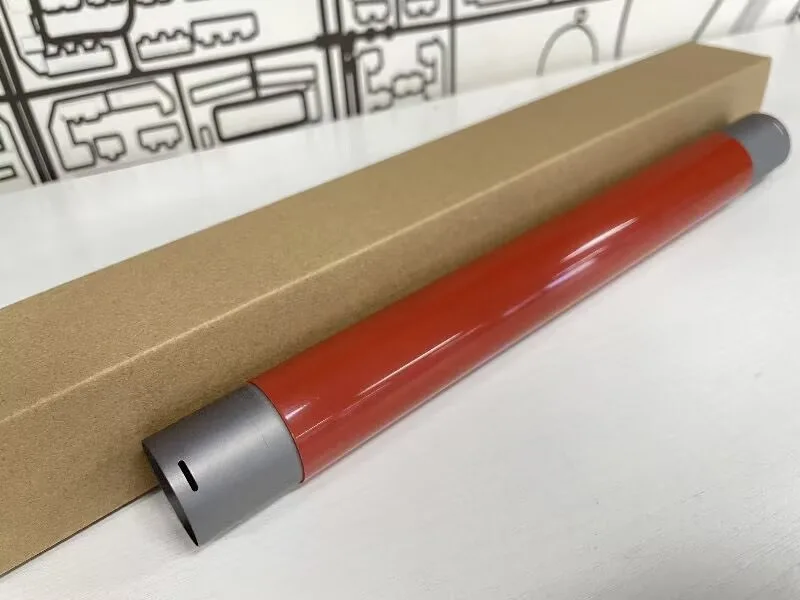
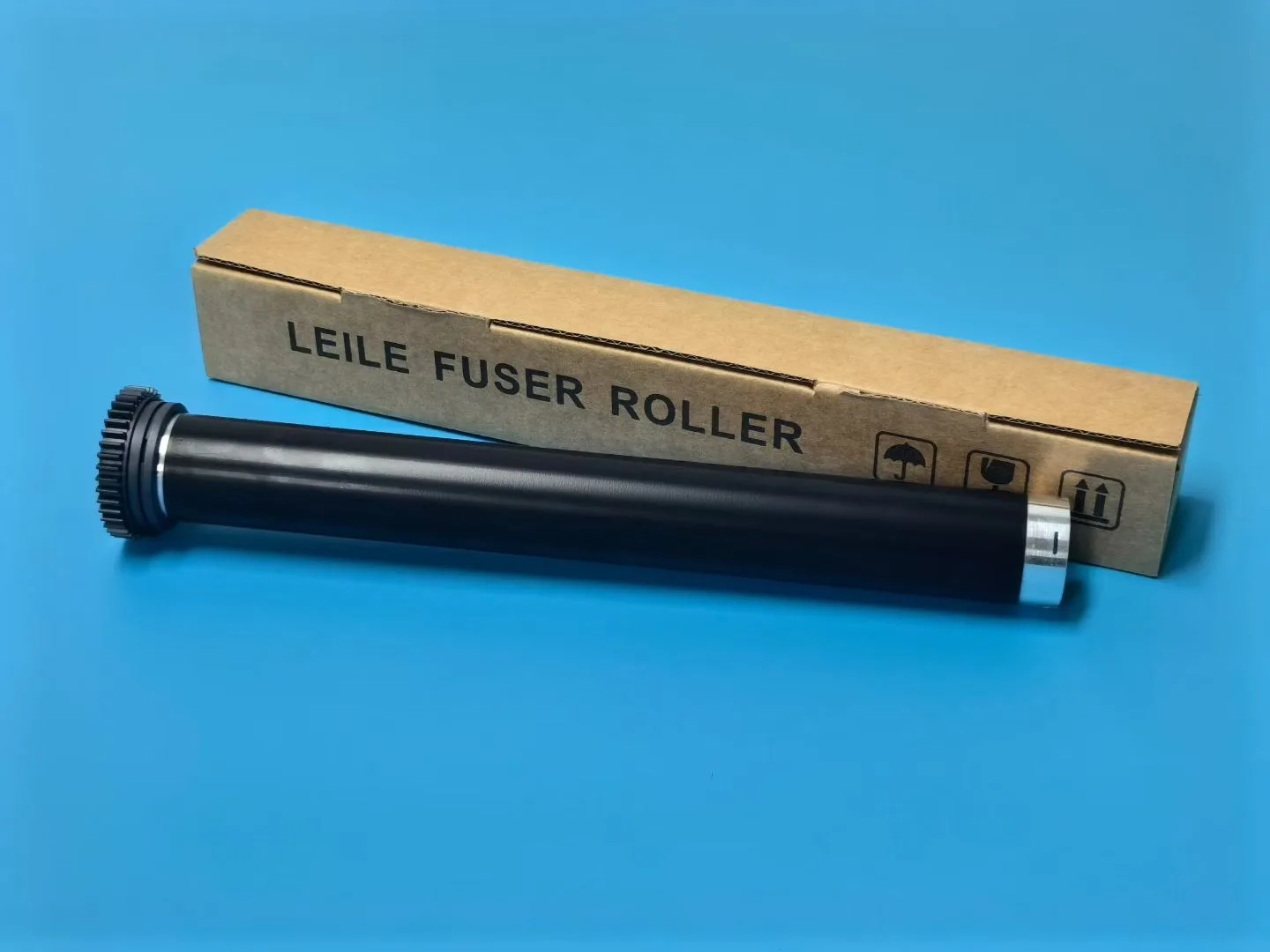
Before you buy in bulk, inspect a sample. Look at the rubber surface: it should be uniformly matte, with no shiny spots, bubbles, or visible mold lines. Shiny areas indicate over-polishing or a bad batch of silicone, which leads to inconsistent charge transfer and ghosting on prints. Run your fingernail lightly across the roller—if it leaves a permanent mark, the rubber is too soft and will deform under pressure.
Check the metal shaft ends for burrs or uneven plating. Burrs can scratch the drum unit’s contact springs, causing intermittent charge loss. Also spin the roller on a flat surface—it should rotate smoothly without wobble. A bent shaft is a common defect in low-cost imports. CLONER performs a 100% run-out test on every production batch, so you get rollers that stay true.
Electrical and Mechanical Fit: Voltage and Resistance
Brother transfer rollers operate at a specific bias voltage (typically -1200V to -1500V DC for monochrome models). The roller’s resistance (measured between the shaft and the rubber surface) must fall within a tight range—usually 0.5–2.0 MΩ at 25°C. If resistance is too high, the transfer voltage drops, causing light prints; too low, and you get background toner or pinhole discharges. Ask your supplier for a resistance spec sheet. CLONER provides batch test data for each production run, so you can verify consistency.
Mechanically, the roller must engage the drum’s drive gear without slipping. On Brother models, the gear on the transfer roller is often plastic—check for flash or sharp edges that could wear the drum gear prematurely. Also confirm the end cap design: some Brother rollers use a snap-fit cap, others a screw-on. A mismatch can cause the roller to dislodge during operation.
Sourcing Strategy: Why Factory-Direct Matters
Brother transfer rollers are high-volume consumables. If you’re sourcing through a middleman, you’re paying a markup that eats into your margin. Going factory-direct with a manufacturer like CLONER lets you buy at near-OEM cost. More importantly, you get control over quality. CLONER uses the same grade of silicone rubber and steel shafts as OEM, and they can customize the roller’s hardness or resistance for specific climates (e.g., higher humidity regions need a slightly different formulation).
For repair shops that also do ODM (own-brand) packaging, CLONER offers private labeling with your logo and part number. This builds customer trust and lets you differentiate from generic sellers. Minimum order quantities are reasonable—start with 500 pieces to test the market, then scale up once you confirm the fit and performance.
Pricing, MOQ, and Lead Time Realities
For Brother transfer rollers, expect factory pricing in the range of $0.80–$1.50 per piece for standard models, depending on volume. MOQs typically start at 500–1,000 units per part number. Lead time from CLONER is 15–20 days for standard orders, faster for stock items. Always ask for a pre-production sample before committing to a full container. CLONER will send you 5–10 samples for functional testing—no charge beyond shipping.
One more tip: order a mix of the top 5–10 Brother models to cover 80% of your customer requests. The most common are the LV2604001 (for L2550 series), LV1704001 (for L2300 series), and LV2804001 (for the newer L2690 series). Keep a spreadsheet of which rollers fit which machines—your technicians will thank you.
When you need a reliable supply of Brother transfer rollers that match OEM specs without the OEM price, CLONER’s factory-direct program gives you the quality assurance, customization options, and bulk pricing that keep your repair shop competitive. Request a sample kit today and see the difference in fit and print quality.
Need a quote or samples from CLONER?
Factory-direct OEM/ODM supplier of compatible printer consumables & spare parts. Tell us your models — reply within 24h.