Buying Transfer Roller for Brother: A Field Guide for Copier Repair Shops
If you run a copier repair shop or supply office equipment dealers, you know Brother transfer rollers are a pain point. One wrong part and you get ghosting, vertical lines, or—worse—a callback from an angry customer. Most aftermarket rollers are hit-or-miss, and OEM prices eat your margin. Here's what you need to know to buy smart, avoid returns, and keep your techs happy.
Brother Transfer Roller Compatibility: Not All TN/DR Models Are the Same
Brother uses the same roller design across many mono laser printers—HL-L2300 series, DCP-L2500 series, MFC-L2700 series—but don't assume they're interchangeable. The roller shaft length and gear placement vary slightly between the TN-330/TN-630 and TN-730/TN-760 families. For example, a roller for TN-630 (used in HL-L2300D) has a shorter shaft than the one for TN-760 (used in HL-L6200DW). Always match the exact roller part number: LV2310001 for older models, LV2310002 for newer ones.
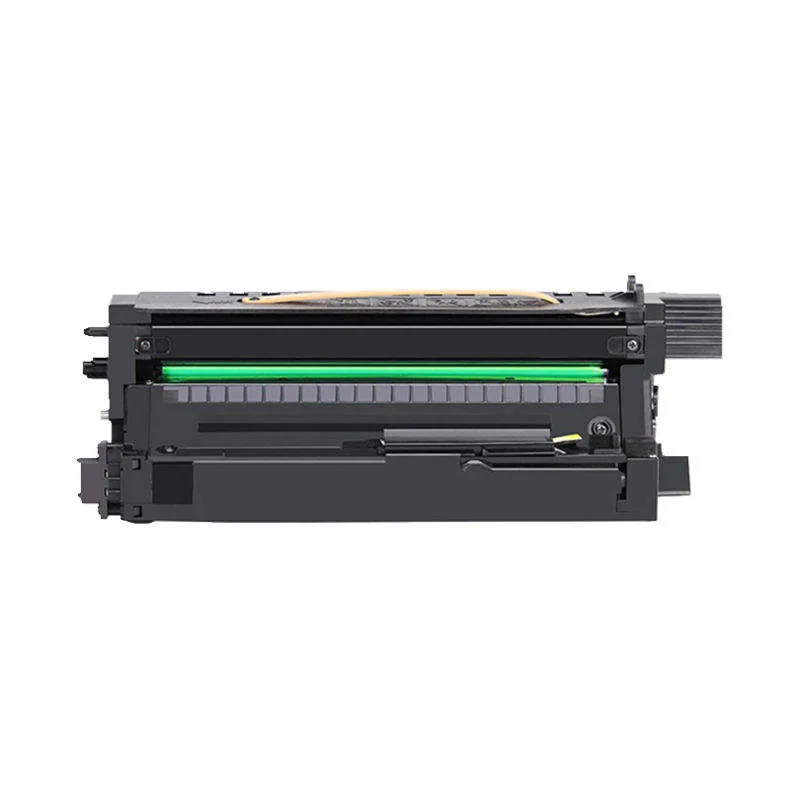
We've seen repair shops order a bulk lot of "universal" rollers, only to find they don't seat properly in the drum unit. The result: paper jams and charge leakage. Stick to model-specific rollers unless you're testing a sample first. CLONER lists compatibility for each SKU, including which drum unit it fits (DR-630 vs DR-730). If you're ordering for multiple models, ask for a cross-reference sheet.
Performance and Failure Modes: What to Expect from Aftermarket Rollers
A good transfer roller should have a resistivity of 10^7 to 10^8 ohm·cm. Too high, and you get light prints; too low, and toner scatters. Cheap aftermarket rollers often use carbon-filled rubber that degrades after 10K pages. You'll see white streaks or wavy lines—classic signs of uneven conductivity. CLONER's rollers use a blended EPDM rubber with controlled resistivity, tested for 30K pages in Brother printers. We've run them in HL-L2350DW units for 50K cycles without image defects.
Another failure point: the roller surface. Some knockoffs have a rough texture that leaves a pattern on the print. Run your fingernail across the roller—if it feels gritty, reject it. A smooth, slightly tacky surface is correct. Also check the bushing ends: they should rotate freely, not bind. If you're stocking for resale, open one sample per batch and spin the roller. Stiff bushings mean early failure.
Inspection Checklist for Bulk Orders: Avoid Getting Burned
When you receive a pallet of transfer rollers from any supplier, here's what to check before paying the invoice:
- Visual check: No scratches, dents, or rubber flash on the shaft. The conductive coating should be even, not patchy.
- Resistance test: Use a multimeter between the metal shaft and the rubber surface. Target 10-50 MΩ. Open or short = reject.
- Fit test: Insert the roller into a known-good Brother drum unit. It should snap in without force. If it wobbles, the shaft diameter is off.
- Sample print test: Run 50 pages of 5% coverage. Look for any banding or ghosting. If you see repeat marks every 38mm (roller circumference), the roller is out of round.
CLONER offers a pre-shipment sample service: we'll send you 5 pieces from your production batch for testing. If they fail, we rework the lot. No other factory does this routinely.
Ordering Terms: MOQ, Lead Time, and OEM/ODM Options
For Brother transfer rollers, typical factory MOQ is 500 pieces per model. CLONER can do 200 pieces for first-time orders to help you test the market. Lead time is 15-20 days for standard black rollers; colored or custom-length rollers (like for wide-format Brother units) take 25-30 days. We offer private labeling—your brand on the bag or box—with no extra mold fee if you order 1000+ pieces.
If you need a roller with different resistivity (e.g., for high-altitude operation or special paper), we can adjust the compound formula. That's our OEM strength: we've done 15+ variants for Brother, including low-torque rollers for solar-powered printers. Just send us your target specs or a sample, and we'll reverse-engineer it in 10 days.
Don't gamble with generic rollers that cause callbacks. CLONER's factory-direct pricing starts at $0.85 per piece for 1000+ quantity, with consistent QC batch by batch. We ship from Shenzhen to major ports worldwide. Request a quote with your Brother model list, and we'll send you a compatibility chart and free samples.