
Factory-Direct Konica Minolta Laser Units: A Distributor's Buying Guide
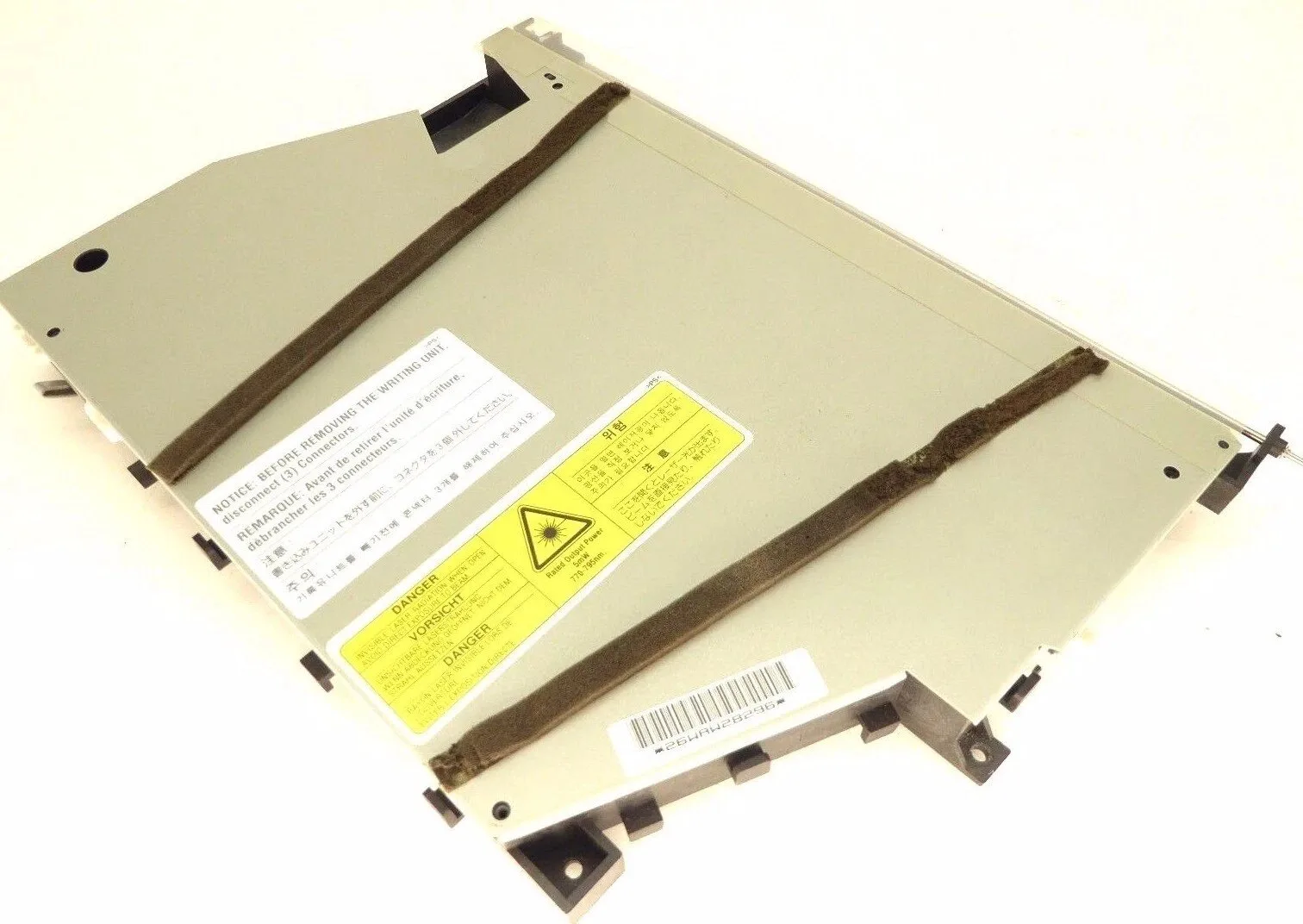
Konica Minolta laser units (LSUs) are a high-failure consumable across the bizhub and C-series ranges, yet plenty of distributors still overpay through indirect channels. Price is not the real risk. The real risk is receiving units that drift out of alignment or ship with contaminated optics, then absorbing the returns when your installers can't get a clean image. This guide covers the inspection points and selection criteria we apply when qualifying factory-direct supply.
Why the Laser Unit Fails—and What That Means for Your Stock
In Konica Minolta bizhub machines, the laser unit sits above the drum and writes the latent image. Dust ingress and polygon-mirror bearing wear degrade that image over time, producing banding, vertical streaks, or a slow loss of sharpness. On high-volume models like the bizhub C258/C308/C368, a tired LSU typically shows as light print on one side or a background haze that cleaning won't resolve. Distributors who recognize these symptoms can target replacement stock to the installers and service shops already fighting them daily.
Counterfeit and refurbished units sold as new are common in this category. A genuine factory-direct LSU arrives with consistent beam alignment and clean optics. Buy from a broker and you are likely getting pulled units that were cleaned and repackaged; they fail again within weeks, and your customer blames you, not the broker.
Inspection Checklist for Incoming Laser Units
Never accept a shipment without a bench test. Start visually: the polygon mirror housing should be sealed, the lens free of haze, and the connector pins straight. Then run a test print on a known-good engine and look for even density across the page with no pitch-dark bands, which indicate polygon motor imbalance. On Konica Minolta models with a slit glass, confirm the glass is scratch-free; a scratched slit glass causes thin white lines that mimic a drum fault.
- Verify the part number against the machine's service manual—Konica Minolta uses different LSUs for the C227/C287 and C258/C308 series.
- Check the polygon motor for smooth rotation and no axial play.
- Inspect the laser diode window for dust or fingerprints under bright light.
- Confirm the unit includes the mounting bracket and alignment pins; missing hardware means it's a pulled part.
- Run a 50-page duplex test and watch for registration drift or banding that appears only after warm-up.
These checks take about ten minutes per unit and save hours of returns. If your supplier can't provide a test report or refuses a sample order, walk away.
Model Coverage and Common Pitfalls
Konica Minolta's bizhub range spans dozens of models, and laser units are not interchangeable across generations. The bizhub 224e/284e/364e series uses a different LSU than the newer i-series, such as the C300i/C360i. Distributors get caught by cross-reference lists claiming one unit fits all—it doesn't. Confirm the exact machine code and firmware version, because some later firmware updates changed the LSU communication protocol, and an older unit may fail to initialize.
Another trap is remanufactured units with replaced polygon motors but original optics. The motor may be new, but a worn lens coating causes gradual image fade. Factory-direct units from a reputable OEM/ODM partner use new optics and tested motors, which keeps the callback cycle out of your warehouse.
Selecting a Factory-Direct Supplier: What to Ask
Price per unit is one factor among several. Ask about the supplier's quality control process: do they test every unit or batch-sample? What is the failure rate on the polygon motor? Can they provide a traceability report? A factory-direct partner should welcome these questions because they control the line, not just the warehouse.
Lead time and minimum order quantities matter for distributors balancing stock. A true factory can offer mixed-model pallets and scheduled shipments, so you aren't sitting on a year's supply of one LSU. Clarify warranty terms as well. A 12-month warranty on the laser diode and polygon motor is standard for quality units; anything shorter signals refurbished stock.
How CLONER Supports Distributors
CLONER manufactures laser units for Konica Minolta and other major brands in our own factory, which means we control the optics, the polygon motor, and the final alignment. For distributors, we run OEM/ODM programs: your branding on the box, custom packaging, and model-specific firmware compatibility testing. Because we ship factory-direct, you bypass the markup of middlemen and get consistent batches with full traceability.
We keep stock of high-runner Konica Minolta LSUs and turn around sample orders quickly. If returns from broker-sourced units are eating your margin, request a sample and run it through the checklist above. Our engineering team can also help you map part numbers across the bizhub range so your catalog stays accurate.
Need a quote or samples from CLONER?
Factory-direct OEM/ODM supplier of compatible printer consumables & spare parts. Tell us your models — reply within 24h.


