Factory Direct Pickup Roller for Kyocera: Aftermarket Copier Spares Buyer's Guide
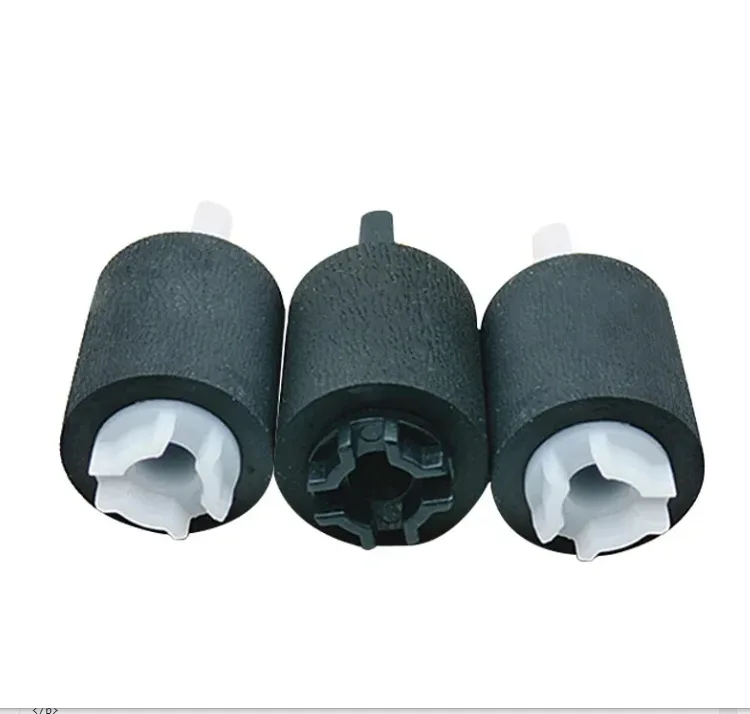
Kyocera pickup rollers look trivial on a spec sheet and wreck your reputation when they fail early. A TASKalfa 3050ci that starts misfeeding at 80,000 pages, or an ECOSYS M3550 that grabs two sheets from tray 2, usually points to the same component — and buyers who source it badly feel it in warranty claims. The real question isn't whether aftermarket is acceptable; it's which factory, which compound, and which inspection regime stands behind the box.
Know the Kyocera feed families before you order
Kyocera's feed geometry is not uniform across the range, and that catches out buyers who treat pickup rollers as a generic SKU. The TASKalfa colour machines (2552ci through 4053ci) and the ECOSYS mono line (M2040, M2540, M3145, P3145) use different roller diameters, shaft collars and hub widths. Older FS-series and KM-series boxes add another set. A pickup roller that physically fits but has the wrong rubber hardness will feed fine on day one and start double-feeding once the paper dust beds in.
Get the part number hierarchy right before quoting. Kyocera typically splits the assembly into pickup roller, feed roller and retard roller — each with its own number, each wearing at a different rate. Repair shops that order only the pickup roller often find the retard pad is the actual culprit on skewed feeds. Ask your supplier to confirm which position each SKU covers and whether the hub is keyed or friction-fit, because a mismatched collar turns a ten-minute job into a stripped shaft.
Volume buyers should also map which rollers are shared across models. A single compound and mould that serves three or four high-runner TASKalfa models cuts your stock depth and simplifies reordering. That cross-model thinking is where factory-direct sourcing pays off — you can consolidate a mixed container instead of carrying dead SKUs.
What actually fails on a Kyocera pickup roller
Field returns almost always trace to one of four things: rubber hardening, glazing, hub cracking, or contamination pickup. Hardening shows up as a durometer drift — a roller that measured 55 Shore A at dispatch reading 70-plus after six months in a warm warehouse. Glazing is the shiny, polished surface that loses grip on coated stock and recycled paper. Hub cracks appear at the collar radius where the mould gate sat, and they propagate under the torque of a high-volume tray.
Contamination is the sneaky one. Cheap compounds with high plasticiser content attract toner dust and paper fibre, so the roller surface turns tacky and starts dragging sheets sideways. On Kyocera machines with tight registration tolerances, that shows up as jams at the registration sensor rather than at the tray, which sends technicians chasing the wrong part.
Ask for the compound data sheet, not just a photo. Nitrile (NBR) is the workhorse for general office paper; EPDM handles higher heat and ozone better in tropical shipments; silicone is overkill for most Kyocera trays but appears in some specialty feeds. A supplier who can't tell you the base polymer and durometer is guessing.
Inspection points that separate good runs from bad
When you evaluate a factory-direct shipment, don't rely on the sample they hand-picked. Pull rollers at random from the carton and run a short, repeatable check. The list below covers the checks that actually predict field performance.
- Durometer reading on the tread surface and at the hub shoulder — both should match the spec sheet within tolerance.
- Visual check for mould flash, gate marks and uneven tread texture under a raking light.
- Hub fit test: press onto a known-good shaft, confirm no wobble and no forced entry.
- Tread concentricity — roll it on a flat surface and watch for high spots that cause feed skew.
- Packaging check: individual bagging, anti-static where relevant, and carton labelling that matches the part number.
Run a small feed trial if you can — 500 sheets of 80gsm through a TASKalfa tray tells you more than any certificate. Watch for double-feeds in the first 50 sheets and listen for the squeal that signals a dry or misaligned hub. A factory that welcomes that trial and ships you the test data is one worth keeping.
Order terms, MOQs and the OEM/ODM route
Factory-direct buying on Kyocera spares usually means mixed-model cartons and MOQs that scale by SKU, not by container. Clarify early whether your supplier holds stock or moulds to order, because lead time on a fresh mould run is very different from pulling from a warehouse. Get the warranty terms in writing — 12 months from shipment is common for aftermarket rollers, but the claim process matters more than the number. Ask what evidence they need: photos, return of the failed unit, or a batch code.
If you carry your own brand, the OEM/ODM route lets you specify compound, durometer, hub material and packaging, then receive private-label cartons with your part numbers and barcodes. That's where a factory's engineering depth shows — a supplier who can tweak the compound for your climate or your customers' paper mix is doing real ODM work, not just slapping a label on a stock roller. Confirm batch traceability and ask for a retained sample from each run so disputes get settled on data.
CLONER manufactures Kyocera-compatible pickup, feed and retard rollers in-house, which means you're dealing with the people who control the compound and the mould rather than a trading desk. We quote factory-direct pricing on mixed-model orders, run durometer and fit checks on every batch, and take OEM/ODM projects from compound specification through private-label packaging. Send your part-number list and volume and we'll come back with a concrete quote and a sample plan you can test on your own machines.
Need a quote or samples from CLONER?
Factory-direct OEM/ODM supplier of compatible printer consumables & spare parts. Tell us your models — reply within 24h.