OEM vs Compatible Cleaning Blade for Siond: Distributor Buying Guide
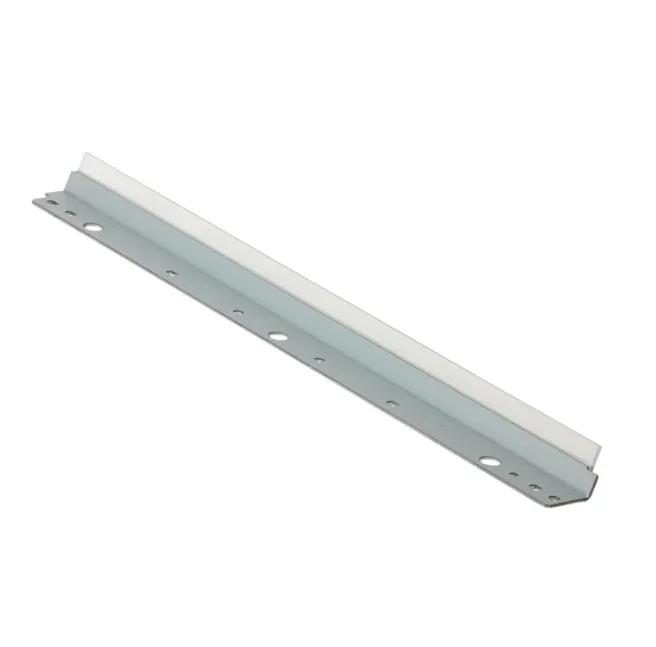
If you stock Siond copiers, you know the cleaning blade is a consumable that can make or break your aftermarket reputation. Distributors often ask: should I pay OEM prices or risk compatible blades? The answer isn't black and white. It depends on your customer base, volume, and how well you vet your supplier. This guide cuts through the noise with practical, field-tested advice for buyers who move boxes, not just units.
OEM Siond Cleaning Blades: The Safe Bet with a Cost
OEM blades come in Siond-branded packaging, typically with a holographic seal and a part number that matches the service manual. For models like the Siond SF- series and newer Siond Pro C-series, OEM blades use a specific polyurethane compound with a 70-75 Shore A hardness. That hardness is tuned to the drum's surface energy and the toner's particle size. Deviate too much, and you get either premature wear or incomplete cleaning.
Pricing for OEM blades runs 30-50% higher than compatible equivalents. For a distributor, that's a real margin squeeze. But OEM blades offer predictable yield—typically 80k to 120k pages on a mid-volume Siond machine. If your customers are risk-averse (banks, law firms, government), OEM is the easy sell. The downside? You're locked into Siond's distribution terms, which often include minimum order quantities and little flexibility on private labeling.
Compatible Cleaning Blades: Where Quality Varies Wildly
Compatible blades for Siond are a mixed bag. Some factories reverse-engineer the OEM spec and produce a blade that performs 90-95% as well for half the price. Others cut corners on the urethane grade or the edge geometry, leading to streaking, drum scratching, or blade flip—a failure where the blade folds over and dumps toner back onto the drum. The difference often comes down to the curing process and the precision of the edge cut.
When evaluating a compatible supplier, ask for the blade's hardness range, the edge angle tolerance (should be ±0.5°), and the batch traceability. A supplier who can't provide these numbers is a gamble. Also, check the packaging: good compatible blades come in anti-static bags with a desiccant, not loose in a cardboard box. That's a quick tell for a factory that understands the product.
Inspection Checklist for Incoming Siond Cleaning Blades
Before you commit to a bulk order, run a sample through a real Siond machine. Install the blade, run 500 pages of a 5% coverage test pattern, then inspect the drum and the blade edge. Look for toner filming on the drum, which indicates the blade isn't making full contact. Check the blade edge under a magnifier—any nicks or waves mean poor quality control. And measure the blade's thickness; OEM Siond blades are typically 2.0 mm, and a compatible that's 1.8 mm will flex differently.
Here's a quick field checklist for your QC team:
- Verify blade hardness with a durometer (target 70-75 Shore A).
- Check edge straightness: no visible waves or chips under 10x magnification.
- Confirm the mounting holes align with the Siond drum unit without forcing.
- Run a 500-page test and inspect for streaking or toner leakage.
- Compare blade thickness to OEM spec (usually 2.0 mm).
If a sample fails any of these, reject the batch. A single bad batch can cost you a customer who runs a fleet of 50 Siond machines.
Cost-per-Page vs. Cost-per-Blade: The Distributor's Math
Distributors often fixate on the unit price. That's a mistake. A compatible blade at $3 that yields 40k pages costs $0.075 per page. An OEM blade at $6 that yields 100k pages costs $0.06 per page. The OEM is actually cheaper per page, but you tie up more cash in inventory. The sweet spot is a compatible blade that hits 80k pages at $4—that's $0.05 per page and better cash flow.
To find that blade, you need a supplier who controls the urethane formula and the cutting process. Many trading companies source from multiple factories, so quality shifts between orders. A factory-direct partner gives you consistent batches and the ability to tweak the compound for specific Siond models. For example, the Siond SF-5300 runs a softer blade than the SF-7800 because of different drum coatings. A one-size-fits-all compatible will underperform on one of them.
Why CLONER's Factory-Direct OEM/ODM Model Works for Siond Distributors
CLONER manufactures cleaning blades in our own plant, not through third-party trading companies. That means we control the urethane mixing, the molding, and the edge trimming. For Siond-specific blades, we keep tooling for the most common models—SF- series, Pro C-series, and the older Siond 2000/3000 lines—and we can run OEM/ODM orders with your branding and packaging. No minimum order of 10,000 units; we work with distributors who need 2,000 to 5,000 pieces per SKU.
Our OEM/ODM service includes custom hardness, custom edge geometry, and private-label packaging that meets retail requirements. We also provide batch test reports so you can verify yield before you sell. If you're tired of inconsistent compatible blades and OEM prices that kill your margin, talk to us. We'll send samples for your Siond machines and let the drum decide.
Need a quote or samples from CLONER?
Factory-direct OEM/ODM supplier of compatible printer consumables & spare parts. Tell us your models — reply within 24h.