
Long-Life Sharp Fuser Film Sleeves: Inspection, Selection, and Factory-Direct Supply
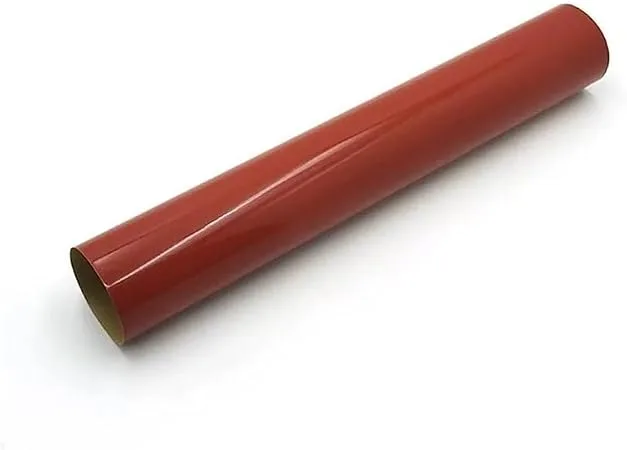
Fuser film sleeves for Sharp copiers are a high-turnover part, and treating them as a commodity often leads to comebacks and service calls. A sleeve that fails at 60k prints instead of 150k can erase your margin on the whole order. The difference comes down to substrate quality, coating adhesion, and exact dimensional match—details that are easy to miss unless you know what to inspect and what to ask your supplier.
Why Sharp Fuser Film Sleeves Fail Early
Sharp's fuser design across the MX and AR series runs the film sleeve against a pressure roller under constant tension. The sleeve is thin—typically 50–70 microns—and must withstand surface temperatures around 180–200°C while flexing millions of times. Early failures usually trace back to three things: inconsistent polyimide wall thickness, poor release-layer bonding, or contamination during assembly. A sleeve that is 5 microns too thin will wrinkle and tear at the edges; one with weak coating will pick up toner and cause offset streaks within the first few thousand prints.
Heat history matters too. Sleeves stored in humid warehouses before shipping can absorb moisture, leading to blistering when first heated. Buyers who source from trading companies without climate-controlled storage often see higher out-of-box failure rates. Factory-direct supply cuts that risk because the sleeve goes from coating line to sealed bag in a controlled environment.
What to Inspect on Incoming Sharp Film Sleeves
You don't need a lab to catch most defects. Start with a visual check under bright light: the surface should be uniform, with no visible pinholes, streaks, or cloudy patches. Run a gloved finger along the edge—any roughness or burrs will cause premature wear on the pressure roller. Measure wall thickness at four points with a micrometer; variation should be within ±3 microns. If you have a sample from a known-good batch, compare flexibility: a quality sleeve flexes smoothly without creasing.
For a deeper check, mount the sleeve on a spare fuser unit and run a test pattern. Look for even gloss across the page and no background toner on the first 50 prints. A sleeve that fails this quick test will likely fail in the field. Also verify the part number against Sharp's model list—MX-4100N, MX-5000N, MX-6200N, and AR-6020 series use different sleeve lengths and end configurations. Mislabeled stock is a common problem with low-cost suppliers.
Selection Criteria for Long Service Life
Not all polyimide sleeves are equal. The base film should be a high-purity polyimide with a consistent molecular structure—recycled or lower-grade film will embrittle faster under heat cycling. The release coating (usually PFA or PTFE) must be sintered properly; a coating that looks good but wasn't cured at the right temperature will wear through in weeks. Ask your supplier for the coating thickness and cure profile. Reputable factories will share this data.
Endless belts versus seamed sleeves: Sharp's design uses endless (seamless) sleeves for most models. A seam—even a well-made one—is a weak point that can catch on the doctor blade and tear. Confirm you're getting seamless construction. Also check the inner surface: some suppliers apply a lubricant that dries out and causes squealing. A dry, clean inner surface is best; the machine's own grease will do the job.
Here's a quick checklist for evaluating a new supplier:
- Request a batch test report with wall thickness and coating weight.
- Ask for the cure temperature and duration for the release layer.
- Confirm the sleeve is seamless and free of inner lubricants.
- Check packaging: sealed bags with desiccant, not loose in a box.
- Get a written commitment on shelf life (typically 24 months from production).
Compatibility and Stocking Strategy
Sharp's fleet is fragmented. The MX-4100/5000 series shares a sleeve with the MX-4140/5140, but the MX-6200/7000 uses a longer sleeve. The AR series (AR-6020, AR-6030) uses a different diameter altogether. Stocking the wrong mix ties up capital and leads to emergency air freight. Work with a supplier who publishes a clear cross-reference and can supply mixed batches without minimum-order penalties.
For high-volume repair shops, keeping two to three of the fastest-moving sleeves on the shelf is smart. But don't overstock slow movers—sleeves have a shelf life, and old stock can absorb moisture even in sealed bags. Rotate stock and use the oldest first. If you're an importer, ask for production date codes on the packaging; it's a simple way to avoid receiving aged inventory.
Factory-Direct vs. Trading Company Supply
The Sharp aftermarket is full of trading companies that source from multiple factories, rebrand, and disappear when quality issues arise. Factory-direct supply from CLONER means you're dealing with the people who coat the film and assemble the sleeve. That matters when you need a custom length for an odd model or a batch with tighter tolerances. CLONER runs OEM and ODM projects for distributors who want their own branding and packaging—no minimum order for standard models, and flexible terms for custom runs.
Because CLONER controls the coating line, we can adjust wall thickness and coating weight to match your market's needs. Some buyers prefer a slightly thicker sleeve for harsh environments; others want maximum thermal transfer for high-speed machines. We keep the process in-house, so lead times are predictable—typically 15–20 days for standard orders, faster for repeat buyers. That's the difference between chasing stock and planning your inventory.
If you're tired of inconsistent fuser film sleeves and want a supplier who understands Sharp's fuser design, talk to CLONER. We'll send samples with full inspection data, and you can test them on your own machines before committing to a volume order. Factory-direct pricing, OEM/ODM support, and a quality record you can check—that's how you build a profitable parts business.
Need a quote or samples from CLONER?
Factory-direct OEM/ODM supplier of compatible printer consumables & spare parts. Tell us your models — reply within 24h.


