
Long-Life Fuser Film Sleeves for Sharp: Sourcing, Inspection, and Fitment
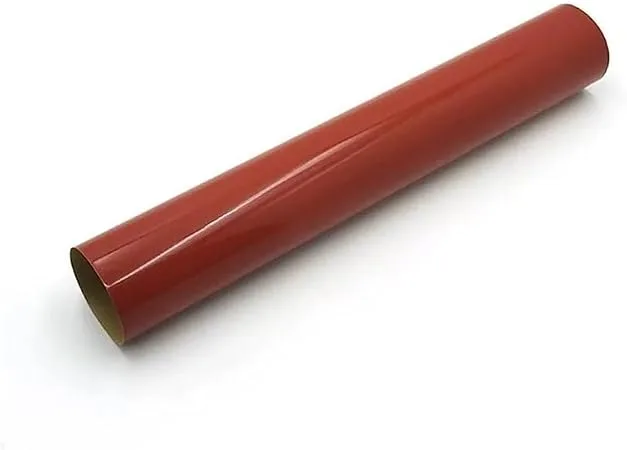
If a carton of Sharp fuser film sleeves comes back with a 40% failure rate, the film itself is rarely the culprit. Coating thickness, inner diameter tolerance, or a supplier who never ran the parts past 20,000 pages—those are the usual suspects. Sharp's MX and AR series machines are unforgiving: a sleeve that's 0.05 mm off spec will drag, blister the grease, and score the pressure roller within a few thousand prints. Buyers who source on unit price alone end up paying twice.
Which Sharp series actually eat fuser film sleeves
The volume sits in three families. MX-2310/2610/3110 and the MX-2640/3140/3640 range are the workhorses in SMB fleets, and their fuser units run hot and fast, so film sleeves take the brunt. The AR-5520/5620 and older AR-5316/5320 units are still dense in aftermarket repair shops across the Middle East and Southeast Asia, where rebuild demand stays steady. Then there's the MX-M264/M314/M354 monochrome line, which shares a sleeve profile with several later models—a good SKU to stock if you want one part number covering multiple machines.
Don't assume cross-compatibility from the parts catalog alone. Sharp changed the sleeve wall thickness and the fluorine coating on later revisions of the MX-3640 fuser without changing the outer part number. If your supplier is shipping old-stock sleeves built to the first revision, they'll fit but wear faster. Ask for the revision date on the coating spec, not just the model list.
What separates a long-life sleeve from a cheap one
Three things decide service life: the base film, the release coating, and the end-face finish. Good sleeves use a polyimide base in the 50–60 micron range with a uniform PTFE or PFA dispersion coat. Cheap ones use thinner film and a sprayed coating with visible orange-peel texture—that texture is where toner starts sticking after 8,000–10,000 pages, and once it sticks, the blade chatters and you get background on the page.
The end faces matter more than most buyers realize. A burr on the sleeve edge will shave the fuser grease off the heater and cause premature wear on one side. Run a fingernail across the edge on a sample; if you feel a lip, reject the lot. Inner diameter tolerance should hold within ±0.02 mm, because the sleeve rides directly on the heater substrate and any slop turns into uneven pressure and banding.
Incoming inspection that catches bad lots before your customers do
You don't need a lab to screen a shipment. A bench inspection of 5–10 pieces per carton catches most defects. Check dimensional consistency first, then run two or three sleeves in an actual fuser unit to 5,000 pages and inspect the film surface and the pressure roller for scoring. If you're buying container volume, insist on a pre-shipment test report with page counts and photos of the film after running.
- Measure wall thickness at four points; variation over 3 microns means inconsistent coating.
- Check end-face burrs under a loupe—any raised edge is a reject.
- Verify inner diameter with a bore gauge, not calipers, on at least five pieces.
- Confirm coating color and texture are uniform across the lot; blotchy or glossy patches signal thin coat.
- Run a 5,000-page burn-in on one sample and photograph the film before accepting the shipment.
Ordering terms that protect your margin
Fuser film sleeves are light and cheap to ship, which makes them easy to over-order and easy to get stuck with a dead revision. Buy in mixed cartons by model rather than betting on one SKU, and set the PO so that the supplier states the coating revision and film thickness on the packing list. For Sharp parts specifically, ask for a written shelf-life statement—coated sleeves stored in humid warehouses can absorb moisture and fail early even if they were perfect at the factory.
Payment terms should tie the balance to the burn-in result on the first carton, not to the shipping date. Reputable factories accept this because they test their own output. If a supplier pushes back on a 5,000-page sample run, that tells you what their process control looks like.
Where CLONER fits into your Sharp parts program
CLONER manufactures fuser film sleeves in-house, including the Sharp MX and AR profiles, with the polyimide base and PTFE coating specified per model revision. We run burn-in testing on production lots and can supply the test data with the shipment. For importers and rebuild shops carrying Sharp lines, we do OEM packaging under your brand and ODM work where you need a revised coating or a sleeve sized for a specific fuser unit. Factory-direct pricing applies from mixed-model cartons, so you can stock the MX-3140 and AR-5620 profiles in one order without committing to a full pallet of each.
Send us the model list you move most and the page-count target you need to hit, and we'll quote against that spec rather than a generic one.


