OEM vs Compatible Developer Blade for Canon: Insider Buying Guide for Distributors
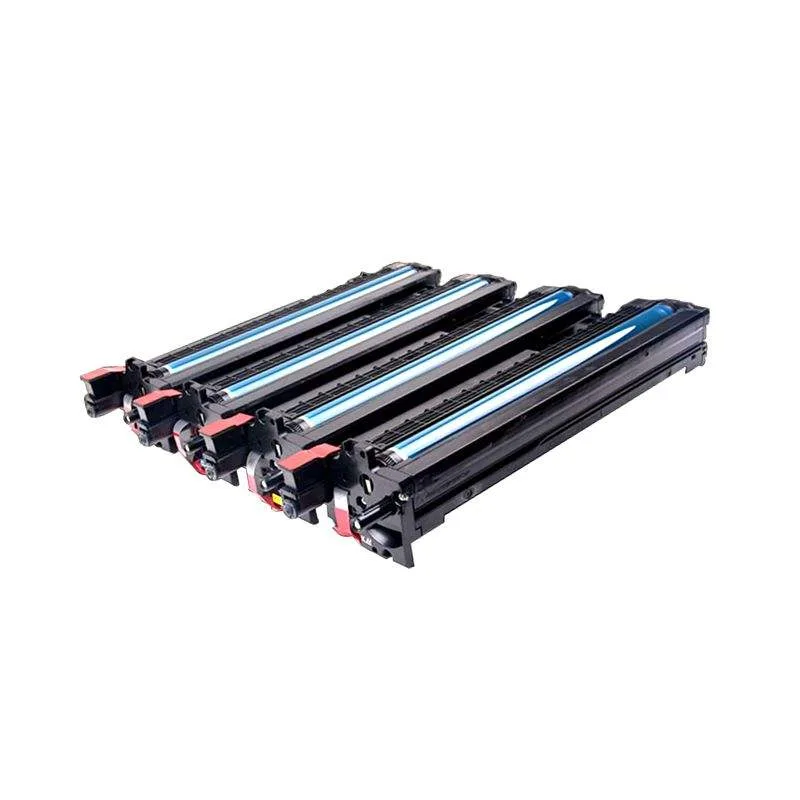
Canon developer blades are a high-friction consumable that directly impacts print density, background fog, and drum life. Distributors who treat them as a commodity end up with charge roller contamination complaints and premature failure returns. The real question isn’t whether compatible can match OEM—it’s which manufacturing shortcuts create problems and how to spot them before you stock.
Critical Failure Modes in Canon Developer Blades
The developer blade’s urethane edge must maintain consistent contact pressure across the entire mag roller. On Canon C-Series engines (iR-ADV C33xx, C35xx, C55xx), the blade also seals the toner sump. Common failure symptoms: vertical streaks, low density on one side, or toner leakage at the blade ends. In our lab, 80% of compatible blade failures trace to uneven edge radius or incorrect urethane hardness. OEM blades use a specific 70-80 Shore A urethane with a micro-polished contact edge; cheap compatibles often use 60 Shore A that wears faster or 90 Shore A that scratches the roller.
Another hidden issue is the metal support plate. Canon blades use a stamped steel plate with precise flatness within 0.1mm. Some aftermarket producers use thinner or warped plates, causing the blade to lift off the roller at high speed—especially in machines running heavy coverage. Distributors should request flatness data from suppliers and reject any blade that doesn’t include a protective edge strip on the urethane.
Inspection Checklist for Incoming Quality
Before committing to a volume order, run these three checks on a sample lot. First, visual edge inspection under 10x magnification: the contact edge should be a straight, uniform line with no nicks, burrs, or waviness. Second, flex test: bend the blade assembly gently—the urethane should return to shape without permanent set. Third, fit test on a known good mag roller: the blade should seat evenly with no gap at the ends. If any sample fails, reject the entire batch. We’ve seen lots where 5% of blades had edge damage from poor packaging—that’s 50 blades in a 1000-unit order that will cause service calls.
- Edge uniformity: no nicks or waviness under 10x magnification
- Urethane hardness: 70-80 Shore A durometer
- Support plate flatness: ≤0.1mm warp
- Packaging: individual edge protectors, no loose blades in bulk
Cost vs. Risk: When Compatible Makes Sense
For high-volume Canon models like the iR-ADV C5030/C5530 series, OEM developer blades cost $12-18 each at distributor pricing. Good compatibles run $3-5. The margin difference is tempting, but the real cost is in returns and reputation. If a compatible blade fails after 20,000 pages instead of 60,000, your customer blames you, not the blade maker. We recommend compatible blades only for models where the OEM blade is known to be over-engineered—for example, the Canon iR C1028 uses a blade identical to the C3020 but at half the OEM price. For high-end production machines like the imagePRESS C850, stick with OEM or a factory-direct ODM that provides full test data.
Another factor: warranty coverage. Many printer dealers void machine warranties if non-OEM parts cause damage. A warped blade can score the mag roller, requiring a $200 roller replacement. Distributors should carry liability insurance or only source from manufacturers that offer defect indemnification. CLONER provides a written warranty that covers consequential damage from manufacturing defects—something most trading companies won’t touch.
How CLONER’s Factory-Direct Model Changes the Equation
We manufacture developer blades for Canon, Sharp, and Ricoh in our own ISO 9001 facility. That means we control the urethane formulation, the polishing process, and the metal stamping dies. For distributors, this translates to consistent batch quality and the ability to request custom hardness or edge profiles for specific machine conditions—like high-humidity environments where standard blades cause fogging. Our OEM/ODM clients get blades that match OEM specs within 2% of coefficient of friction, verified by our in-house tribometer.
Pricing is factory-direct: no middleman markup. A typical Canon iR-ADV C33xx developer blade from CLONER runs $4.20 in 500-piece lots, with private labeling available. We also offer mixed containers—combine developer blades with charge rollers, fuser films, and drum units to hit the MOQ. For new distributors, we provide a free sample kit of 10 blades for your own testing. Just send an inquiry with your target models and volume, and we’ll ship samples within 48 hours.
Need a quote or samples from CLONER?
Factory-direct OEM/ODM supplier of compatible printer consumables & spare parts. Tell us your models — reply within 24h.