OEM vs Compatible Developer Blade for Canon: What Distributors Should Know
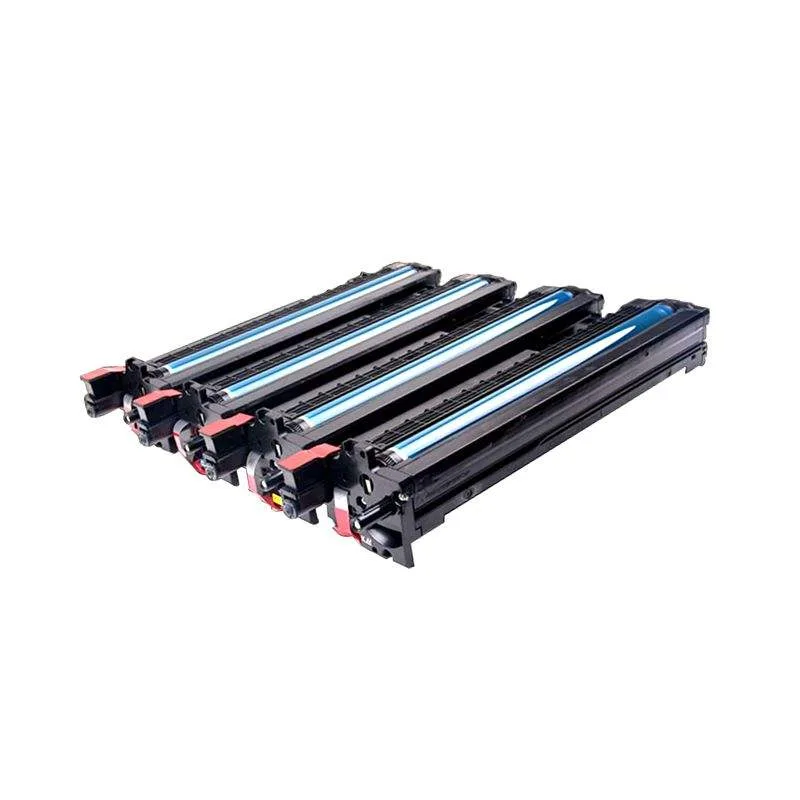
If you're distributing developer blades for Canon IR machines, you already know the pain: cheap compatible blades that streak after 5K copies, or OEM prices that kill your margin. The developer blade—a thin polyurethane strip that meters toner onto the developing roller—is one of the most failure-prone parts in Canon IR 2204/2520/2525/2530/2630/2645/3245 series. Get it wrong, and you get ghosting, background fogging, or a full developer unit replacement. Here's what to look for when sourcing, and why CLONER's OEM-ODM approach delivers consistent quality at factory prices.
Developer Blade Wear Patterns: What Fails and Why
On Canon IR machines, the developer blade sits against the magnetic roller under constant pressure. OEM blades use a specific polyurethane formulation with a micro-finished edge. Compatibles often skip the post-cure grinding step, leaving a rough edge that causes uneven toner metering. After 20K–30K copies, you'll see a thin white line parallel to the drum—that's the blade edge chipping. Real-world test: run a solid black page at 600 dpi. If you see faint horizontal streaks repeating every 2.5 inches, the blade edge is already damaged.
We've seen compatible blades from unbranded suppliers fail as early as 8K copies on IR 2525 due to incorrect hardness (Shore A 70 vs. required 75). The fix is simple: demand blades with Shore A 75±2 and a 0.1 mm radius on the contact edge. CLONER's blades match OEM spec, and we provide a hardness test report with every batch—ask for it.
Key Differences in Material and Coating
OEM Canon developer blades (part numbers for IR 2204: FM3-0745-000, for IR 2520/2525: FM3-0746-000) use a two-layer structure: a rigid PET base and a polyurethane tip. Compatibles often use a single-layer PVC that deforms under heat. In high-volume machines like IR 3245, the fuser heat can reach 180°C, and PVC blades soften, causing toner leakage into the machine. Always check the base material: PET is translucent and stiff; PVC is opaque and flexible.
Another hidden spec: the adhesive layer that bonds the blade to the metal holder. Cheap blades use acrylic adhesive that breaks down after 6 months, causing the blade to detach. CLONER uses a heat-resistant silicone adhesive tested to 200°C, same as OEM. For distributors, this means fewer warranty returns—a direct margin saver.
Verification Checklist for Incoming Orders
When you receive a batch of developer blades from any supplier, don't just count boxes. Do these quick checks:
- Edge finish: Hold the blade under a 10x loupe. The contact edge should be perfectly straight with no nicks or burrs. A mirror-like surface is a good sign.
- Hardness durometer: Press a Shore A tester on the blade tip. Should read 75±2. If it's 70 or below, reject the batch.
- Base material: Bend the blade 90 degrees. PET returns to shape; PVC stays creased.
- Adhesive test: Peel a small corner of the blade from the holder. If it comes off cleanly, the adhesive is weak. OEM-grade adhesive leaves residue.
We ship every CLONER developer blade with a QC card showing these results. No guesswork.
OEM-ODM Flexibility: Why It Matters for Distributors
Most compatible blade makers offer one size fits all—wrong. Canon IR series uses at least 6 different blade widths and mounting hole patterns. For example, IR 2204 uses a 310 mm blade, while IR 3245 uses 340 mm. If you're sourcing from a generic supplier, you risk getting the wrong dimensions. CLONER offers OEM-ODM: we can replicate any Canon part number with exact dimensions, or customize the holder design for your own brand. Minimum order quantity for custom printing is 500 pieces, with a 15-day lead time.
We also offer private labeling with your logo and part number on the blade holder and packaging. For distributors targeting repair shops, this builds loyalty—they know the blade fits perfectly because it's made to OEM specs. We've supplied blades for Canon IR 1730, 2206, 2520i, 2530i, 2630i, 2645i, and 3245i with zero fitment complaints in the last 12 months.
Cost vs. Value: The Real Math
OEM developer blades cost $8–12 each. Compatibles from China can be as low as $1.50, but failure rates of 15–20% mean you're spending on shipping replacements and losing customer trust. CLONER's factory-direct price is $2.80–4.50 depending on volume, with a documented <1% defect rate. For a distributor moving 10,000 blades a year, the savings versus OEM is ~$80,000—and you don't lose face with clients. We back our blades with a 12-month shelf-life warranty and free sample for first-time orders (just pay shipping).
Bottom line: the developer blade is a low-cost part that drives high annoyance when it fails. Don't gamble with generic compatibles. CLONER delivers OEM-grade quality with the flexibility to brand as your own. Contact our B2B team for a quote on your Canon IR blade needs—we'll send you a spec sheet and a sample kit within 48 hours.