OEM vs Compatible OKI Print Heads: A Distributor's Guide to Risk and Margin
If you distribute OKI print heads, you already know the margin squeeze. OEM parts eat your profit, but cheap compatibles can eat your reputation when a head fails at 30,000 pages. The real question isn't which is 'better' in a vacuum—it's which fits your risk profile and customer base. Let's get into what actually matters when you're buying print heads for the C800 series, the MC860, or the Pro9540.
What's Actually Inside an OKI Print Head
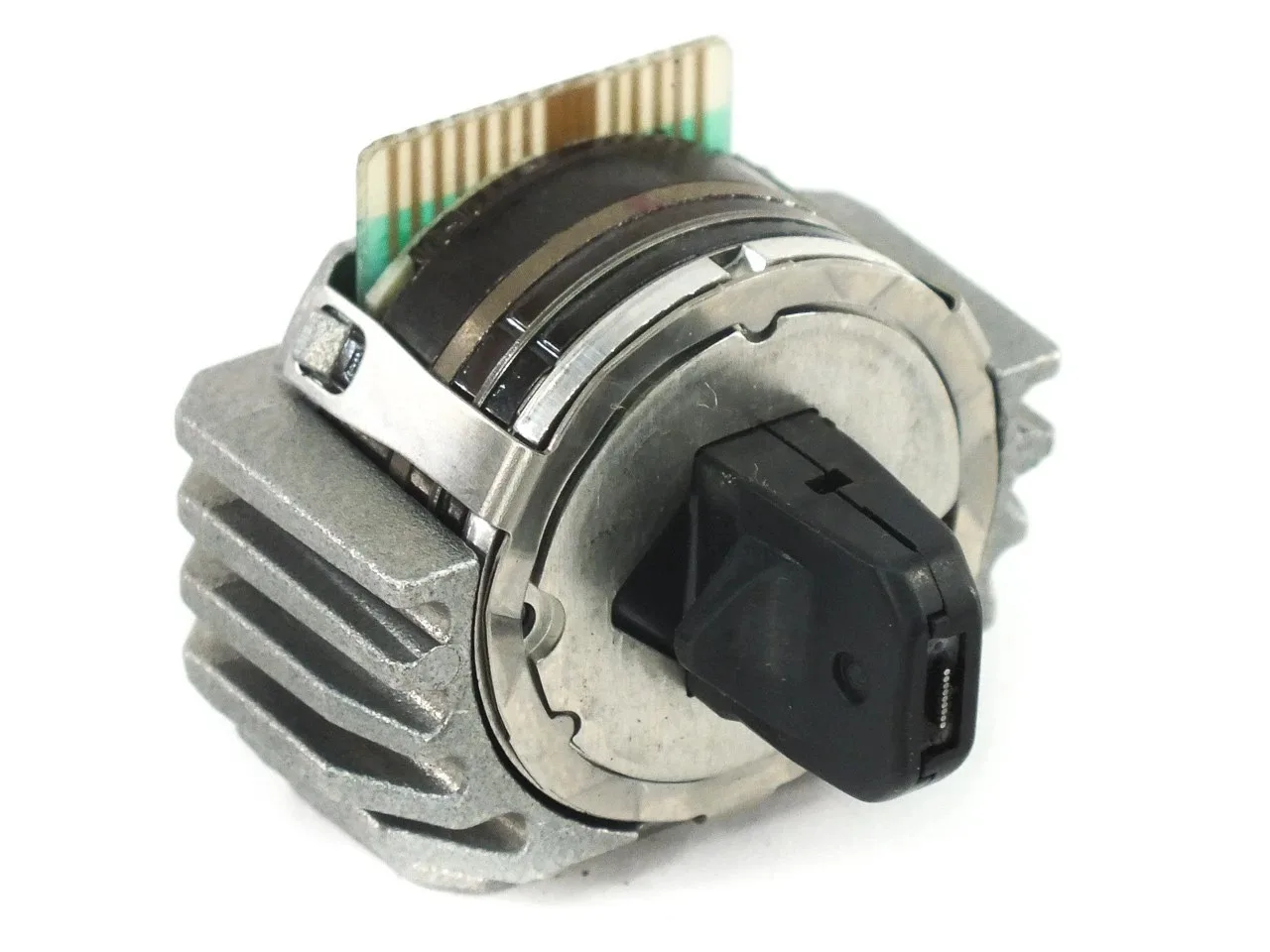
OKI's LED heads are not your average inkjet cartridge. They contain a ceramic piezoelectric element that drives ink through microscopic nozzles, and the alignment tolerances are measured in microns. When we tear down OEM heads at CLONER's factory, we see why OKI charges what they do—the nozzle plate is laser-welded, the fluid channels are etched, and the driver chip is calibrated to the specific head.
Compatible manufacturers take different shortcuts. Some use a generic driver chip that's 'close enough' and hope the firmware accepts it. Others skip the final calibration step, which shows up as banding or color misregistration after 10,000 pages. The worst ones use a thinner piezoelectric layer, which means lower ink ejection force and more clogging with high-viscosity inks.
Inspection Checklist Before You Commit to a Supplier
You don't need an electron microscope to separate good compatibles from bad ones. Start with the physical build—look at the nozzle plate under a magnifier. OEM and quality compatibles have a perfectly smooth, uniform surface. Cheap ones show tooling marks or slight warping. Check the flex cable for kinks or scratches; any damage there is a death sentence within 5,000 pages.
Next, ask the supplier for the driver chip datasheet. It should match the OKI original part number or have a clear cross-reference. If they can't provide that, walk away. Finally, request a sample batch and run them in a real MC873 or C831. Print a 5% coverage test page at 1200 dpi, then a full-bleed photo. Look for horizontal banding, color shifts, or missing nozzles after 500 pages. A quality compatible should be indistinguishable from OEM for at least 50,000 pages.
- Check nozzle plate for tooling marks
- Verify flex cable integrity
- Demand driver chip datasheet
- Run 500-page test in a real machine
- Compare output against OEM baseline
Cost vs. Failure Rate: The Real Math for Distributors
Let's talk numbers. An OEM OKI print head for the C800 series runs you around $180–$250 wholesale. A typical compatible is $60–$90. The margin looks irresistible—until you factor in failure rates. Our own field data from CLONER's customers shows that low-end compatibles have a 5–8% early failure rate (within the first 20,000 pages), while OEM is under 1%. If you sell 100 heads a month, that's 5–8 angry customers.
But here's the nuance: a mid-range compatible from a factory like CLONER, with proper QC, can hit a 1.5–2% failure rate. That's manageable if you price it at $110–$130. You still make 40% more margin per unit than OEM, and you only eat the cost of replacing one or two heads out of a hundred—which you can cover with a simple warranty reserve. The key is not to buy the cheapest option; buy from a supplier who can show you their defect rate and has a return policy that doesn't fight you.
Selecting by Model Family: Not All OKI Heads Are Equal
OKI's print head designs vary significantly across generations. The older MC360/MC560 series use a separate head per color, and they're notoriously sensitive to voltage fluctuations. If your customers run these on dirty power, a compatible with less robust circuitry will fail faster. For those, we recommend sticking closer to OEM specs or using a compatible that explicitly lists surge protection.
The newer C800/C900 series and the Pro9540 use a unified head block that's easier to manufacture—and easier to clone successfully. We've seen compatibles for these models outperform OEM in some cases because they incorporate a slightly larger ink reservoir that reduces air bubble formation. But don't take that as a blanket rule. The MC860's head, which combines four colors in one unit, is a nightmare to align. If you source a compatible for that, demand a calibration certificate from the factory—CLONER provides one with every head we ship, showing the measured droplet volume and nozzle alignment.
Why Factory-Direct Matters for Your Bottom Line
When you buy through a middleman, you're paying for their warehouse, their sales team, and their markup. Buying factory-direct from a manufacturer like CLONER cuts out those layers. You get the same product—or better, because you can specify your own QC standards—at a price that leaves room for you to compete on both price and service.
More importantly, a factory-direct partner can offer OEM/ODM options that no distributor can match. Need a head with a reinforced flex cable for a customer who runs high-duty cycles? CLONER can modify the design to your spec. Want your own brand on the packaging and a custom part number? That's standard for us. We've been manufacturing printing consumables and copier parts for over two decades, and we know that a distributor's reputation hinges on consistency. That's why every CLONER print head goes through a 72-hour burn-in test before it ships—so you don't have to field calls about premature failures.
So when you're weighing OEM vs compatible, remember that the choice isn't binary. It's about finding a supplier who gives you the data to make an informed decision, the flexibility to adapt to your market, and the margins to keep your business healthy. That's what we offer. Get in touch with CLONER for a sample order, and see the difference for yourself.
Need a quote or samples from CLONER?
Factory-direct OEM/ODM supplier of compatible printer consumables & spare parts. Tell us your models — reply within 24h.