OEM vs Compatible Pickup Roller for Konica Minolta: Distributor Buying Guide
If you're stocking pickup rollers for Konica Minolta bizhub and CS series, you've likely seen the price gap between OEM and compatible parts. But the real cost shows up in service callbacks and customer complaints. A pickup roller that fails after 20,000 pages instead of 60,000 will eat your margin faster than any upfront saving. Let's get into what separates a reliable compatible from a cheap knockoff.
What the Pickup Roller Actually Does in Konica Minolta Machines
The pickup roller is the first point of contact between the paper cassette and the imaging engine. In models like the bizhub 227, 287, 367, and the CS (Care Select) series, this roller must handle a range of paper weights—from 60gsm bond to 220gsm cardstock—without slipping or skewing. It also works with the separation roller and feed roller to prevent multi-feeds, which are a common source of jams in these machines.
Over time, the roller's rubber surface loses its coefficient of friction. You'll see it as misfeeds, especially when the cassette is nearly full or nearly empty. If the roller is worn unevenly, you might also get paper jams at the registration section. Most OEM rollers for Konica Minolta are rated for around 100,000 to 150,000 pages, but that depends on the environment and paper quality. Compatible rollers vary wildly—some last as long as OEM, others fail in weeks.
Key Differences Between OEM and Compatible Rollers
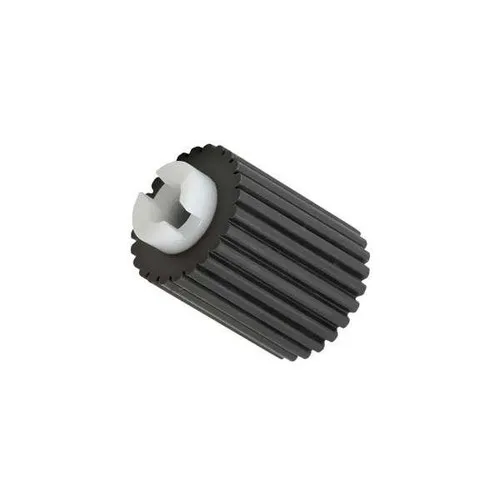
OEM rollers are made to exact specifications, with a specific rubber durometer (hardness) and surface texture. For Konica Minolta, the pickup roller typically has a dual-layer construction: a hard inner core for rigidity and a softer outer layer for grip. The outer layer's material—often a blend of EPDM or silicone—determines how well it picks up paper in low-humidity conditions.
Compatible rollers can be made from cheaper materials like NBR (nitrile rubber) that harden over time or lose grip when the machine sits idle for a few days. This is a common complaint from end-users: the first print after a weekend fails to pick up paper. Another difference is the roller's diameter and shaft tolerance. A compatible roller that's 0.1mm off can cause uneven pressure, leading to skewed feeds or premature wear on the separation pad.
One more thing to check is the roller's surface finish. OEM rollers have a micro-textured surface that helps grip paper without leaving dust. Some compatibles are too smooth or too rough, which either slips or creates paper dust that contaminates the feed path. That dust will eventually cause other feed issues and might void the machine's warranty if it's still active.
How to Inspect a Compatible Roller Before You Stock It
Don't rely on the supplier's spec sheet alone. Ask for a sample and run a few simple checks. First, measure the roller's outer diameter with calipers. It should match the OEM part's measurement, which you can find in the service manual or by measuring a genuine roller. For the bizhub 227, the pickup roller diameter is about 18mm. Any deviation of more than 0.2mm is a red flag.
Second, press your fingernail into the rubber surface. It should feel slightly tacky but spring back immediately. If it feels hard or leaves a dent, the rubber is likely over-cured or low quality. Third, check the shaft and bearing area. The roller should spin smoothly with no wobble. If it's a roller that comes with a one-way clutch (like some Konica Minolta models), test that the clutch engages properly—a faulty clutch will cause intermittent feed failures.
Finally, run a paper feed test if possible. Use a mix of paper weights, including a lightweight 60gsm and a heavy 200gsm. Feed at least 100 pages and watch for any misfeeds or double feeds. Also, let the machine sit idle for an hour and then test again—this simulates the weekend problem. If the compatible roller passes these tests, it's likely to perform well in the field.
Practical Selection Criteria for Distributors
When you're sourcing compatible rollers for Konica Minolta, look for a manufacturer that provides detailed technical data, including material composition and hardness. They should also offer a warranty that covers defects and performance. A good compatible roller will typically cost 30–50% less than OEM, but only if it meets the same durability standards.
Also consider the roller's compatibility across multiple models. For example, the pickup roller for the bizhub 227 is also used in the bizhub 287, 367, and some CS models. Stocking a universal roller that fits several models reduces your inventory risk. But be careful—some manufacturers list a roller as compatible with a range, but the actual part number may differ in shaft length or clutch type. Always cross-reference the OEM part numbers.
Here's a quick checklist before you commit to a bulk order:
- Verify the roller's diameter and shaft dimensions against OEM specs.
- Test the rubber hardness and surface texture with a durometer and visual inspection.
- Run a 100-page feed test with mixed paper weights.
- Check the one-way clutch operation if applicable.
- Confirm the manufacturer's warranty and return policy.
Why CLONER's Factory-Direct Approach Matters for Your Business
At CLONER, we manufacture pickup rollers and other feed parts for Konica Minolta and other brands in our own factory. That means we control the rubber formula, the molding process, and the quality checks. We don't just resell parts from unknown sources—we engineer them to match or exceed OEM performance. For distributors, this translates into consistent quality batch after batch, which is crucial when you're building a reputation for reliable parts.
We also offer OEM/ODM services. If you have a private label or need a custom roller for a specific application, we can develop it to your specs. Because we're factory-direct, you get better pricing and direct technical support. When you're stocking rollers for Konica Minolta bizhub or CS series, you can trust that CLONER parts will keep your customers' machines running smoothly and reduce your service calls. That's the kind of partnership that pays off in the long run.
Need a quote or samples from CLONER?
Factory-direct OEM/ODM supplier of compatible printer consumables & spare parts. Tell us your models — reply within 24h.