Bulk Sourcing Brother Drum Units: MOQ, Lead Time, and QC Tips for Distributors
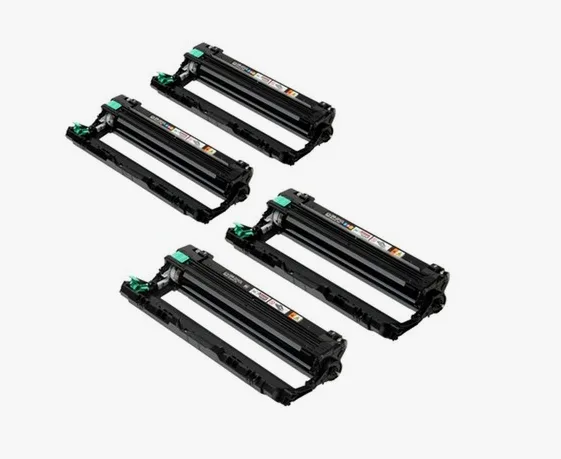
If you're stocking Brother drum units for resale, you already know the brand's aftermarket demand is steady—TN-227, TN-237, DR-241CL, and DR-630 are shelf movers. But bulk sourcing these parts carries its own set of risks: clone quality varies wildly, and a bad batch can burn your reputation with repair shops that depend on you. Here's how to buy smart, inspect hard, and keep your margins healthy.
Understanding MOQ and Price Breaks
Most credible Chinese factories won't talk to you below a 50-piece MOQ per model. That's fine for a first trial, but the real savings kick in at 200–500 units. At those levels, you can expect per-unit prices to drop 10–20% depending on the drum unit model. For example, a DR-630 clone might cost $12–14 at 50 pieces, but $10–11 at 300. Don't chase the lowest quote blindly—a factory that shaves $2 off a drum unit is likely cutting corners on the OPC drum coating or the wiper blade.
Also, ask about mixed MOQs. A good supplier will let you combine different Brother models (e.g., DR-241CL and DR-251CL) to hit a total quantity, which helps you test multiple SKUs without overcommitting to one. Always get the MOQ and price structure in writing, including whether it's FOB or CIF.
Lead Time: What to Expect and How to Plan
Standard lead time for Brother drum unit production is 15–25 days after order confirmation and deposit. That assumes the factory has the raw components—OPC drums, charge rollers, and doctor blades—in stock. If your order includes a less common model like DR-431CL, add 5–10 days for sourcing parts. During peak seasons (August–October, before Q4 sales), lead times stretch to 30–35 days. Plan your inventory accordingly.
You can compress lead time by ordering a trial batch first, then committing to a monthly rolling forecast. Factories like ours at CLONER prioritize scheduled orders because it lets us batch production runs. If you're a distributor with steady demand, negotiate a 12-month forecast and lock in guaranteed slots. That way, you're not at the mercy of spot orders.
Quality Control: The 20-Point Inspection Checklist
Before you wire a deposit, ask for the factory's QC checklist. A reputable supplier will have a documented process. Here's what I'd insist on:
- Print test on a real Brother printer (e.g., HL-L2350DW for DR-630) with a 5% coverage pattern, checking for density, streaks, and background.
- Geiger counter test on the OPC drum surface to ensure coating thickness uniformity.
- Life test: run 10% of the batch to 20,000 pages (for DR-630) to verify yield claims.
Also, inspect the packaging—drum units are sensitive to static and light. Each unit should be in a sealed, light-proof bag with silica gel. If the factory skips that, you'll get returns due to premature drum failure.
Selecting the Right Factory: What to Look For
Not all factories are equal. Look for one that specializes in Brother-compatible parts, not just a general toner mixer. Check if they use genuine OPC drums from reputable suppliers like Mitsubishi or Fuji, or if they source cheap generic ones. Ask for a sample batch of 5 units and test them yourself. Run them in a high-volume environment, not just a quick print test.
Also, verify their certifications—ISO 9001 for quality management, and maybe CE or RoHS if you're shipping to Europe. But certifications alone aren't enough. Ask for a video tour of their production line. A factory that's proud to show you their cleanroom and testing equipment is usually a safer bet than one that makes excuses.
Factory-Direct Advantage with CLONER
At CLONER, we've been making compatible drum units for over a decade, and we understand the demands of B2B buyers. Our factory-direct model means you skip the middleman, and our OEM/ODM capabilities allow you to private-label the units with your brand. We offer flexible MOQs starting at 50 units, with lead times of 15–20 days for standard models. More importantly, we stand behind our QC—every batch is print-tested before shipping, and we provide a warranty against defects. If you're looking to expand your Brother drum unit line without the headaches, contact us for a sample batch and see the difference.