How to Check Printer Cable Quality for Kyocera Copiers Before You Buy
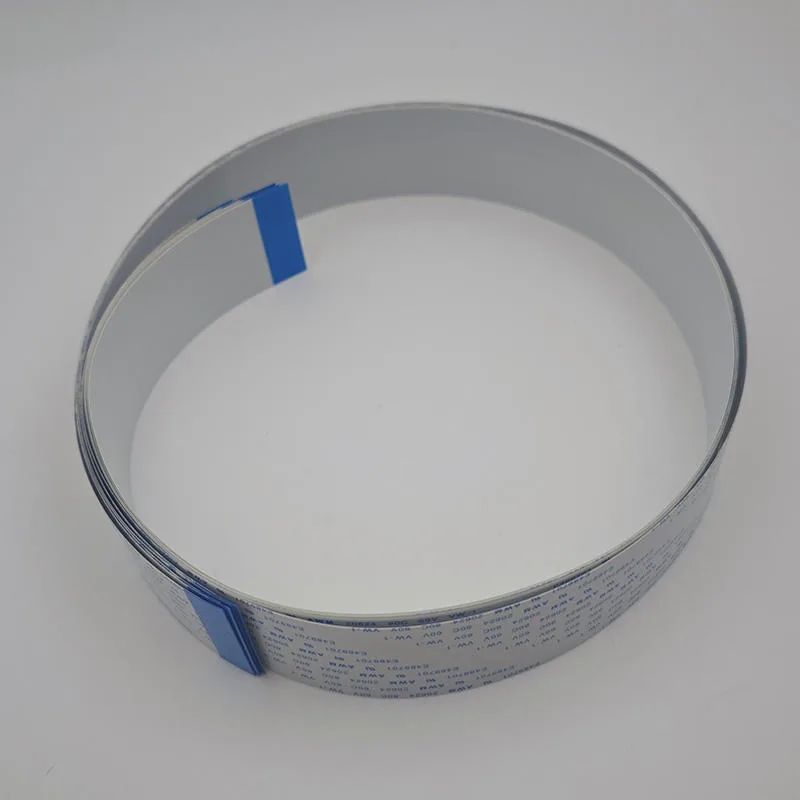
A container of Kyocera cables arrives. You plug one into a TASKalfa 3554ci. Within a week, the machine throws a C-2801 or J-0101. The connector looked fine. The price was right. Now you are eating return shipping and losing a repair-shop account. Kyocera copiers are less forgiving than most brands on cable quality, especially on the drum drive and fuser interface lines. Here is what to check before you commit to a PO.
Start with the connector, not the cable
Pull a sample and look at the housing first. Genuine Kyocera connectors on TASKalfa series use a glass-filled nylon body with a positive latch that clicks once and stays put. Cheap copies use plain ABS or recycled nylon. They feel slick, the latch is soft, and after 20–30 insertions the retention drops. Plug it into a real Kyocera harness and wiggle it side to side. If it moves more than about 0.5 mm, reject the lot.
Check the crimp, not just the pin. Strip one connector back with a knife. A proper crimp has a visible gas-tight seal and the conductor strands are compressed, not cut. If you see nicked strands or a crimp that only grabs the insulation, that cable will fail intermittently on high-vibration paths like the duplex unit or the paper feed assembly. This is the single most common defect I see in low-cost Kyocera cable batches.
Gold plating matters more than sellers admit. On Kyocera ECOSYS machines running in humid warehouses or coastal markets, tin-plated contacts oxidize and create resistance drift. Ask for at least 0.5 micron gold flash on the contact area. If the supplier cannot provide a plating thickness report, assume it is tin.
Measure impedance and shielding before you trust the spec sheet
Kyocera controllers are sensitive to impedance mismatch. For the main harness on TASKalfa 2552ci through 4052ci, you want 100 ohm differential impedance within plus or minus 10 percent. A $30 handheld TDR or even a decent LCR meter will catch cables that are wildly off. If you do not own one, ask your supplier for a sample test report with real numbers, not just a pass stamp.
Shielding is where cheap cables cut corners. Look for a foil wrap plus a drain wire, or a braided shield with at least 85 percent coverage. On Kyocera fuser and drum cables, poor shielding shows up as random image noise, skewed print, or intermittent C-6000 series errors. Cut one cable open and count the layers. If you see only a single foil layer with no drain wire, that is a budget cable and it will bite you in the field.
Do a continuity and resistance check on every conductor. A good Kyocera cable should read under 0.5 ohm per meter on power lines and under 1.5 ohm on signal lines. Anything higher means thin copper or poor crimps. This takes ten minutes per sample and saves you a container of returns.
Field-test on the actual machine, not a bench
Bench testing tells you almost nothing. Install the sample cable in a Kyocera TASKalfa or ECOSYS machine and run at least 500 prints, including duplex and heavy coverage pages. Watch for jams, image defects, and error codes. Then power cycle the machine 20 times and check that the cable does not throw a communication error on startup. Kyocera controllers log intermittent faults, so pull the error history after the run.
Vibration matters. Run a duplex job with the machine on a hard floor, then repeat on a slightly uneven surface. Cheap cables with weak latches will disconnect under vibration. If your cable passes on a bench but fails in a real office environment, you have a field failure waiting to happen.
Ask for a batch traceability number. If a defect shows up six months later, you need to know which production run it came from. Suppliers who cannot trace a batch are not serious about quality control.
What to put in your PO and inspection checklist
Before you sign, lock down these points in writing. This is the short list I use with importers and repair-shop buyers:
- Connector retention force: minimum 20 N pull-out, tested on 5 samples per batch.
- Contact plating: 0.5 micron gold minimum, with a plating report.
- Impedance: 100 ohm differential, plus or minus 10 percent, tested with TDR.
- Shielding: foil plus drain wire or 85 percent braid, verified by cross-section.
- Field test: 500 prints on a Kyocera TASKalfa or ECOSYS machine, no C- or J- codes.
Also agree on AQL. For Kyocera cables, I recommend AQL 0.65 for critical defects like open circuits and wrong pinout, and AQL 1.5 for cosmetic issues. If a supplier pushes back on AQL 0.65, they are telling you their process is not stable.
Get a pre-shipment inspection done by a third party if the order is over 5,000 pieces. The cost is small compared to a recall. Ask the inspector to pull 20 cables at random, not the ones the factory picked.
Why factory-direct sourcing changes the math
Most Kyocera cable problems trace back to trading companies buying from unknown workshops and relabeling. When you buy factory-direct from CLONER, you are dealing with the people who actually run the injection molding, crimping, and testing lines. We build Kyocera-compatible cables for TASKalfa and ECOSYS series on the same equipment we use for our OEM and ODM programs, which means we can hold the tolerances above without a middleman marking up every defect.
We do OEM and ODM work for importers who want their own branding, custom lengths, or specific connector colors. If you need a cable that matches a particular Kyocera model year or a non-standard harness routing, send us a sample or a drawing and we will quote it. We also provide batch test reports, plating thickness data, and pre-shipment inspection support as standard, not as an upsell.
If you are sourcing Kyocera cables for the first time, order a small sample batch, run the checks above, and see how the cables hold up in real machines. That is the only test that matters. When you are ready to scale, CLONER can quote factory-direct pricing with the quality documentation your customers will ask for.