
Kyocera Drum Chip Bulk Sourcing: What Actually Matters
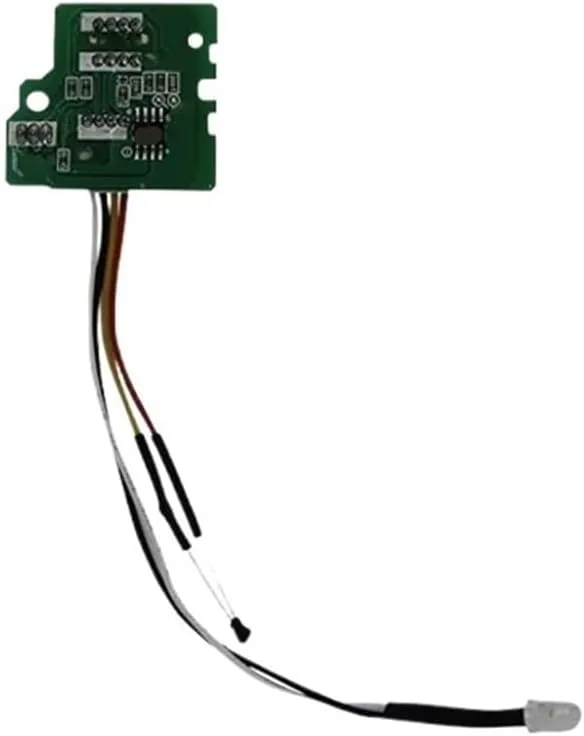
Most Kyocera drum chip complaints don't start in the copier. They start on the purchase order. A repair shop buys 500 chips at a good unit price, fits them into TASKalfa 3050ci and 3550ci units, and three weeks later half the machines throw a toner or drum error again — or the counter resets and then stalls at 40%. The supplier goes quiet, and the shop eats the labor. Bulk buying only pays off if you know what MOQ really means, how lead time behaves, and which QC checks catch a bad batch before it reaches a customer's floor.
MOQ: what the number hides
For Kyocera drum chips, quoted MOQs usually run from 100 to 1,000 pieces depending on whether the chip is a universal reset type or a model-specific one. The trap is that a low MOQ often signals mixed stock — chips pulled from different production lots and re-bagged. Those lots can differ in firmware compatibility, and you won't see it until field failures start. Ask the supplier whether the MOQ is one production batch or assembled from leftovers. A factory that runs its own batches will tell you the lot date and the firmware version tested.
Model coverage matters more than raw quantity. Kyocera's ECOSYS and TASKalfa lines don't share a single chip; an FS-2100 series chip won't behave the same as one for a TASKalfa 2552ci. If you service a mixed fleet, don't let a supplier talk you into one "universal" chip across the range. Buy per-series in quantities that match your actual repair volume, and keep the MOQ concentrated on the two or three models you see weekly. That way a bad lot hits a narrow slice of your install base, not all of it.
For shops doing 50–200 machines a month, 200–500 pieces per popular model is a sane first order. It's enough to get factory pricing and enough to run a real incoming inspection without holding dead stock for a year.
Lead time: plan for the second order, not the first
Sample orders arrive fast — often 3–7 days by express — and that's exactly why shops get burned. The first batch is hand-picked. The bulk order is where lead time and consistency diverge. For a 1,000-piece Kyocera drum chip order, expect 10–20 days production plus shipping, and confirm whether the lead time quoted is from payment or from material arrival. Factories that hold chip wafers in stock ship faster; ones that program chips to order need the longer window.
Ask for the production schedule in writing and tie it to a penalty or a split shipment. A supplier confident in its line will accept a partial shipment at day 10 and the balance at day 20. One that won't commit is likely brokering. Also pin down the firmware baseline: Kyocera pushes firmware updates that can affect chip recognition, so confirm which machine firmware version the batch was validated against. If your customers auto-update, a chip validated only on older firmware is a returns queue waiting to happen.
QC: the checks that separate a batch from a box
Incoming inspection for drum chips is cheap and fast if you do it right. Pull 10–20 pieces at random from different inner bags, not from the top of the carton. Fit them into real machines — at least one mono and one color Kyocera — and run a full reset cycle. Watch for three failure modes: the chip not being read at all, the counter resetting but the machine still flagging drum end, and the reset holding for a few hundred pages then reverting. The third is the sneaky one and only shows up if you run a print test after reset, not just a power cycle.
Then check the physical side. Gold-plated contact pads should be uniform, not blotchy or thinly coated — poor plating causes intermittent contact that looks like a board fault. The chip housing should seat firmly with no rocking; loose tolerances cause read errors after a few door cycles. If the supplier offers lot-level test reports, ask for the actual pass rate, not a certificate template.
- Random-pull 10–20 chips from separate inner bags, never the carton top.
- Full reset plus a 300–500 page print run on one mono and one color Kyocera.
- Inspect contact pad plating under light; reject blotchy or thin coating.
- Confirm firmware version the batch was validated against.
- Keep one retained sample per lot with the lot date for traceability.
Pricing traps and the OEM/ODM question
Unit price alone tells you little. A chip at 40% lower cost that fails 15% in the field is more expensive than a stable one, once you count labor, return shipping, and the customer who stops calling. Compare suppliers on field failure rate per 100 pieces, not on quote sheets. Ask what happens to a confirmed bad lot — replacement, credit, or nothing. The answer separates a trading company from a maker.
If you sell under your own brand or need a specific packaging format for your market, OEM/ODM is worth asking about early. Chip programming, labeling, and blister or bag packaging can be customized, but the minimums climb and the lead time stretches. Get the ODM MOQ and tooling or setup cost in writing before you design packaging around it.
CLONER runs drum chip production in-house for Kyocera and other major brands, quotes MOQ by actual production batch, and ships with lot dates and firmware validation on record. For repair shops and distributors who want their own label, OEM/ODM is available direct from the line — send your model list and monthly volume, and we'll come back with a batch-based quote, a lead time you can hold us to, and samples pulled from the same lot you'd be buying.


