Buying Drum Chip for HP: A Field Guide for Copier Repair Shops
If you run a copier repair shop, you already know the HP drum chip is a small part with big consequences. It tracks page counts, manages toner yield, and when it fails, it can brick a perfectly good drum unit. For B2B buyers, the difference between a smooth restock and a wave of customer complaints often comes down to how you source these chips. Let's walk through what matters when buying HP drum chips in bulk.
Know Your HP Drum Families
HP's lineup spans several drum unit families, each with its own chip design. The CF287, CF360, and CF410 series are common in LaserJet Pro and Enterprise models, but the chips differ in pin layout and firmware handshake. A chip that works for a CF287A drum won't necessarily work for a CF287X, even though the drum body looks identical. Always confirm the exact model number, not just the series, before placing an order.
Pay attention to the page-count ceiling encoded in the chip. Some chips reset to full capacity, others are pre-programmed to a specific yield. For high-volume customers, you want chips that match the original OEM page count, or you'll get early 'replace drum' warnings. If you're selling remanufactured drums, the chip's reset behavior is your biggest control point.
Inspect Before You Stock
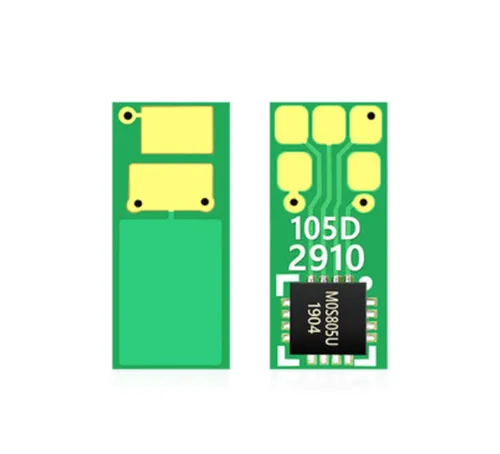
Not all drum chips are created equal. The first thing to check is the contact surface—gold-plated contacts are non-negotiable. Cheap chips often use bare copper, which corrodes after a few months in humid storage, causing intermittent errors like 'Drum Error' or 'Replace Supplies'. Look for chips with a sealed protective coating; it's a sign of a manufacturer that understands field conditions.
Second, verify the chip's firmware version. HP updates printer firmware regularly, and older chips may not be recognized by newer printers. Ask your supplier if their chips are firmware-compatible with the latest HP updates. A chip that works today might fail tomorrow if the printer auto-updates. CLONER tests its chips against current HP firmware versions, so you know what you're getting.
Finally, check the physical size and mounting holes. Some aftermarket chips are slightly thicker, which can cause seating issues in the drum unit. A chip that sits proud of the socket can break during insertion. Measure the chip against an OEM sample if you have one.
Selecting a Supplier: What to Ask
When you're buying in bulk, the supplier's testing process matters more than the price per unit. Ask if they run each batch through a functional test on an actual HP printer. Some suppliers only do electrical continuity checks, which won't catch a bad handshake. CLONER runs a 100% compatibility test on every production run, using a range of HP LaserJet models.
You also want a supplier who can provide a clear defect rate. Industry standard is under 0.5%, but some budget suppliers run 2-3%. That might not sound like much, but if you're shipping 500 drums a month, that's 10-15 returns you have to handle. Factor in your labor cost for troubleshooting, and a slightly higher unit price from a reliable source often pays off.
Lead time and MOQ are practical concerns. If you're a small shop, you don't want to tie up cash in 1000 chips. Look for suppliers who offer flexible MOQs, like CLONER's 50-piece minimum. And ask about lead time—if your supplier is on backorder for three weeks, you're stuck. A factory-direct partner like CLONER can typically ship within 5-7 days because they control the supply chain.
Common Pitfalls in Bulk Orders
The biggest mistake we see is mixing chip types in a single order without clear labeling. If you order chips for CF287 and CF410 at the same time, make sure each batch is separately packaged and labeled. A mislabeled box can cause a whole batch of returns.
Another pitfall is ignoring the reset cycle. Some chips are one-time reset, others are multi-cycle. For remanufacturers, multi-cycle chips are more cost-effective, but they're also more expensive. Confirm the reset capability with your supplier and test it before committing to a large order.
Watch out for 'compatible' chips that aren't truly OEM-equivalent. Some chips have reduced functionality, like not tracking toner levels accurately. That can lead to customers running out of toner without warning, which damages your reputation. Insist on chips that match OEM specs, not just fit.
CLONER's Factory-Direct Advantage
CLONER manufactures drum chips and complete drum units in-house, so you're getting a product designed for the aftermarket, not a rebranded import. Our chips are built with the same gold-plated contacts and firmware compatibility as OEM, but at a price that keeps your margins healthy. We offer OEM-ODM services too—if you need custom chip programming for your own brand, we can do that. With a 50-piece MOQ and fast lead times, we're set up for shops that need reliable supply without the hassle. When you're ready to restock, ask us for a sample batch to test in your own shop.