
Kyocera Transfer Roller Failures: What Buyers Must Check Before Ordering
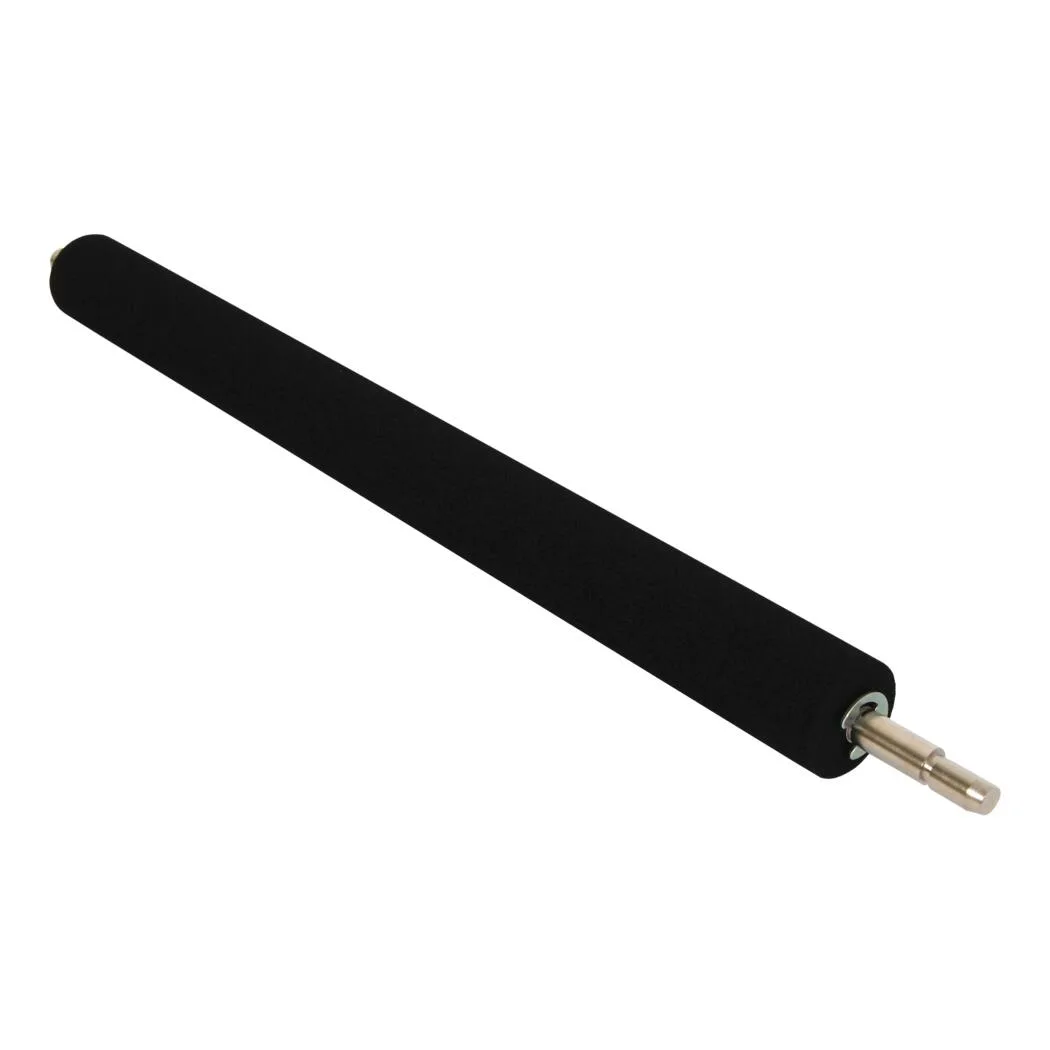
If you source Kyocera transfer rollers, you know the pattern: a batch looks fine on arrival, then three weeks later the field reports repetitive marks, ghosting, or high-voltage arcing. By then the container is gone and warranty claims are piling up. The fix isn't a better return policy—it's knowing exactly how these rollers fail and what to check before you wire the deposit.
Why Kyocera Transfer Rollers Fail Differently
Kyocera's ECOSYS and TASKalfa engines use a contact-transfer design where the roller sits directly against the drum, biased by a high-voltage spring contact. That architecture is efficient but punishes the roller's conductive layer. Unlike corona-transfer machines, there's no air gap to absorb contamination—any toner film, paper dust, or humidity-driven resistance shift shows up as print defects almost immediately.
The most common failure mode in returned cores is arcing pits on the roller surface, usually near the bias contact end. That's not random. It signals the conductive coating's resistance drifted outside spec—often because the carbon-loaded layer was undercured or the base rubber too porous. On a Kyocera FS-2100 or TASKalfa 1800 series, a roller that measures 1.2 × 10^6 Ω·cm fresh can climb past 1 × 10^8 Ω·cm after 20k prints if the compound is wrong. Once it hits that range, transfer current scatters and you get ghosting plus a high-pitched arcing noise the end user will definitely notice.
The Three Failures That Eat Your Margin
Toner filming and blade welding. Kyocera's toner is ground fine and formulated for low-temperature fixing. That's great for energy consumption, bad for the transfer roller if the surface energy is off. A roller with a low surface-energy silicone coating lets toner particles migrate and fuse into a film under the cleaning blade. The symptom is a repetitive background band every revolution—roughly 47mm on most TASKalfa models. If your supplier's rollers show filming after 5k prints in a 30°C/80% RH chamber, reject the lot. The coating formula is wrong.
Bearing and shaft wear. The transfer roller's conductive bearing is a pressed-in assembly on most Kyocera units. Cheap bearings with insufficient grease throw off the roller's parallelism, causing uneven transfer and a wobble that chews the drum's edge. Pull ten rollers from any batch and spin the bearing by hand. It should feel smooth with no lateral play. If you hear grit or feel a catch, the bearing cage is undersized—common on rollers from second-tier molders.
Hardness drift. Kyocera specifies rubber hardness around 30–35 Shore A for most transfer rollers. Too soft, and the nip width widens, over-transferring toner and causing background fog. Too hard, and you get light transfer on the trailing edge. Ask for a durometer reading across five points on each sample. A variation greater than ±3 Shore A across the roller means the rubber compound wasn't milled evenly—a batch-level problem, not a one-off.
Incoming Inspection: What to Measure, Not Just Look At
Visual checks catch the obvious stuff—cuts, contamination, mold flash on the shaft ends. But the failures that cost you money are electrical and mechanical. Put together a simple bench test before you approve a shipment.
- Resistance: Measure across the roller at 500V DC. Compare to the OEM spec sheet for the specific model (FS-1030/1130, TASKalfa 1800/2200, etc.). Reject anything outside ±20%.
- Hardness: Five-point Shore A check. Flag any roller with more than ±3 variation.
- Runout: Mount the roller on V-blocks and measure TIR with a dial indicator. More than 0.15mm means the core is bent or the bearing bore is off-center.
- Surface energy: A simple dyne pen test on the coating. If the ink beads up below 30 mN/m, the coating won't resist toner filming.
- Print test: Run 500 prints on a donor machine at 25°C/60% RH. Check for ghosting, background, and arcing noise before teardown.
That last point matters more than the first four combined. A roller that passes bench tests but films up after 500 prints is a formulation problem you can't fix with incoming inspection—you need to catch it at the supplier's process control.
Sourcing Specs That Keep You Out of Trouble
When you write the PO, don't just list the Kyocera part number. Specify the conductive layer's resistance range, the rubber hardness window, and the bearing grease type. Ask for a PPAP-style submission on the first article: material certs, resistance readings, and a 1k-print field sample. Suppliers who can't provide that are assembling rollers from open-market components, and you'll pay for it in returns.
Also lock down the packaging. Transfer rollers are sensitive to ozone and UV during shipping. Individually bagged with a conductive shield is the minimum. Bulk-packed rollers in a carton with no barrier will arrive with resistance drift before they ever touch a machine—especially on sea freight through humid routes.
CLONER runs transfer roller production on our own mixing and molding lines, which means we control the carbon-loaded compound and the curing profile—the two variables that decide whether a roller arcs at 20k prints or runs clean to 80k. We supply standard Kyocera-compatible rollers from stock and do OEM/ODM runs with your resistance spec, hardness window, and packaging requirements. Send us the model list and your target failure rate; we'll quote against the actual process control, not a catalog number.


