
Ricoh Transfer Roller Sourcing: Compatibility, Page Yield & Inspection Tips
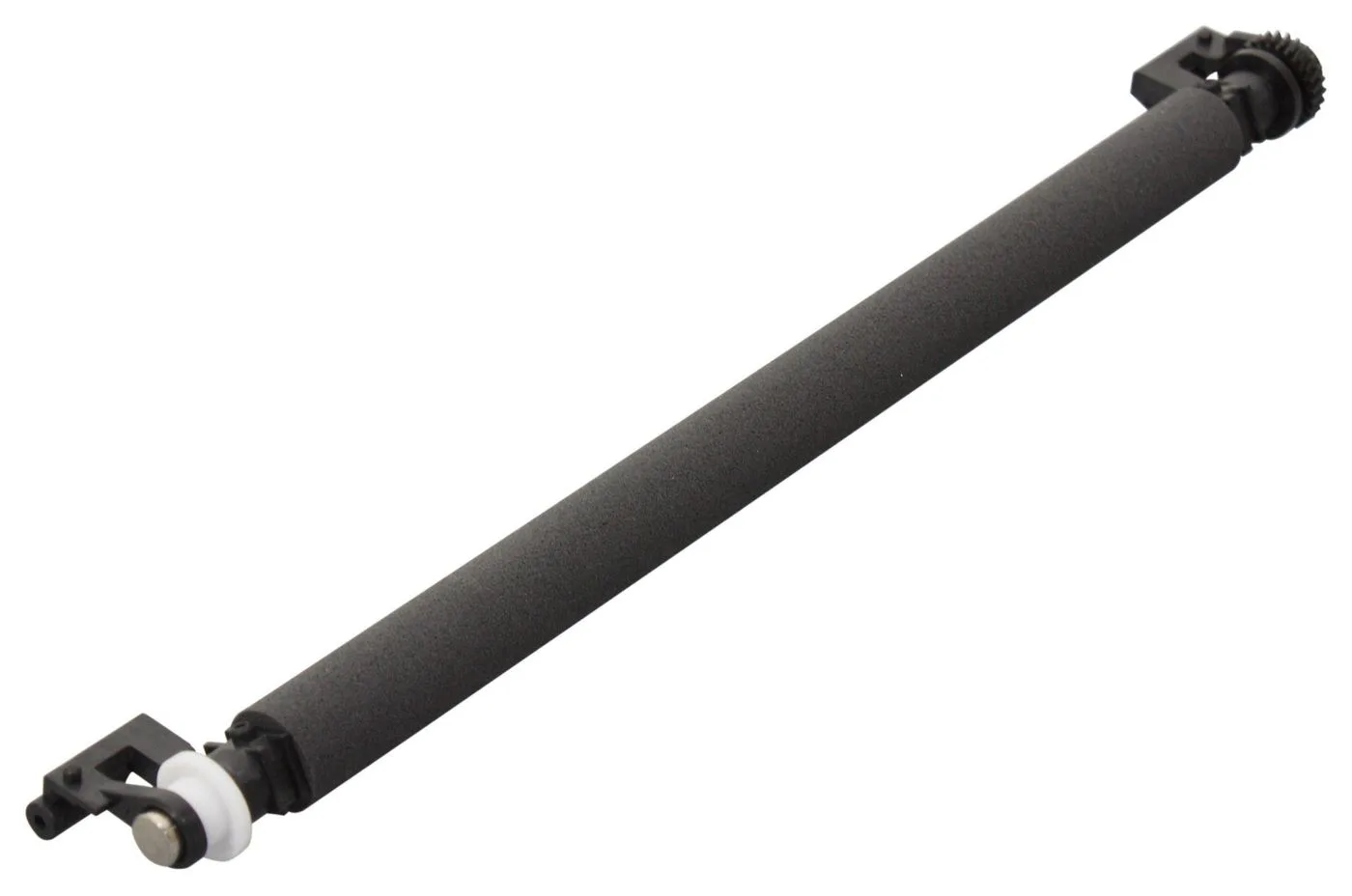
Most Ricoh transfer roller complaints we hear from importers aren't about the roller itself—they're about buying the wrong one. The MP C2003 and MP C2503 look identical from the outside, but the transfer unit assemblies differ. Get the compatibility wrong and you're stuck with a pallet of returns, or worse, chargebacks from repair shops who installed them and watched streaks appear at 15k pages. Here's what actually matters when you source these parts.
Compatibility: More Than Just Model Numbers
Ricoh's transfer rollers are shared across product families more than most catalogs admit. The MP C2003/C2503/C3003/C3503 series uses the same transfer roller in many configurations, but the MP C4503/C5503/C6003 line steps up to a different roller with a larger shaft diameter. The older MP C2030/C2050/C2550 family is a separate beast entirely. If a supplier quotes you one roller for all of them, walk away.
Also watch the Aficio SP series—SP C830DN and C831DN share a transfer roller that's often confused with the MP C3003 part. We've seen repair shops order the SP roller for an MP machine because the photos looked close. They don't fit. Always confirm the machine's full model code and the transfer unit part number (e.g., D149-6020 for certain MP C series) before you approve a sample.
Page Yield: What the Spec Sheet Doesn't Tell You
Ricoh rates transfer rollers at 120k to 150k pages for the mid-range MP C series, but that's under specific conditions: 5% coverage, OEM toner, and a clean transfer belt. In the field, a roller that sees heavy graphics or third-party toner can fail at 60k pages. The failure mode is usually surface wear—the conductive coating thins out, resistance climbs, and you get light images or background scatter.
Don't trust a supplier's yield claim without a test report. Ask for the resistance value (typically 1×10^6 to 1×10^7 ohms) and a wear test at 80k pages. A good roller holds resistance within ±10% after 50k pages. Cheap ones drift 30% or more. That drift is what causes the gray background that makes end users call for service.
Inspection Checklist Before You Commit
When you receive a sample or a pre-shipment batch, check these five points. Skip any and you're gambling:
- Shaft diameter and length: Measure with calipers against an OEM sample. Tolerance is ±0.05mm—anything looser causes wobble and uneven wear.
- Surface hardness: Should be 60–65 Shore A. Too soft and it flat-spots; too hard and it won't transfer toner evenly.
- Coating uniformity: Look for streaks or bubbles under a bright light. A single pinhole in the conductive layer means early failure.
- Gear and bearing fit: Spin the roller by hand. Any binding or excessive play means the bearing seat is off.
- Packaging: Individually bagged with end caps. Bulk-packed rollers get nicked in transit and you'll eat the scrap.
Run a 500-page print test on a machine with known-good toner and drum. Check for background, streaks, and image density. If the roller passes, you're ready to talk volume.
Sourcing: Factory Direct vs. Trading Company
Most Ricoh transfer rollers on the market come from a handful of factories in China and Japan. Trading companies mark them up 20–30% and often can't tell you which factory made the core. When you buy factory direct, you get the production line's actual test data and can specify the conductive coating thickness. That matters for markets where humidity swings—a roller that works in Guangzhou may fail in Dubai if the coating isn't formulated for dry heat.
Ask for the factory's ISO 9001 certificate and a batch traceability number. A serious factory will provide both without hesitation. If they can't, you're buying from a reseller who's buying from a reseller.
OEM/ODM: When You Need Your Own Brand
Private label transfer rollers are common in this category. The key is to lock down the specification before you print boxes. Decide on the coating resistance range, the shaft material (stainless vs. nickel-plated steel), and the packaging format. A good OEM partner will produce a golden sample, get your sign-off, and hold the line on that spec for every batch.
We've seen too many importers approve a sample, then receive production with a different coating because the factory switched suppliers mid-run. That's why CLONER builds an inspection report into every OEM order—resistance, hardness, and dimensional checks on each lot, with photos. You don't have to fly to the factory to know what you're getting.
CLONER runs transfer roller production for Ricoh MP C series and SP series in our own facility, with OEM/ODM options for private label. We supply the test data—resistance curves, wear tests, dimensional reports—before the container leaves. If you're sourcing Ricoh transfer rollers for repair shops or office dealers, send us the model list and we'll match it to the correct part numbers and quote factory-direct pricing. No trading company in the middle.


