Buying Feed Roller for Canon: A Field Guide for Copier Repair Shops
If you run a copier repair shop, the Canon feed roller is a high-turnover item. But ordering by machine model alone often leads to the wrong part—or a cheap roller that fails within months. This guide cuts through the noise. You'll learn what to inspect before buying, how to match rollers to specific Canon engine families, and why the source matters more than you think.
Know the Canon Roller Families and Their Failure Modes
Canon uses different feed roller designs across its iR, imageRUNNER, and imageCLASS lines. For example, the iR2202/iR2002 series uses a separate feed roller and retard roller assembly, while newer iR2625/iR3125 models integrate the feed roller with a one-way clutch. Order the wrong one, and it won't seat properly—or worse, it slips and causes paper jams at the registration sensor.
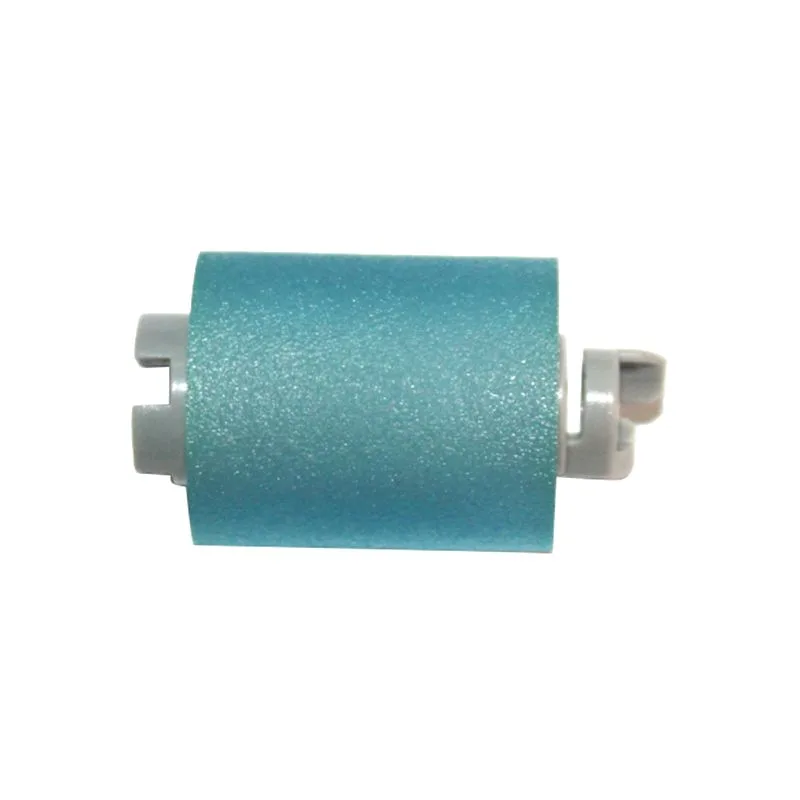
Pay attention to the roller's durometer (hardness) and surface texture. Canon original rollers are typically 40–50 Shore A with a micro-roughened surface. Aftermarket rollers that are too hard (60+ Shore A) lose grip as they warm up. If a customer reports misfeeds after the machine runs for 20 minutes, suspect the rubber compound. That's a classic sign of a poorly made part.
Inspect the Roller Before You Fit It
Don't rely on the part number alone. A quick visual and tactile check can save a service call. Measure the outer diameter with calipers. A new Canon feed roller for the iR series should be around 24.2 mm. If it's under 24.0 mm, the roller may have been machined down to fit a generic core—it will wear out faster. Press your thumbnail into the surface; it should dent slightly and spring back. If it's rock-hard, reject it.
Also inspect the core. Canon feed rollers often have a metal or hard plastic core with a D-cut or keyway that aligns with the shaft. If the keyway is off by even a millimeter, the roller will wobble and cause skew. Look for burrs or rough edges on the core—those can damage the shaft bushing over time.
Match the Roller to the Machine's Paper Path
Not every Canon model needs the same roller, even if the part number looks similar. The iR2520 and iR2530 share a cassette but differ in pickup roller spring tension. If you fit a roller designed for a lighter spring, it will compress too much and lose grip. Always cross-reference with the Canon parts catalog and note the roller's dimensions and spring rate.
For high-volume machines like the iR ADVANCE C5030, feed rollers are often sold as a kit with the separation pad. Buy the kit if possible—mixing a new roller with a worn pad is a common cause of double-feeds. If ordering aftermarket, ask the supplier for the pad's hardness and the roller's surface roughness (Ra value). A good match is around Ra 1.5–2.5 μm. Anything smoother will slip on coated paper.
Ordering: What to Specify and How to Avoid Counterfeits
When placing an order, don't just give the Canon part number. Specify the machine series, the roller's position (feed, retard, or pickup), and the quantity. If stocking for multiple models, ask for a compatibility chart—a reputable supplier will provide one without hesitation. Verify the packaging: genuine OEM rollers come in sealed bags with a clear label. If the roller is loose in a box, it's likely grey-market.
Counterfeit Canon rollers are a real problem. They look identical but use inferior rubber that hardens after a few months. One way to spot them is the smell—cheap rubber has a strong chemical odor. Another is the print on the part itself. Canon engraves a date code and a small logo. If the marking is blurry or missing, be suspicious. Always buy from a source that can provide batch test data on demand.
Working with a Factory-Direct Partner
That's where a manufacturer like CLONER comes in. We don't just resell Canon rollers—we produce compatible parts that match or exceed OEM specs. Our feed rollers for Canon iR series are made from NBR rubber with precise Shore A hardness, and we test each batch for dimensional accuracy and coefficient of friction. You get a consistent product, not a lottery.
Because we're factory-direct, you can order custom quantities—even small lots for trial—and scale up as you trust the part. Need a roller with different hardness for a specific paper stock? We can do that in our OEM/ODM line. We'll also share technical datasheets and application notes, so your techs know exactly what they're installing.
When you're ready to test, ask for samples. Fit one in a Canon iR2520 and run 10,000 copies. Check the wear pattern and feed reliability. If it passes, you've found a supplier that keeps your customers happy and your margins healthy. That's the kind of partnership that makes a repair shop's life easier.
Need a quote or samples from CLONER?
Factory-direct OEM/ODM supplier of compatible printer consumables & spare parts. Tell us your models — reply within 24h.