Buying Canon Feed Rollers: A Field Guide for Copier Repair Shops
If you're stocking feed rollers for Canon copiers, you know the pain: a customer's iR2625 starts jamming every 50 prints, the pick-up roller looks fine, but the feed roller has turned glossy and hard. You swap it, problem solved—until three months later, same call. The difference between a roller that lasts 200k and one that dies at 60k often comes down to what you didn't check at the time of purchase. Let's get into the details that matter for your bottom line.
Know Your Canon Series: Not All Feed Rollers Are Equal
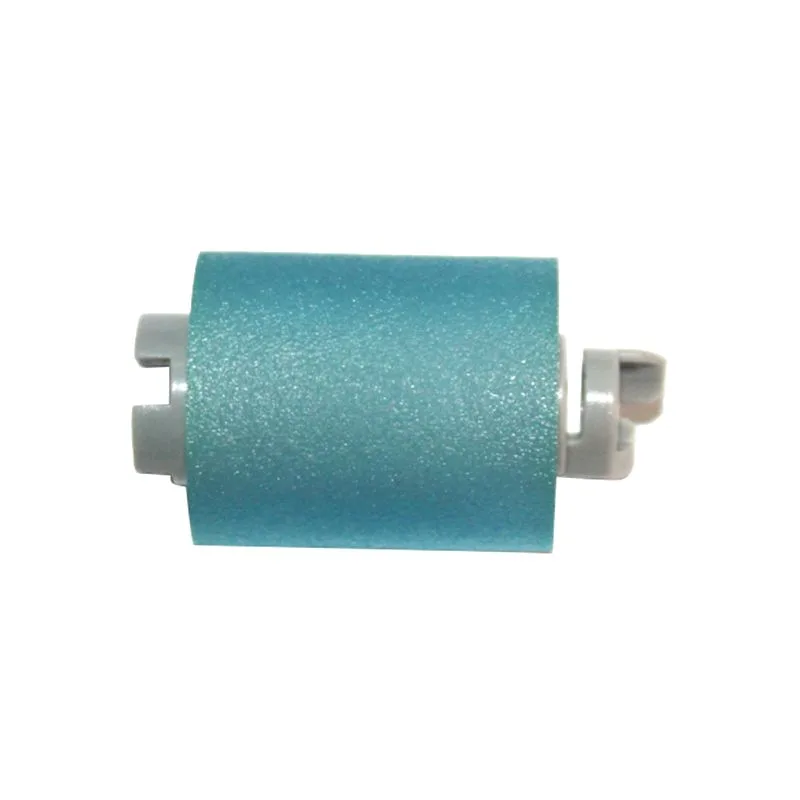
Canon uses different roller compounds across its lines. The iR/DR series (iR2525, iR2625, iR3226) rely on a softer, high-friction roller for the first pass, while the imageRUNNER Advance series (iR-ADV C2500, C3500, C5500) uses a harder compound with a longer dwell time. Mixing them up is the fastest way to create paper feed issues that you'll have to troubleshoot for free.
Check the part number—not just the model name. For example, the feed roller for iR2625 is FM3-6381-000, while the iR-ADV C3520 uses FM3-6380-000. They look almost identical, but the inner diameter and shaft length differ. A cheap supplier might send you a 'universal' roller that fits neither properly. Always cross-reference the Canon part number against your machine's service manual before ordering.
Wear Limits and the Glossy Surface Trap
Most Canon feed rollers have a wear indicator—a small groove or a step on the roller surface. When that groove disappears, the roller is done. But here's the catch: after about 80k prints, the roller surface becomes glossy from the paper's mineral fillers. That gloss reduces friction even if the groove is still visible. If you only check for wear, you'll miss the real problem.
Inspect the roller under a bright light. Run your thumbnail across the surface—if it slides without resistance, the roller is polished and needs replacement. For B2B buyers, this means you should test a sample batch from any new supplier under actual print conditions, not just measure dimensions. A roller that picks up fine on day one but fails at 30k is a supplier problem, not a machine problem.
OEM vs Aftermarket: What to Demand from a Supplier
OEM Canon rollers are priced at a premium, and for good reason—they're tested for exact friction coefficients and durometer. But aftermarket rollers can be just as good if the manufacturer uses the right EPDM or polyurethane compound. The key is asking the right questions: What's the hardness (Shore A)? What's the coefficient of friction on standard 80gsm paper? Do they have a test report from an independent lab?
CLONER, as a factory-direct manufacturer, provides these specs upfront. We produce rollers for Canon iR and imageRUNNER Advance series with a Shore A hardness of 55–65, matching OEM friction curves. We also offer OEM-ODM services—if you need a custom roller for a specific paper type (e.g., heavy stock or recycled paper), we can adjust the compound and test it on your machine. That's not something you get from a trading company that just repackages generic rollers.
Practical Quality Checks Before You Commit to a Bulk Order
- Run a 10,000-sheet endurance test on a sample roller. Measure pick-up failure rate at 1k, 5k, and 10k intervals.
- Check the roller surface for any mold flash or uneven texture—these cause skewed feeds.
- Verify the inner metal core is rust-proofed (zinc-plated or stainless). Rust on the core leads to slippage and premature wear.
- Ask for the exact part number compatibility list, including any recent Canon revisions (e.g., FM3-6381-000 vs FM3-6381-001).
These checks take time, but they save you from the nightmare of a batch of 500 rollers that all fail at 50k prints. A reputable factory will welcome your testing protocol—it shows you're serious. If a supplier hesitates or can't provide a test report, walk away.
Ordering Terms and Lead Times That Protect You
When you're ordering feed rollers for Canon machines, never rely on a verbal 'it will be fine.' Get the spec sheet in writing, including the durometer and friction coefficient. Set a clear acceptance criterion: if more than 1% of the rollers in a batch fail your pick-up test, the entire batch is rejected and replaced at the supplier's cost. That's standard in the industry, and CLONER agrees to such terms because we're confident in our product.
Lead times matter too. If you're a wholesaler, you don't want to hold huge inventory of every Canon roller type. CLONER offers flexible MOQs (as low as 100 pieces per part number) and a 15–20 day production lead time for standard items. For OEM-ODM custom jobs, we'll work with you on your schedule, but expect 4–6 weeks for compound development and testing. Plan your stock accordingly, especially for the iR2625 and iR-ADV C3520 series, which are high-turnover items in most repair shops.
At CLONER, we've been manufacturing feed rollers for over a decade, supplying directly to distributors and repair chains worldwide. Our factory in China produces rollers that meet or exceed OEM specs, and we back every order with a 12-month warranty against manufacturing defects. Whether you need a standard Canon replacement or a custom compound for a niche machine, we're set up to handle bulk orders and white-label requests. Send us your part number list, and we'll send you samples to test on your own machines—that's the only way to be sure.