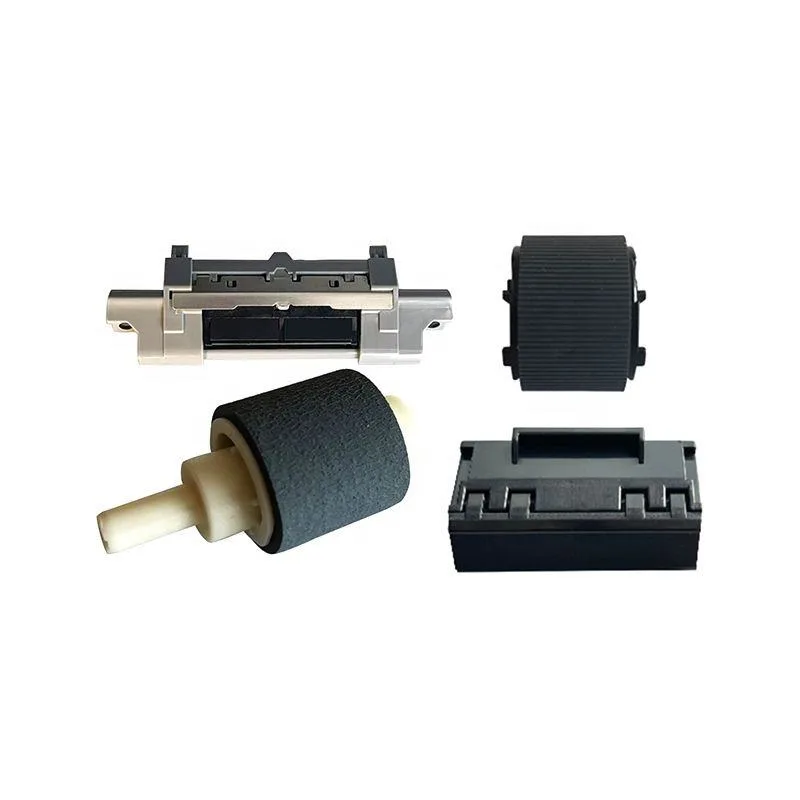
How to Check the Quality of Pickup Roller for Samsung Copiers Before You Buy
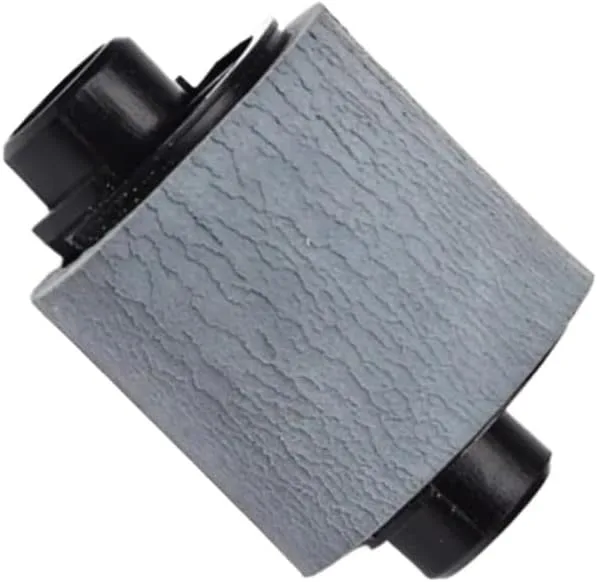
When a Samsung copier starts misfeeding or jamming, the pickup roller is often the first suspect. But buying a replacement that fails in weeks is worse than the original problem. For importers and repair shops, the real challenge is assessing quality before placing a bulk order. This guide gives you practical, hands-on checks to evaluate Samsung pickup rollers so you can stock with confidence.
Know the Exact Model Fit
Samsung's copier lineup spans many series, and pickup rollers are not universal. A roller for a SCX-4200 won't fit a CLX-3305, and the ML-2160 uses a different assembly than the ML-3710. Before you buy, confirm the part number and cross-reference it against Samsung's official documentation. Reputable suppliers provide a compatibility list that includes model codes, machine series, and OEM part numbers. If a supplier can't tell you which Samsung models a roller fits, that's a red flag.
CLONER maintains detailed fitment data for every Samsung pickup roller we produce. We cross-check against OEM specs and real-world machine variants, so you don't have to guess. When you order from us, you get a clear mapping to the exact Samsung models, reducing the risk of returns and customer complaints.
Inspect the Rubber Compound and Hardness
The rubber is where most aftermarket rollers cut corners. Cheap rollers use low-grade rubber that hardens quickly, losing grip and causing feed failures. A quality pickup roller uses a rubber compound with a Shore A hardness typically between 40 and 55. Too soft, and the roller deforms under pressure; too hard, and it slips on paper. Ask for a durometer reading or test it yourself with a Shore A gauge. Also, check for surface texture: a slightly matte finish provides better friction than a glossy one.
Another sign of quality is the rubber-to-core bond. Poorly bonded rubber can separate from the shaft, especially in high-heat environments. Flex the roller gently—if you see any lifting or cracking at the edges, reject it. CLONER uses a proprietary bonding process that ensures the rubber stays put for the life of the roller, even in demanding office conditions.
Examine the Bearing and Shaft Assembly
The bearing might be small, but it's critical. A low-quality bearing increases rotational resistance, causing the roller to drag and misfeed. Spin the roller by hand: it should rotate smoothly with minimal noise and no wobble. Metal bearings with sealed lubrication outperform plastic bushings, especially in high-volume machines. Check the shaft for straightness—a bent shaft will cause uneven wear and paper skew.
Look at the overall construction. The core should be rigid, often made of metal or high-strength plastic. Injection-molded cores with flash or rough edges indicate poor tooling. CLONER manufactures cores with precision molds, ensuring a perfect fit and balance. Our bearings are sourced from tier-one suppliers and tested for rotational life, so you get consistent performance across the entire batch.
Test for Static and Electrical Conductivity
Samsung copiers often use conductive pickup rollers to dissipate static electricity. Static buildup can cause paper to stick to the roller or attract dust, leading to jams. A quality roller has a controlled electrical resistance, typically in the range of 10^6 to 10^9 ohms. If the roller is completely insulative, it may not function correctly in certain Samsung models. Ask the supplier for resistance specifications or test with a megohmmeter.
CLONER formulates rubber compounds with the correct carbon black content to achieve the target conductivity. This attention to detail prevents static-related feed issues that plague generic rollers. We also offer OEM/ODM services, so if you need a specific resistance value for a particular Samsung series, we can tailor the compound to your requirements.
Check Packaging and Batch Consistency
Packaging tells you a lot about the supplier's quality control. Rollers should be individually bagged or boxed to prevent dust and UV exposure, which degrade rubber. Look for a batch code and date of manufacture—rubber has a shelf life, and old stock may already be hardening. If you're ordering in bulk, request a sample from the current batch and test it before committing.
Consistency across batches is where factory-direct sourcing wins. CLONER controls the entire production process, from compounding to molding to assembly. We keep records of each batch's rubber hardness, conductivity, and dimensional checks. When you reorder, you get the same performance, not a lottery. Our OEM/ODM clients rely on this consistency for their own branded products.
Before you finalize any purchase, ask for test reports and a sample. A supplier confident in their product will provide them without hesitation. With CLONER, you're buying direct from the factory, so you can audit our processes and even customize specifications. That's how you avoid costly pickup roller failures and keep your customers' Samsung copiers running smoothly.
Need a quote or samples from CLONER?
Factory-direct OEM/ODM supplier of compatible printer consumables & spare parts. Tell us your models — reply within 24h.