OEM vs Compatible Lower Fuser Roller for Ricoh: A Distributor’s Buying Guide
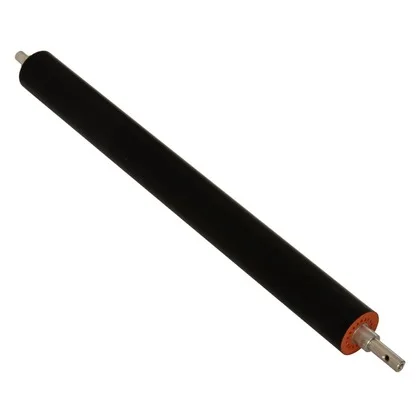
When you’re sourcing lower fuser rollers for Ricoh machines, the OEM-versus-compatible decision isn’t just about price. It’s about failure rates, print quality, and how many service callbacks you can absorb. Most distributors I talk to have been burned by cheap rollers that glaze over after 20,000 pages or leave a permanent offset on the pressure roller. The right compatible can match OEM performance at 30–40% less, but only if you know what to look for.
What Actually Wears Out on a Ricoh Lower Fuser Roller
The lower roller (often called the pressure roller) works against the hot upper roller. On Ricoh models like the MP 2554, MP 3554, and the IM 430F series, the lower roller’s job is to apply even pressure and carry heat to the paper. The most common failure is surface glazing—a shiny, hardened layer that causes paper jams and poor toner fusing. Another is flat spots or deformation, which create a rhythmic defect on every print.
You also see edge wear on the roller’s ends, especially in machines that run heavy cardstock or labels. That wear leads to creasing and misregistration. If you’re buying compatible, the roller’s core material and the rubber’s heat resistance are the critical factors. A good compatible roller uses a steel core with a high-temp silicone or rubber compound that can withstand 180–200°C without breaking down.
Inspection Checklist for Compatible Rollers
Before you commit to a supplier, ask for samples and run these checks. First, measure the roller’s diameter and hardness—Ricoh’s spec is typically around 30–35 Shore A for the lower roller. Too soft and it deforms; too hard and it won’t wrap the paper properly. Second, look at the surface finish. It should be smooth and slightly matte, not shiny. A glossy finish is a red flag for premature glazing.
- Check the core’s bearing surfaces—they must be precisely machined to avoid vibration.
- Verify the roller’s overall length and end caps fit your specific model—Ricoh uses several variants even within the same series.
- Ask for a thermal test report showing the roller’s performance at 200°C for 100 hours.
Also, inspect the packaging. A roller that arrives bent or with surface scratches is a sign of poor quality control. Reputable factories ship each roller in a foam-lined tube with end caps secured. If you see rollers stacked loose in a box, walk away.
Cost vs. Longevity: What Distributors Should Calculate
OEM lower fuser rollers for Ricoh typically retail between $80 and $150, depending on the model. Compatible rollers from a solid manufacturer run $30–$60. But the real cost isn’t the part—it’s the labor and downtime. A service call to replace a failed roller can cost $100–$150 just in tech time, plus the customer’s frustration.
If a compatible roller lasts 80,000 pages versus OEM’s 120,000, you’re not saving money. You’re just shifting the replacement cost to earlier. That’s why you need to test in real machines, not just look at specs. Ask your supplier for references from other distributors who run the roller in Ricoh MP 301 or MP 4002 models. A roller that works well in one Ricoh line often carries over, but not always—the IM series runs hotter and faster.
How to Test a Compatible Roller Before Stocking
Set up a controlled test with a high-volume Ricoh model like the MP 6054. Run 10,000 pages of 20-lb bond, then 5,000 pages of 80-lb cover. Check for fusing quality—use a tape pull test on solid black areas. Also monitor the machine’s temperature stability. A roller that doesn’t conduct heat evenly will show up as a lighter band across the page.
After the run, pull the roller and inspect its surface. Any discoloration, cracking, or a sticky residue means the rubber is degrading. Also listen for noise—a thumping sound indicates a flat spot. If the roller passes these tests, you’re probably safe to stock it. But keep a sample from each batch and re-test every six months, because manufacturing quality can drift.
Why Factory-Direct Matters for Your Margin
When you buy from a factory like CLONER, you cut out the middleman. We manufacture the lower fuser roller in-house, which gives us control over the rubber compound and the machining tolerances. That means we can offer a compatible roller that meets or beats OEM durability at a price that leaves you room to compete. Plus, our OEM/ODM capability means if you want a private label or a specific hardness tweak for a regional paper type, we can do it.
We also understand the Ricoh line intimately—not just the popular MP series but also the newer IM C series. Our engineering team can advise on which roller fits which model, and we can provide test reports and samples before you commit to a bulk order. For distributors who value reliability, that’s the kind of partnership that keeps your customers happy and your service calls down. Get in touch with CLONER for a quote, and we’ll help you build a fuser roller program that works.
Need a quote or samples from CLONER?
Factory-direct OEM/ODM supplier of compatible printer consumables & spare parts. Tell us your models — reply within 24h.