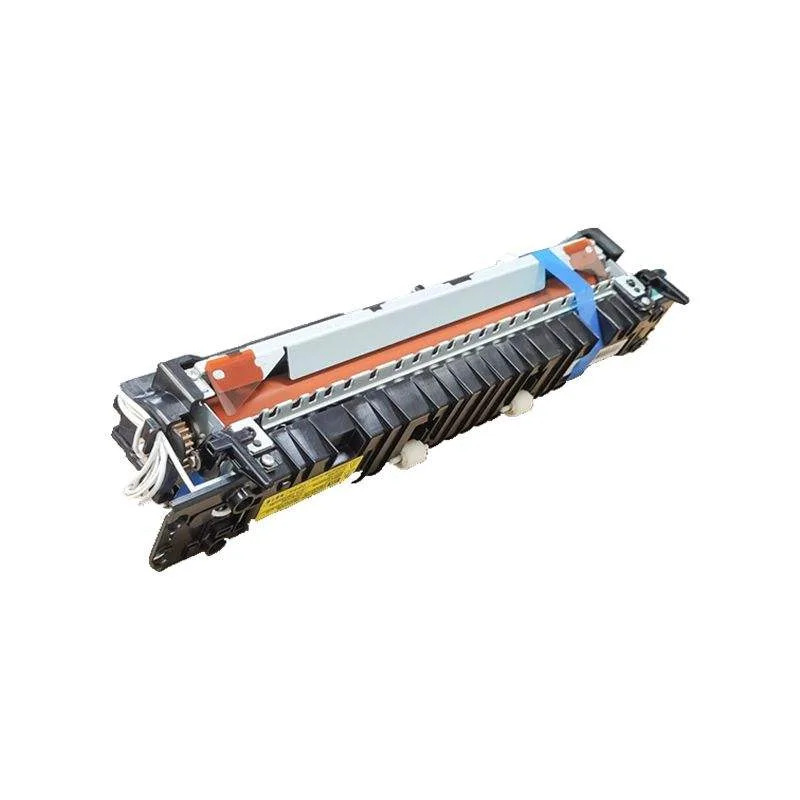
Ricoh Lower Fuser Roller: OEM vs Compatible – A Distributor's Guide
If you're distributing lower fuser rollers for Ricoh MFPs, you've likely faced the OEM vs compatible dilemma. OEM rollers are reliable but pricey; compatible ones can be a goldmine or a liability. The difference? It's not just about price – it's about knowing what to check before you commit to a batch.
Why the Lower Fuser Roller Matters
The lower fuser roller, often the pressure roller, works in tandem with the upper heat roller. It provides the necessary pressure for toner to fuse onto paper. In Ricoh models like the MP 4000/5000, MP 6001/8001, and the newer IM series, a failing lower roller leads to jams, image defects, and uneven wear on the upper roller. Distributors who ignore this component's quality often face warranty claims and lost customers.
Common failure signs include: paper wrapping around the roller, ghosting, and fusing issues on heavier stock. If you're seeing these complaints from your customers, the lower roller is a prime suspect. But here's the thing – not all compatible rollers are created equal. The material, the surface finish, and the dimensional tolerances make or break performance.
OEM vs Compatible: What's the Real Difference?
OEM rollers are made to Ricoh's exact specs, using silicone or fluoropolymer coatings that handle high heat and pressure. They're dependable, but you're paying for the brand and the supply chain. Compatible rollers, when manufactured properly, can match OEM performance at 30-50% lower cost. The catch? Substandard factories cut corners on materials and QC, leading to premature wear or even damage to other fuser components.
For example, a lower roller with a slightly off shaft diameter can cause uneven pressure, leading to that dreaded 'shiny band' on prints. A low-quality silicone layer can delaminate after 20,000 pages. These are the issues that plague cheap imports. So, as a distributor, you need to vet your supplier – not just the price tag.
Key Specifications to Verify Before Ordering
When sourcing compatible lower fuser rollers for Ricoh, always check these specs: hardness (typically 60-70 Shore A), surface roughness (Ra should be around 0.4-0.8 µm), and the roller's outer diameter (must match OEM within ±0.05mm). Also, confirm the material – silicone rubber with a PFA or PTFE sleeve is standard for high-speed models.
Ask your supplier for a technical data sheet and, if possible, a sample for testing. Run it on a high-volume machine like the Ricoh MP 7502 or MP 9002. Check for consistent fusing across different paper weights and ensure no offset or wrapping after 50,000 pages. A reliable supplier will welcome this scrutiny – it's a sign they're confident in their product.
Quality Control and Compatibility Pitfalls
One of the biggest mistakes distributors make is assuming compatibility across Ricoh series. The lower fuser roller for the MP 4000 series may look similar to the one for the MP 5000, but the shaft length and end caps differ. Always cross-reference part numbers – for instance, Ricoh part number AD040100 for the MP 4000/5000, and D0391010 for the MP 6001/8001. A mismatched roller can cause install issues or, worse, damage the fuser unit.
Also, watch out for 'universal' rollers that claim to fit multiple brands. They often compromise on dimensional accuracy. Stick to a supplier that makes rollers specifically for Ricoh models, with dedicated tooling for each part number. At CLONER, we do exactly that – our rollers are manufactured to OEM specs, with 100% dimensional inspection before shipping.
Logistics and Inventory Strategy
For distributors, inventory management is key. Lower fuser rollers are high-turnover items, especially for popular Ricoh models. Keep a buffer stock of the top 10 models you sell – but don't overstock on slow movers. Work with a supplier who offers flexible MOQs and reliable lead times. At CLONER, we offer MOQs as low as 50 pieces, and our factory-direct model means you get the best price without middlemen.
We also provide OEM/ODM services – if you want to brand the rollers as your own, we can do that, with custom packaging and part numbers. This is a huge advantage for distributors looking to build their own brand in the aftermarket space. Just ensure your supplier has the capacity to scale with you.
In the end, the choice isn't OEM vs compatible – it's about choosing the right compatible supplier. Do your due diligence, test samples, and verify specs. At CLONER, we've been manufacturing fuser rollers for over a decade, supplying to distributors worldwide. We're not just a factory; we're your partner in growth. Get in touch for samples or a quote.