OEM vs Compatible Waste Toner Cartridge for Toshiba: A Distributor’s Insider Guide
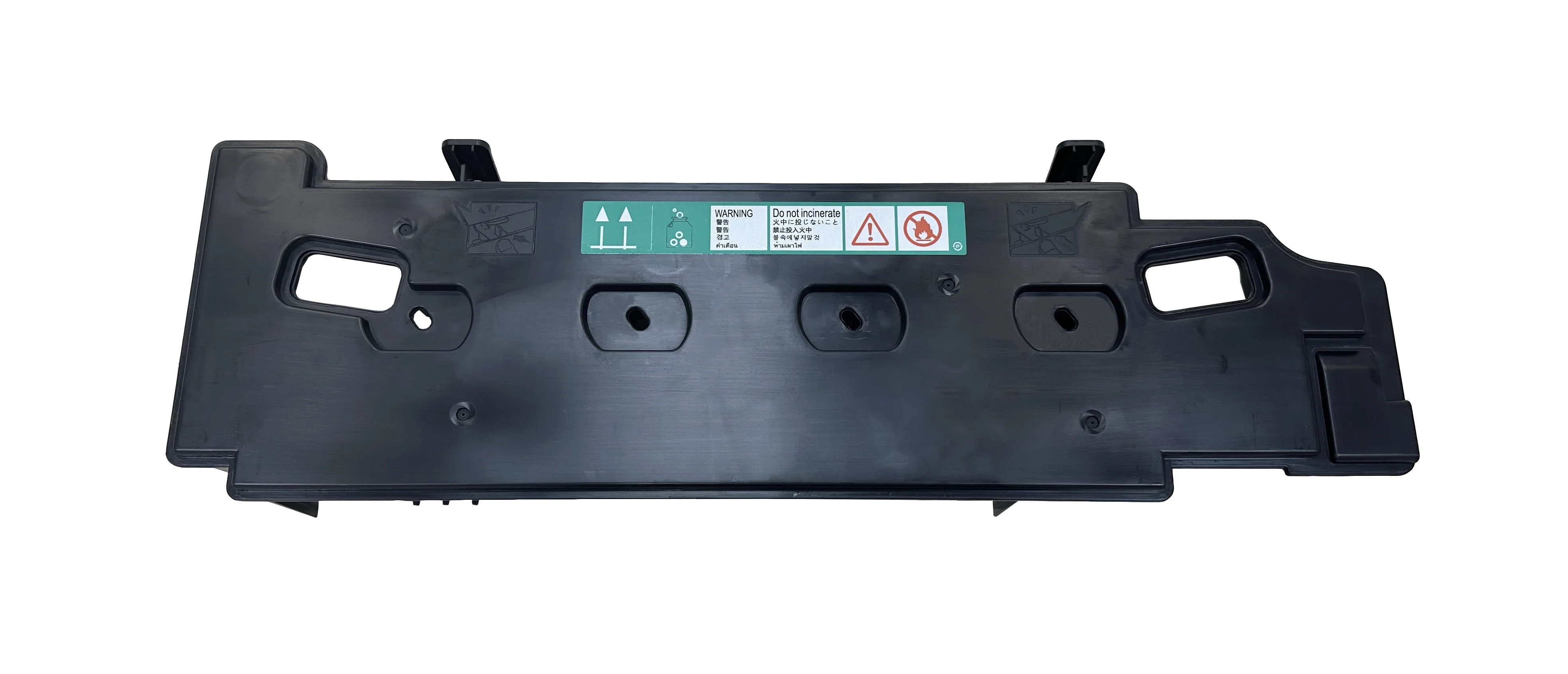
Every Toshiba multifunction printer—from the e-STUDIO2309A to the 5008LP series—has a waste toner cartridge that quietly fills up until one day the machine stops with a dreaded error code. For distributors, that part is a steady revenue stream, but only if you source it right. The OEM vs compatible debate isn’t academic; it affects your margin, your customers’ uptime, and your reputation when a cartridge leaks or misaligns. Let’s get into the specifics that matter for Toshiba parts.
What Actually Differs: OEM vs Compatible Waste Toner Cartridges
OEM Toshiba waste toner cartridges (like the 6AJ90007000 for many e-STUDIO models) are made to exact tolerances. The plastic is virgin-grade, the seal is consistent, and the internal sponge or agitator—if present—is designed to handle the toner particle size Toshiba uses. Compatible versions, on the other hand, vary wildly. Some are made from recycled plastic that can warp in high-heat environments; others use a thinner wall that cracks during shipping. The core difference isn’t rocket science—it’s material quality and dimensional accuracy.
But here’s the kicker for B2B buyers: a compatible cartridge that’s engineered properly can perform identically to OEM at a fraction of the cost. The trick is knowing what to look for. For Toshiba, the critical points are the locking tabs (they snap into the imaging unit), the sealing cap (it must be airtight until installed), and the overall rigidity. A cheap compatible might save 30% upfront but cost you a service call when toner spills inside the copier. That’s a hard lesson many repair shops learn once.
Inspection Checklist for Incoming Waste Toner Cartridges
Before you stock any batch, do a quick physical inspection. First, weigh the cartridge—OEM Toshiba waste toner cartridges have a specific empty weight, and a significant deviation suggests thinner plastic or missing internals. Second, check the seal: it should be a solid pull-tab or screw cap, not a flimsy tape that can dislodge in transit. Third, examine the locking mechanism. On Toshiba models like the e-STUDIO3508LP, the cartridge slides in and clicks; if the tabs are brittle, they’ll snap off during installation, and your customer is stuck.
Another overlooked point is the sponge or filter inside. Some compatible manufacturers skip this to cut cost, but that sponge controls toner dust when the cartridge is full. Without it, toner can leak out the vent, causing a mess and potential health issues. Always ask your supplier for a sample batch first. Test it in a high-volume machine—run 10,000 prints and check for error codes like F116 or toner spillage. If the cartridge holds up, you’re good. This isn’t overkill; it’s how you protect your margin from returns.
Why Price Isn’t the Whole Story for Toshiba Parts
Distributors often chase the lowest cost per unit, but with waste toner cartridges, the total cost of ownership includes failure rate. A compatible cartridge that fails 5% of the time might seem acceptable, but those failures generate service calls, replacement shipping, and unhappy dealers. For Toshiba’s larger machines, like the e-STUDIO7508LP, a leak can contaminate the transfer belt, costing hundreds in repairs. That’s a risk you don’t want to pass to your customers.
Instead, look for a supplier that offers consistent quality and stands behind the product. A factory-direct manufacturer like CLONER, for instance, controls the entire production process—from injection molding to final assembly. That means they can offer both OEM-compatible and OEM-equivalent options with the same tolerances as Toshiba’s own parts, but without the brand markup. For distributors, that’s the sweet spot: you get reliability and competitive pricing, and you can pass on the savings to your network.
Selecting the Right Supplier: What to Ask
When you’re evaluating a new vendor for Toshiba waste toner cartridges, ask pointed questions. What’s the material grade? Is it virgin or recycled? What’s your defect rate per 1,000 units? Do you offer a warranty that covers consequential damage if a cartridge leaks and ruins an imaging unit? Most generic suppliers will waffle on that last one. A factory-direct partner like CLONER can give you a straight answer because they’re the ones making the part.
Also, check their model coverage. Toshiba has dozens of waste toner cartridge variants, and a supplier that only carries the top 10 models isn’t a long-term partner. You need someone who can supply the 6AJ90007000 for older e-STUDIO2330c, the D2540A for the 3055 series, and the newer 6LJ82687000 for the 5008AC—all from one source. That simplifies your inventory and reduces shipping costs. And because CLONER supports OEM/ODM, they can even private-label the cartridges for your brand, giving you a unique product line that your competitors can’t easily match.
The Bottom Line for Distributors
You’re not just buying a plastic box with a sponge in it; you’re buying uptime for your customers. OEM gives you guaranteed fit, but at a premium. Compatible gives you margin, but only if you vet the quality. The smart play is to source from a manufacturer that combines both—factory-direct, with full control over quality and the flexibility to brand it as your own. That’s exactly what CLONER offers. We’ve been making toner cartridges and copier parts for years, and our waste toner cartridges for Toshiba are tested to match OEM specs. If you’re ready to cut out the middleman and get a reliable supply, reach out. We’ll send you samples, and you can put them through the wringer. That’s the only way to be sure.
Need a quote or samples from CLONER?
Factory-direct OEM/ODM supplier of compatible printer consumables & spare parts. Tell us your models — reply within 24h.