Upper Fuser Roller for Konica Minolta: Compatibility, Page Yield and Sourcing Tips
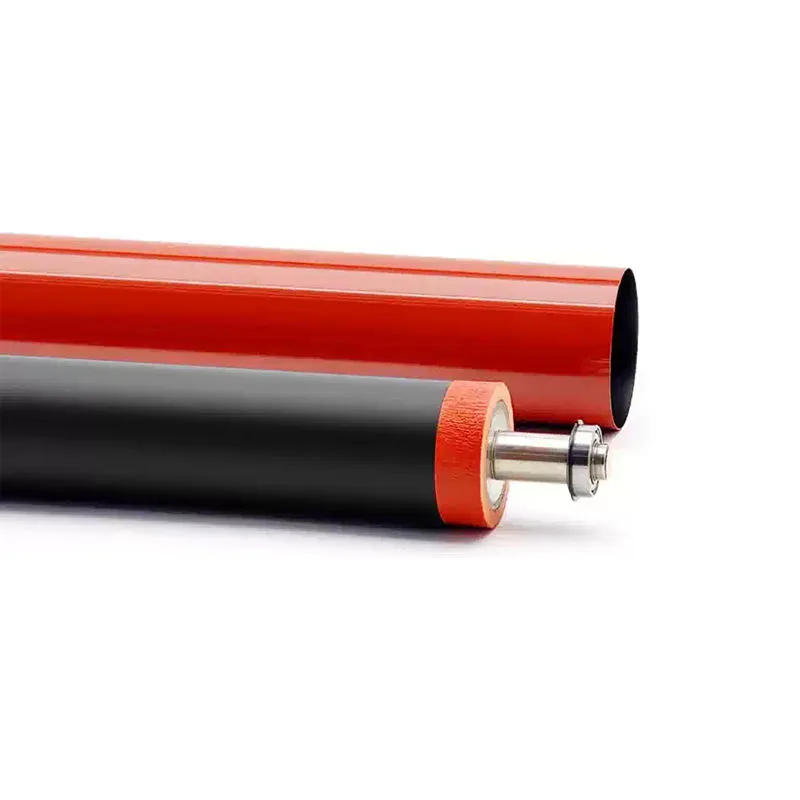
Stocking upper fuser rollers for Konica Minolta machines comes with a familiar risk: a bad batch can cause streaks, offset, and premature wear, turning into service callbacks that eat your margins. The roller is the heart of fusing—when it fails, your customers see wrinkled prints and ghost images. Here's what to verify before you commit to a supplier.
Compatibility: It's Not Just About the Model Number
Konica Minolta shares fuser units across several model families, but the upper roller isn't always interchangeable. For instance, the bizhub 227, 287, and 367 share a fuser design, yet the roller for the 227 may lack the heat-resistant coating needed for the 367's higher speed. Always confirm the OEM part number—like A0VU2581 for the bizhub 227 series—and cross-reference it with your supplier's list.
Physical dimensions matter just as much. Roller length, shaft diameter, and thermistor contact point vary. A roller that's 2mm short can cause uneven fusing at the edges, leading to toner that rubs off. Demand a spec sheet with exact measurements and compare it against the OEM drawing. If a supplier hesitates to share that, walk away.
Pay attention to the core material, too. Konica Minolta uses aluminum cores with a silicone rubber layer for even heat distribution. Some aftermarket rollers use steel cores, which heat up faster but can create hot spots and shorten thermistor life. Stick with aluminum unless you're testing a specific upgrade.
Page Yield: What Really Determines Roller Life
Most buyers focus on the roller's rated page yield—typically 120,000 to 180,000 pages for Konica Minolta upper rollers. But that number assumes ideal conditions: standard paper, correct fusing temperature, and regular maintenance. In the field, heavy cardstock or labels can cut life by 30% or more. The roller's surface hardness is the key factor; a softer roller (around 50 Shore A) gives better wrap but wears faster, while harder rollers (60 Shore A) last longer but may have lower fusing quality on textured paper.
Another overlooked factor is the pressure roller. If the lower roller is worn, it puts uneven pressure on the upper roller, causing early failure. Advise your customers to replace both together—even if the lower roller looks fine, the cost of a second service call outweighs the savings. You can bundle them in a kit and increase your average order value.
Finally, check the roller's release layer. A PTFE or PFA coating reduces toner adhesion and extends life. Some budget rollers skip this coating, and you'll see toner build-up within 10,000 pages. Ask for a sample and run a quick test—it's worth the time.
Inspection Checklist: What to Look For Before You Buy
When you receive a batch of rollers, do a quick visual and tactile check. Look for any scratches, pits, or bubbles on the surface—these are manufacturing defects that will show up as print defects. Run your fingernail across the surface; it should be smooth, not tacky. Tackiness indicates the silicone hasn't cured properly.
- Check the roller ends for burrs or rough edges that could damage the fuser bearings.
- Measure the roller diameter with calipers; it should match the OEM spec within 0.1mm.
- Spin the roller on a flat surface to ensure it's straight, not warped.
Also, verify the packaging. A roller shipped in a flimsy box can be bent or have its surface damaged in transit. CLONER uses rigid tubes with foam end caps, so our rollers arrive pristine. If your current supplier skimps on packaging, you're risking returns.
Sourcing Tips: Factory-Direct vs. Middlemen
You can source upper fuser rollers from trading companies, but you'll pay a premium and get inconsistent quality. Factory-direct suppliers like CLONER give you better pricing and direct access to the production line. We can adjust the roller's hardness or coating based on your market's needs—for example, a harder coating for regions with high humidity to prevent paper curl.
When you work with CLONER, you get more than a product. We provide detailed spec sheets, sample testing, and flexible MOQs. If you're an OEM-ODM buyer, we can private-label the rollers with your brand, and we handle the logistics so you can focus on sales. Our engineers are available to answer technical questions, which is a lifeline when your customer has a tricky fusing issue.
Don't underestimate the value of a supplier who understands the aftermarket. We know that a roller that fails at 80,000 pages is a disaster for your reputation. So we test every batch for hardness, surface finish, and thermal conductivity before shipping. That's the kind of reliability you can't get from a middleman.
In the end, the right upper fuser roller for Konica Minolta comes down to three things: correct fit, realistic page yield expectations, and a supplier who stands behind the product. CLONER offers all three, with factory-direct pricing and the flexibility to customize. Send us a sample of the OEM roller you're replacing, and we'll match it or improve it. That's how we build long-term partnerships.
Need a quote or samples from CLONER?
Factory-direct OEM/ODM supplier of compatible printer consumables & spare parts. Tell us your models — reply within 24h.