Canon Toner Chip Buying Guide for Copier Repair Shops
You replaced the drum, cleaned the PCR, and the machine still throws E0002-0001 or 'toner cartridge not recognized.' Nine times out of ten, the chip is the problem. For repair shops buying Canon toner chips in bulk, a bad batch doesn't just cost you the part—it costs you a callback, a reputation hit, and a customer who now thinks you can't fix a simple iR-ADV. This guide covers what actually matters when sourcing chips for Canon iR, iR-ADV, and imageRUNNER C series machines.
Know Your Canon Firmware Generation Before You Order
Canon doesn't make this easy. A chip that works in an iR-ADV 4525 won't necessarily work in a 4535, even though the cartridges look identical. The firmware revision on the machine's controller board determines which chip data string the printer will accept. Shops that order 'Canon iR-ADV chips' generically end up with a drawer full of returns.
Ask your supplier for the exact firmware compatibility list—not just the model number. For third-generation iR-ADV 4000/5000 series, you need chips flashed for firmware v3.11 and above. For imageRUNNER C3320/C3330, the chip must match the region code (US, EU, ASIA) or the machine will reject it on first install. If a supplier can't tell you the firmware version without checking, they're reselling, not manufacturing.
CLONER keeps separate SKUs for each firmware branch. We don't merge them into one 'universal' chip because that's how you get intermittent recognition errors at page 1,200.
What Separates a Reliable Chip from a Landfill Chip
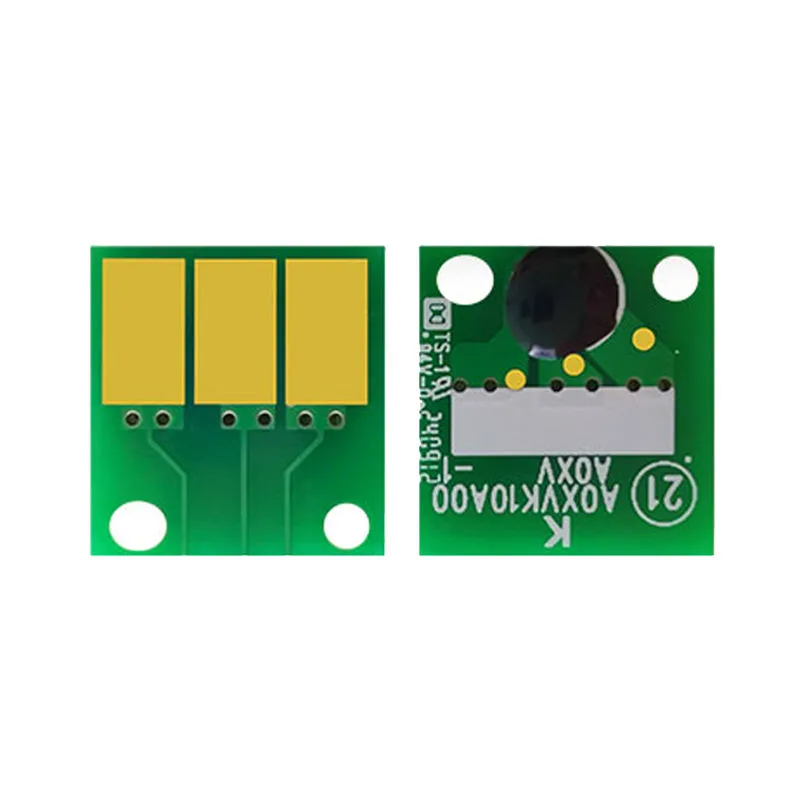
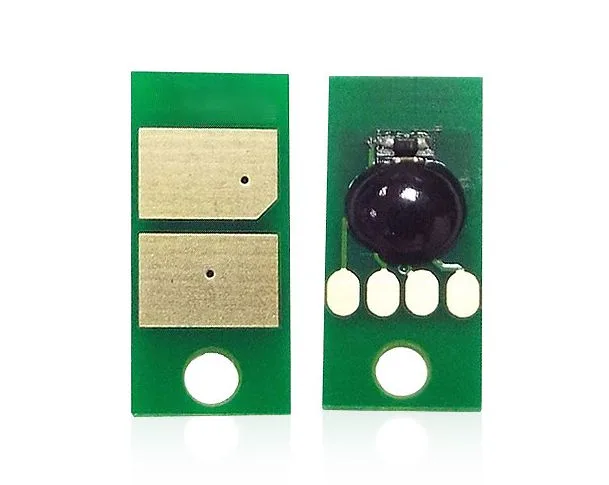
Look at the PCB, not the price. A real toner chip uses a gold-plated contact pad with consistent thickness—usually 3 to 5 microns. Cheap chips use tin or nickel plating that oxidizes after a few heat cycles inside the fuser area. The result: works on the bench, fails in the field after a week.
Check the EEPROM cell. Genuine-grade chips use a 1Kbit or 2Kbit serial EEPROM from known fabs. The counterfeit ones use recycled or out-of-spec dies that lose their data after 50 to 100 write cycles. Canon machines write to the chip every time you power cycle. A recycled die dies fast.
Ask for the chip's operating temperature rating. Canon iR-ADV fuser zones hit 180–200°C. A chip rated only to 85°C will drift. The good ones are rated 105°C minimum. If your supplier doesn't know the rating, they've never opened a datasheet.
Field Testing: Three Checks Before You Buy a Batch
Never approve a bulk order based on a single sample. Pull five chips from different reels or trays. Install them in five different machines—not five identical models, but a mix of iR-ADV and imageRUNNER C series if you service both. Run each machine through at least three power cycles and print 500 pages. If any chip throws a 'toner level unknown' or 'check toner cartridge' error, reject the batch.
Use a chip reader to verify the data string before installation. A $40 reader saves hours. Compare the OEM data string against your supplier's. If the serial number or page count field is blank or shows zeros, the chip was never programmed—it's a blank EEPROM, not a finished product.
Heat test: put one chip in an oven at 90°C for 30 minutes, let it cool, then read it. If the data is corrupted, the EEPROM is marginal. This is the single fastest way to filter out junk.
Pricing, MOQ, and OEM/ODM Realities
Canon toner chips are not a commodity. A chip that costs $0.80 landed is usually a recycled die with tin contacts. A chip that costs $1.80–$2.50 landed is typically a new EEPROM with gold pads and proper firmware. The difference in field failure rate is 2% versus 20%. For a repair shop doing 50 installs a month, that's 9 extra callbacks—at $80 per callback, you do the math.
MOQ from most Chinese suppliers is 500–1,000 pieces per firmware version. That's fine if you standardize on two or three machine families. If you service a wide range, find a supplier who will do mixed batches. CLONER runs mixed MOQs of 500 total across up to five firmware versions, because we assemble and flash in-house.
OEM/ODM matters here. If you want your own brand printed on the chip or a custom data string for a specific fleet contract, you need a factory that controls the EEPROM programming, not a trader who buys finished reels. Ask to see the programming jig. If they can't show you one, they can't do ODM.
Red Flags When Vetting a Canon Chip Supplier
- No firmware version listed—only 'compatible with iR-ADV.'
- Sample chips arrive in anti-static bags with no batch code or date code.
- Price below $1.20 landed for gold-pad chips (gold alone costs more).
- Supplier can't explain the difference between a reset chip and a permanent chip.
- No written warranty beyond 30 days. Good factories offer 12 months against data loss.
One more thing: ask for the chip's page-count reset behavior. Some Canon models require the chip to reset the toner level to 100% on install; others need it to report a specific starting percentage. If your supplier doesn't know which is which, you'll get calls from customers saying the toner gauge is stuck at 50%.
CLONER manufactures Canon-compatible toner chips at our own facility—gold-plated contacts, 105°C-rated EEPROMs, firmware flashed per region and version. We supply repair shops and importers direct, with mixed MOQs and OEM/ODM options for private-label programs. If you're tired of sorting through batches that half-work, send us your machine list and firmware versions. We'll tell you exactly which SKUs you need and send samples that survive the heat test.